
Signs of Mold Behind Walls in Cape Coral Homes
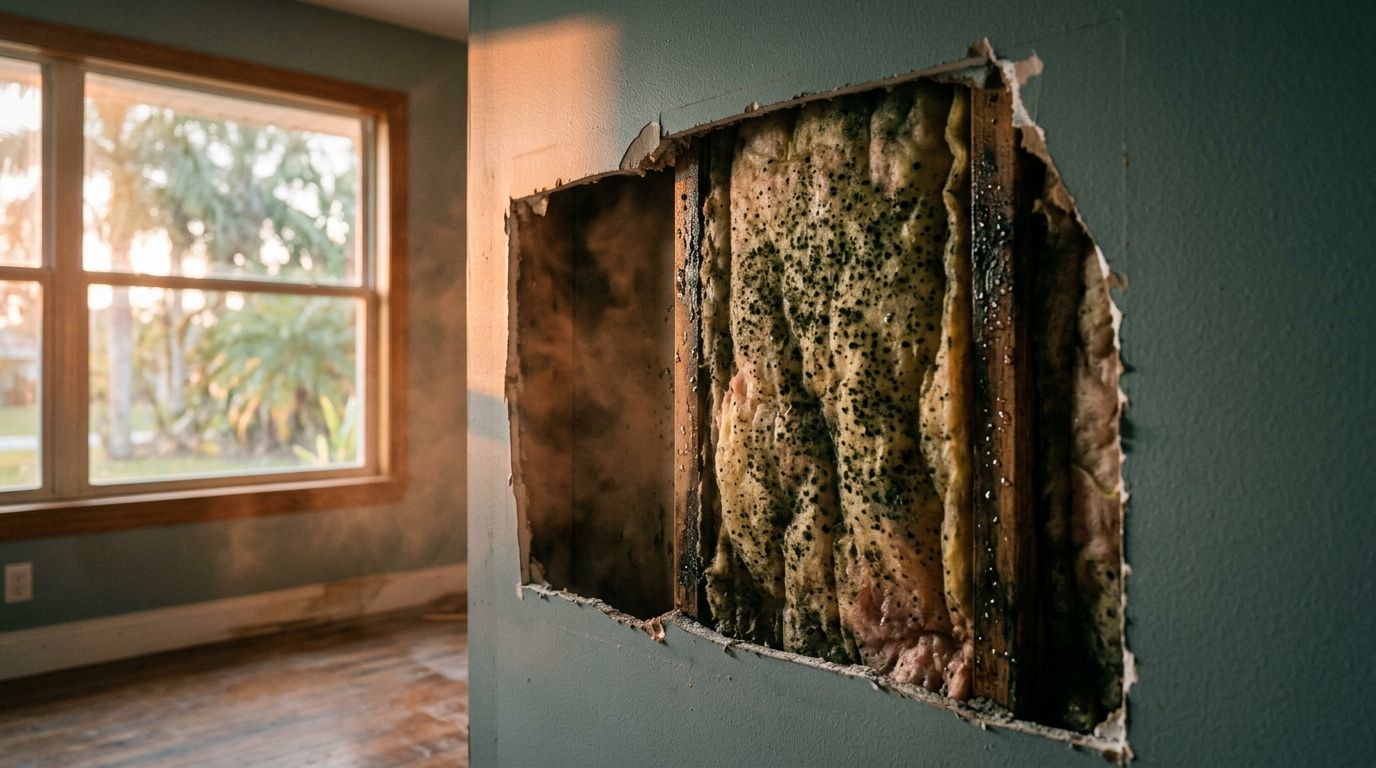
A musty smell may be the first clue that mold behind walls is growing where you can’t see it. In Cape Coral, warm humidity, storm-driven rain, roof leaks, plumbing failures, and air-conditioning moisture can keep wall cavities damp long after the surface looks dry.
Peeling paint or a dark stain deserves attention, but hidden mold can also appear without obvious discoloration. Learn the warning signs, avoid disturbing the cavity, and document the damage before repairs begin.
Key Takeaways
- A persistent musty odor, bubbling paint, swollen drywall, or recurring stains can point to hidden moisture.
- Mold often develops around plumbing, windows, roof leaks, AC equipment, cabinets, and exterior walls.
- Opening a wall without proper protection can spread spores and expose contaminated or damaged materials.
- Stop the water source first, photograph the damage, and check your policy before discarding affected items.
- A qualified mold professional should inspect concealed areas when the damage is widespread, recurring, or connected to contaminated water.
Why Cape Coral Homes Develop Mold Behind Walls
Mold needs moisture, a food source, and time. Drywall paper, wood framing, dust, insulation, and cardboard all provide material that mold can use when damp conditions continue.
Cape Coral’s climate can make drying harder. Warm air carries moisture, while high indoor humidity slows evaporation inside walls, ceilings, cabinets, and closets. A small roof leak may wet insulation above a ceiling. An AC drain problem may dampen the wall beside an air handler. Wind-driven rain can enter around windows, doors, roof penetrations, or stucco cracks.
Water also travels farther than the visible stain suggests. It can follow framing, plumbing lines, or the underside of a ceiling before appearing several feet away. A brown mark on a bedroom wall might come from a bathroom supply line or a roof area above it.
Mold can develop after a single event, but repeated moisture creates a greater concern. A slow leak under a sink, a loose washing machine hose, or condensation around an uninsulated duct may keep the same wall damp for weeks. The paint may dry between episodes while the cavity remains wet.
The EPA’s mold cleanup guidance explains that moisture control is the main part of mold prevention. Cleaning the surface without fixing the leak leaves the cause in place.
Warning Signs of Mold Inside a Wall
Hidden mold rarely announces itself with one clear symptom. Instead, several small changes may appear together. Pay attention when a room smells different, a wall changes texture, or damage returns after cleaning.
A persistent musty odor is one of the strongest clues. The smell may become more noticeable after rain, when the AC runs, or when a room stays closed. Check near baseboards, closets, cabinets, electrical outlets, and plumbing access panels. Odor can travel through small gaps, so the source may sit beside, above, or below the area where you notice it.
Watch for changes in paint and drywall. Common signs include:
- Bubbling, blistering, or peeling paint
- Brown, yellow, gray, or greenish discoloration
- Soft, swollen, or crumbly drywall
- Repeated stains that return after repainting
- Warped baseboards, trim, or cabinet backs
- Wallpaper that lifts, wrinkles, or separates
- A wall that feels colder or damper than nearby surfaces
A recurring stain deserves more attention than an old, stable mark. Fresh moisture can reactivate an existing stain, but a new leak may also be feeding growth behind the finish.
You may notice loose drywall tape, nail pops, or small cracks near a leak. These problems don’t prove mold is present, yet they can show that moisture has affected the wall assembly. Furniture pressed tightly against an exterior wall can hide staining and restrict airflow, especially in closets or guest rooms.
Some people also notice irritation in a damp room, such as a stuffy nose, coughing, wheezing, or eye discomfort. These symptoms have many possible causes. The CDC’s information on mold and health recommends reducing exposure to damp, moldy environments and addressing moisture problems.

Photo by Jessica Lewis
Mold color alone can’t identify the type or risk. Black, green, white, and brown growth can all occur indoors, and visual color isn’t a reliable way to judge toxicity. The moisture source and affected materials matter more than the shade.
Places to Check for Hidden Mold
Start with locations where water commonly enters or collects. You don’t need to tear into every wall. Look for patterns that connect the odor or damage to a likely moisture source.
Around plumbing fixtures: Inspect walls behind toilets, sinks, tubs, showers, dishwashers, washing machines, and water heaters. Supply lines and drain connections can leak inside cabinets or wall cavities. A small cabinet leak may soak the back panel and the drywall behind it.
Near windows and exterior doors: Check lower corners, trim, drywall edges, and nearby baseboards after heavy rain. Clogged weep holes, failed caulk, damaged flashing, and gaps around frames can allow water into the wall.
Beside AC equipment: Look around air handlers, condensate lines, drain pans, and nearby supply ducts. Condensation can affect drywall and insulation even when there is no standing water. A recurring damp smell near an AC closet needs inspection.
Below roofs and ceilings: Roof leaks often travel along rafters or framing before they appear in a room. Check attic insulation, the underside of the roof deck, ceiling drywall, and the upper corners of exterior walls.
Behind cabinets and furniture: Kitchen cabinets, bathroom vanities, built-ins, and large wardrobes can conceal stains. Limited airflow also lets moisture remain longer. Move furniture only if it is safe and dry enough to handle.
A moisture meter can help locate damp materials, but a reading doesn’t identify mold by itself. Thermal imaging can show temperature differences that suggest moisture, yet a professional must confirm what causes the pattern. Air sampling also has limits. When visible growth exists, finding and correcting the moisture problem usually matters more than learning the mold’s name.
What to Do When You Suspect Mold
Begin with safety. If water is near an outlet, appliance, or electrical panel, keep away from the area and contact a qualified electrician. Don’t touch wet electrical equipment or enter a flooded space without knowing it is safe.
Next, stop the source if you can do so safely. Shut off a leaking fixture or supply line, place a container under an active drip, and arrange roof or plumbing repairs. A mold cleanup cannot last if water continues entering the wall.
Avoid cutting, scraping, drilling, or pulling off baseboards to investigate suspected mold. Disturbing a wall cavity can release spores into the room and spread contaminated dust through the HVAC system. It can also expose you to wet insulation, damaged framing, sewage residue, or hidden electrical wiring.
Don’t paint over a stain or seal a damp wall. Cosmetic repairs can trap moisture and make later inspection harder. Regular household fans may move spores or spread humid air without drying the cavity. Porous materials such as soaked drywall, carpet padding, cellulose insulation, and swollen particleboard often need removal rather than surface cleaning.
If the affected area is small and involves clean water, you may be able to manage limited surface cleanup with proper protection. However, hidden wall damage requires more care because you can’t see how far moisture traveled. The EPA recommends considering professional help when mold covers more than about 10 square feet, involves HVAC systems, or follows significant water damage.
For guidance specific to Florida indoor conditions, review the Florida Department of Health’s mold resources. Keep children, older adults, and anyone with asthma or a weakened immune system away from the suspected area until you understand the condition.
When to Call a Mold Professional and Document Damage
Call a qualified mold remediation professional when the odor continues after the leak is repaired, damage returns, several rooms are affected, or moisture sits inside drywall, insulation, flooring, or cabinets. Professional work should begin with an inspection and moisture mapping, not an immediate demolition order.
A proper assessment may include moisture meters, targeted access points, thermal checks, photographs, and a review of the water source. The crew should explain what must be removed, what can remain, how the cavity will dry, and how they will prevent dust from spreading. Industrial dehumidifiers, air movers, containment, and HEPA filtration may be needed depending on the scope.
Ask for a written estimate that separates inspection, containment, removal, drying, cleaning, disposal, and reconstruction. Verify the company’s Florida credentials, insurance, references, and experience with water damage in Cape Coral. If the work involves a roof, plumbing, or electrical failure, confirm which licensed trade will repair the source.
Document the condition before work begins. Take wide photos of each room, close photos of stains and damaged materials, and a short video showing active dripping or equipment. Record when you first noticed the problem, recent storms, plumbing failures, unusual odors, and the steps you took to limit further damage.
Insurance coverage depends on the policy, cause of loss, exclusions, deductible, and endorsements. Sudden accidental leaks may receive different treatment from long-term seepage, wear, poor maintenance, storm surge, or flooding. Flood damage often requires separate coverage, while water backup may depend on an endorsement.
Notify your insurer promptly if you plan to file a claim. Ask what it needs before damaged contents are discarded or walls are opened. Keep the claim number, inspection reports, estimates, invoices, receipts, inventory lists, and written communications together. A line-item estimate helps show where the water went and why demolition or drying was necessary.
Conclusion
Mold behind walls often starts with a moisture problem that seems too small to matter. Musty odors, recurring stains, soft drywall, warped trim, and damp areas near plumbing, windows, roofs, or AC equipment deserve prompt attention.
Fix the source, avoid disturbing suspected growth, and document the damage before repairs begin. When moisture is hidden or widespread, qualified inspection and controlled drying can prevent a surface patch from concealing a much larger problem.
