
Can Water-Damaged Hardwood Floors Be Saved in Florida?
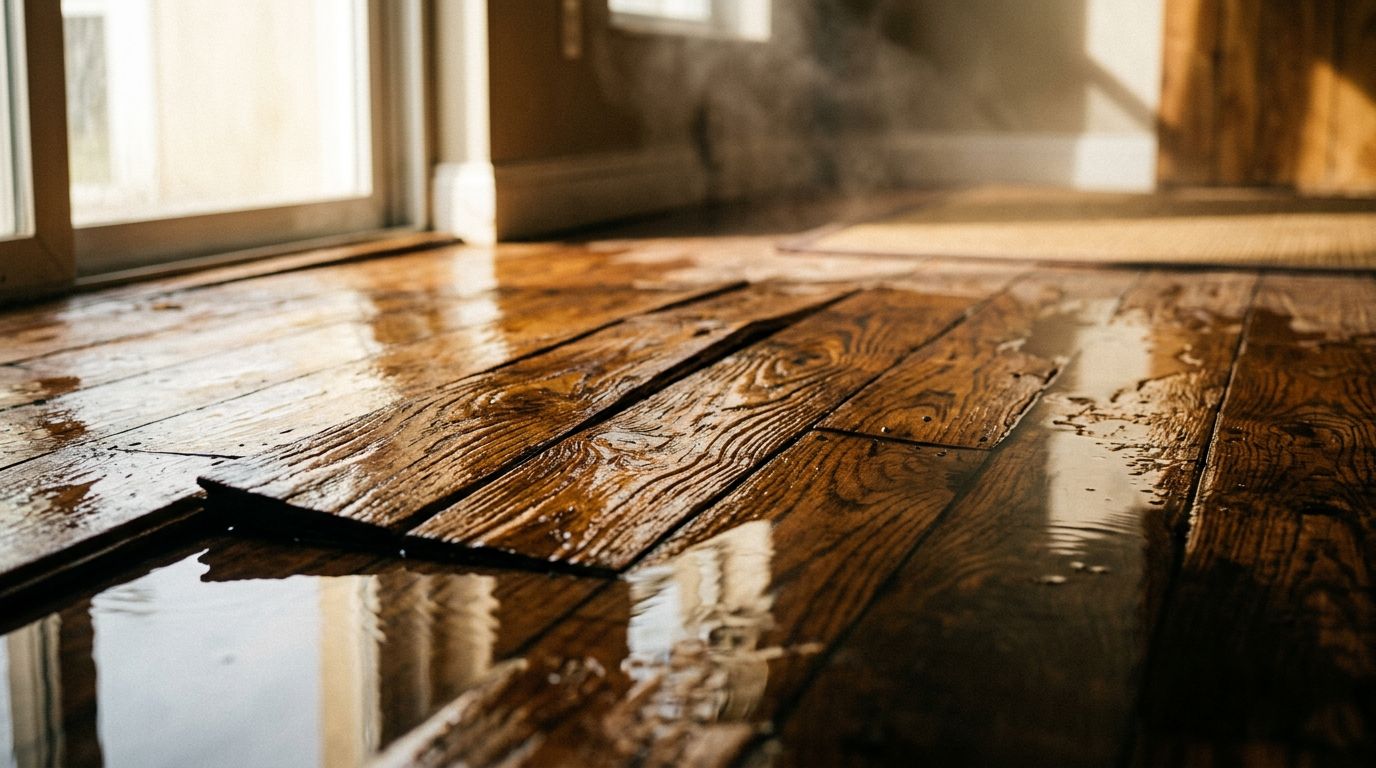
Water can ruin a hardwood floor in a few hours, but replacement isn’t always necessary. Water-damaged hardwood floors may be salvageable when the leak was small, the water was clean, and drying began before the boards or subfloor absorbed too much moisture.
Florida’s humidity makes the decision harder. A floor can look dry while moisture remains underneath, inside seams, or across the subfloor. The safest choice depends on the water source, the flooring type, how long it stayed wet, and readings from a professional moisture assessment.
Key Takeaways
- Clean water damage may be repairable when drying starts quickly.
- Sewage, floodwater, and contaminated water require professional remediation.
- Cupping, crowning, swelling, and gaps can indicate moisture below the surface.
- Never sand, refinish, or seal hardwood until the flooring and subfloor are confirmed dry.
- A restoration professional should assess hidden moisture before you decide between repair and replacement.
When Hardwood Floors Can Be Saved
Hardwood has a better chance of recovery when the water exposure was brief and limited. A broken refrigerator line, washing machine hose, or supply pipe may cause serious damage, but fast extraction can reduce the time moisture spends inside the boards.
The type of flooring also matters. Solid hardwood can sometimes be dried and refinished because the wood runs through the full thickness of each plank. Engineered hardwood has a real wood surface over layered material. Some engineered products recover well, while others swell or separate when water reaches the core.
The finish may look cloudy, dull, or stained after a leak. That appearance alone doesn’t prove the floor needs replacement. A flooring contractor may be able to sand and refinish boards after drying, provided the wood remains stable and the subfloor is sound.
Several conditions make restoration more likely:
- The source was clean water, such as a supply line or appliance hose.
- The leak was stopped quickly.
- Boards remain attached and haven’t split.
- The flooring shows limited swelling or distortion.
- The subfloor has no major deterioration.
- Moisture readings improve steadily during drying.
A small surface stain is different from water that has traveled beneath the floor. Moisture can move through seams and reach the plywood, concrete slab, baseboards, and nearby drywall. That hidden spread often determines the final repair cost.
A floor that looks acceptable on top can still hold damaging moisture underneath.
Contaminated water changes the decision. Sewage, toilet overflow, rising floodwater, and water that has passed through chemicals or heavy soil can carry pathogens and other hazards. Hardwood, padding, insulation, and affected subfloor materials may need removal. Don’t treat contaminated water as a routine mopping job.
How to Tell What the Water Has Done
Start with the pattern of the boards. Cupping occurs when plank edges rise higher than the center. Crowning occurs when the center rises above the edges. Both conditions point to uneven moisture, although the exact cause can differ.
Gaps can appear after boards dry and shrink. Buckled planks may lift away from the subfloor. Dark staining can indicate absorbed water, but it can also result from a damaged finish. A musty odor raises concern about moisture that remains below the visible surface.
The material beneath the hardwood deserves equal attention. Plywood can swell at its edges and lose a smooth surface. Particleboard can break down after saturation. Concrete doesn’t rot, but it can retain moisture and release it into flooring for an extended period.
Use this comparison as a starting point, not as a substitute for inspection.
| Condition | Possible outcome |
|---|---|
| Light surface discoloration, stable boards | Cleaning or refinishing may work |
| Mild cupping after a clean-water leak | Drying may allow partial recovery |
| Severe buckling or split boards | Sections may need replacement |
| Separated engineered layers | Replacement is often more practical |
| Swollen or crumbling subfloor | Subfloor repair or replacement may be needed |
| Sewage or floodwater exposure | Professional removal and sanitation are required |
Moisture meters help technicians compare affected flooring with nearby unaffected areas. They may also check baseboards, wall edges, cabinets, and the subfloor. In Florida homes, the surrounding humidity matters because a floor can stop feeling wet before it reaches a stable condition.
Don’t make a final decision based on one reading or one dry-looking spot. The technician should monitor the affected area as drying continues. If readings stop improving, moisture may be trapped under the floor or inside an adjacent wall.
What to Do After a Hardwood Floor Leak
Safety comes before damage control. If water reached outlets, appliances, electrical panels, or floor-level wiring, keep away from the area and contact a qualified electrician or emergency professional. Never step into standing water near electrical equipment.
If the area is safe, stop the source. Close the appliance valve or water supply, or call a licensed plumber for a hidden pipe leak. Don’t cut into walls or flooring to find a pipe while the area is wet.
Next, document the condition. Take wide photos of each room, then capture close images of swollen boards, stains, damaged furniture, and the leak source. Record when you discovered the problem and what steps you took. Keep receipts for extraction, equipment rental, temporary repairs, and damaged-item disposal.
Remove rugs and lightweight items from the floor. Lift furniture carefully instead of dragging it across softened boards. Place foil or plastic blocks beneath furniture legs if they remain in the room. Cardboard can transfer moisture and dye onto hardwood, so avoid using it as a barrier.
For a small clean-water spill, you may remove standing water with towels or a wet/dry vacuum. Use the vacuum only when electrical conditions are safe, and never use a standard household vacuum for water. A fan and dehumidifier can help after the leak stops, but equipment shouldn’t create a trip or electrical hazard.
Florida homeowners often make one unhelpful move: opening every window. Outdoor air can carry high moisture, especially during summer storms. Use air conditioning and a dehumidifier when possible, and keep the area controlled while the floor dries.
Avoid these common mistakes:
- Don’t sand or refinish boards while they remain damp.
- Don’t nail down buckled planks to force them flat.
- Don’t apply sealant over moisture.
- Don’t use bleach on finished wood without professional guidance.
- Don’t run fans across sewage or floodwater contamination.
If water came from a toilet backup, sewer line, flood, or rising stormwater, leave the area and call a restoration professional. Porous materials can absorb contamination even when the surface appears clean.
Florida Humidity and Signs the Floor May Need Replacement
Florida’s warm, humid air slows evaporation. Homes built over concrete slabs can face another problem because moisture may move between the slab and flooring. Air conditioning can reduce indoor humidity, but it doesn’t remove moisture trapped under boards.
Watch for changes over the following days. New cupping, expanding gaps, loose boards, recurring odor, and darkening around seams suggest the floor hasn’t stabilized. Baseboards may swell even when the hardwood looks better. Paint bubbling near the floor can point to moisture inside the wall.
Replacement becomes more likely when the wood has lost its shape or the layers have separated. Engineered planks with delaminated edges usually don’t return to their original structure. Solid boards with severe buckling may also need removal, especially if fasteners pulled loose or the subfloor has deteriorated.
Mold growth adds another concern. Visible growth, persistent musty odor, or wet material that remained covered for an extended period calls for professional evaluation. Don’t cover the area with rugs or furniture while you wait.
A restoration professional may remove a small section to inspect the subfloor. That access can reveal whether the damage is limited to flooring or extends beneath cabinets and walls. Partial replacement is often possible when the affected area is clearly contained, but matching the existing species, width, finish, and age can be difficult.
When to Call a Water Damage Restoration Professional
Call for professional help when water covers a large area, reaches walls, remains under the flooring, or comes from a contaminated source. You also need help when the floor has buckled, the leak source is hidden, or electrical equipment may have been exposed.
A qualified restoration team should do more than place fans in the room. Ask how the company will measure moisture in the hardwood, subfloor, baseboards, and nearby walls. Proper drying may require air movers, commercial dehumidifiers, controlled access, and daily readings.
The company should explain what it plans to remove and why. It should also provide photos, moisture records, equipment information, and an itemized scope. Local restoration service descriptions, such as this Fort Myers water damage guide, can help homeowners compare common mitigation steps before choosing a provider.
Insurance coverage depends on the policy and cause of loss. A sudden burst pipe may receive different treatment than long-term seepage, maintenance-related damage, storm surge, or flooding. Water-backup coverage may require a separate endorsement.
Notify your insurer promptly if you plan to file a claim. Ask before discarding damaged boards or opening large sections of flooring. Keep the claim number, photos, estimates, invoices, and repair records together. Documentation can show when the damage occurred and why drying or removal was necessary.
The best contractor won’t promise that every plank can be saved. Instead, the company should base the recommendation on the water source, material condition, moisture readings, and the state of the subfloor.
Conclusion
Water-damaged hardwood floors can sometimes be restored, especially after a short clean-water leak with prompt extraction and controlled drying. Severe buckling, separated engineered layers, damaged subflooring, and contamination make replacement more likely.
Florida’s humidity makes surface appearance an unreliable guide. Before you refinish, seal, or replace the floor, have the affected materials checked and documented. The right decision starts with safety and moisture readings, not a quick look at the boards.
