
What Is a Flood Cut After Water Damage?
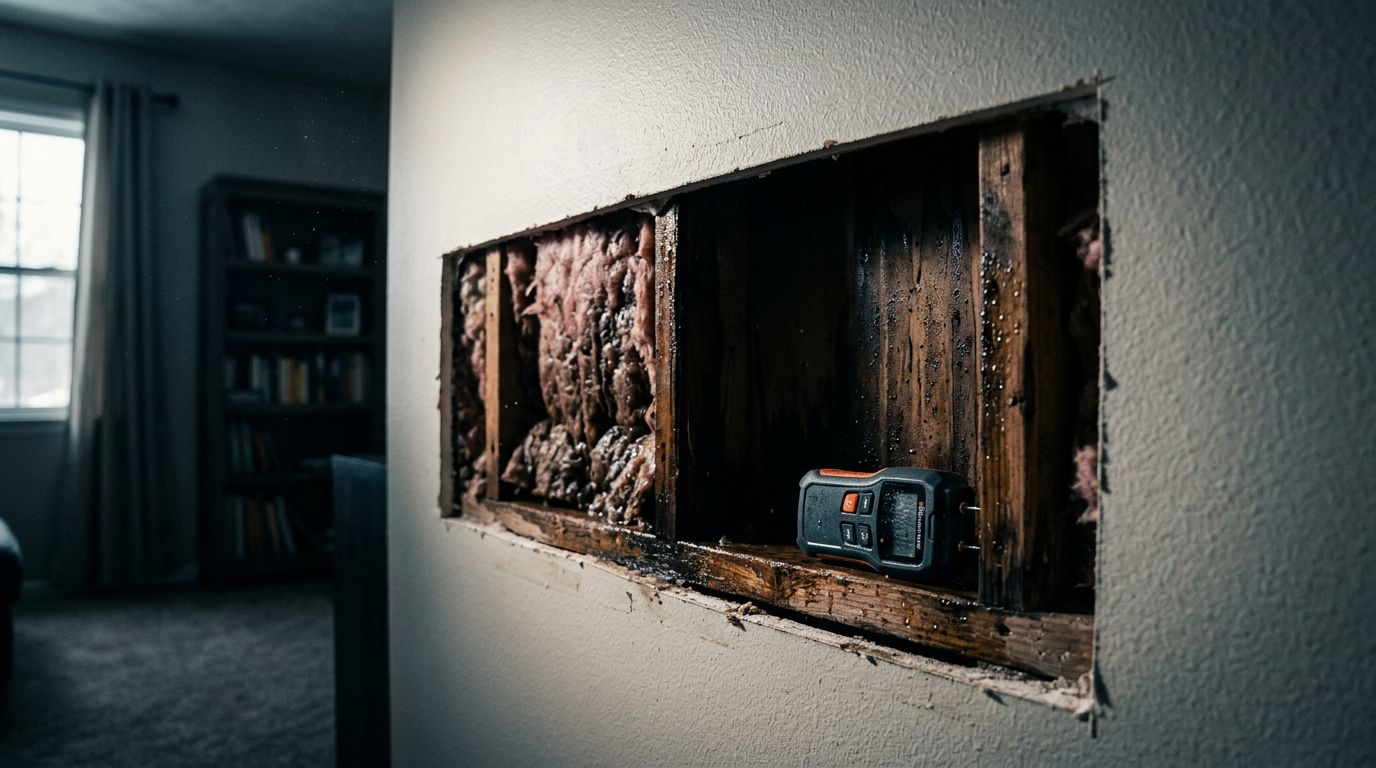
Water can travel farther inside a wall than the stain on its surface suggests. When drywall absorbs water, the safest repair may involve removing a horizontal section rather than painting over the damage.
A flood cut is a controlled cut through drywall that allows professionals to remove wet material, inspect the wall cavity, and dry the framing. The cut line depends on moisture readings, water contamination, insulation, drywall condition, and local building requirements. It isn’t a universal measurement.
What a flood cut does
A flood cut removes damaged drywall above the visible waterline. Restoration technicians use moisture meters to identify how far water has traveled through the sheet, insulation, baseboard, and framing. They then mark a level line through the affected section and remove the material below it.
The goal is to expose the wall cavity. Once the drywall is open, the crew can check for:
- Wet or compressed insulation
- Damp wood studs and bottom plates
- Mold growth or musty odors
- Damaged electrical components
- Hidden moisture above or below the visible stain
- Contamination from sewage or floodwater
Drywall acts like a sponge. Its paper facing and gypsum core can hold moisture long after the surface feels dry. A small opening may leave wet material trapped behind the wall, especially when water entered through a baseboard, window, door, or plumbing leak.
The cut also gives air movers and dehumidifiers access to the cavity. In Cape Coral, high humidity can slow evaporation, so a wall may need longer monitoring than homeowners expect. A professional crew should take follow-up readings instead of deciding that the wall is dry by touch.
A flood cut doesn’t automatically mean the entire wall needs replacement. It usually targets the damaged section while preserving sound drywall above the verified moisture boundary.
When drywall needs to be removed
The water source determines whether drying or removal is appropriate. Clean water from a supply line may allow limited drywall damage to dry in place when the exposure was brief and moisture readings remain low. A technician may still open a small inspection area before making that decision.
Gray water contains contaminants and can come from appliances, toilets with clean contents, or certain backups. Black water includes sewage, rising floodwater, and water carrying harmful debris. With contaminated water, porous drywall and insulation often require removal because cleaning cannot reliably restore materials that absorbed polluted water.
Floodwater creates additional concerns. It may carry bacteria, chemicals, silt, and other debris into wall cavities. That is why a flood cut after storm surge, exterior flooding, or sewage backup should generally be assessed and performed by a qualified restoration professional.
Removal becomes more likely when:
- Drywall feels soft, swollen, or crumbly
- Water reached insulation or electrical boxes
- Mold is visible or the odor continues after surface drying
- The wall stayed wet for an extended period
- The affected water was contaminated
- Moisture readings remain elevated around the cut area
A professional may remove insulation that stayed wet, lost its shape, or became contaminated. Fiberglass can sometimes dry after limited clean-water exposure, while cellulose often clumps and holds moisture. The material and the length of exposure both matter.
Covering a water stain can hide the problem without drying the wall. The cavity must be checked before it is closed.
How restoration professionals perform a flood cut
The process begins with safety. The water source must be stopped, and the crew checks for electrical risks, structural concerns, and unsafe contamination. If water reached outlets, switches, wiring, or an electrical panel, don’t touch the affected components or plug anything in. A licensed electrician may need to inspect the system.
Next, technicians document the condition with photographs and moisture readings. They map the affected area instead of relying on the darkest stain. Water can move sideways through drywall and downward through insulation, so the visible mark doesn’t always show the full extent.
The crew then protects unaffected surfaces and controls dust and airborne particles. They remove baseboards or trim as needed, mark the cut line, and open the wall with tools suited to the material. The work should avoid plumbing, wiring, and other concealed systems.
After removal, the cavity is cleaned and dried. Air movers, dehumidifiers, moisture meters, and sometimes thermal imaging help technicians track progress. They compare readings inside the damaged area with nearby dry materials. Drying is complete when the affected materials reach an acceptable, stable level rather than when the wall simply feels less damp.
Once the cavity is dry, the crew addresses damaged framing, insulation, wiring, and any mold or contamination. New insulation and drywall can then be installed, finished, primed, and painted. A clear outline of water-loss response and drying work is available in this residential water damage guide.
Should you make a flood cut yourself?
Homeowners can sometimes handle a small clean-water cleanup when the area is limited, the electrical system is dry, and no insulation or structural materials are affected. Drying towels or running a household fan may help with surface moisture, but they don’t confirm that a wall cavity is dry.
Cutting drywall yourself becomes risky when the wall contains wiring, plumbing, insulation, or contaminated materials. Sewage, floodwater, and long-term moisture exposure also require protective equipment and controlled containment. Poorly timed demolition can spread contamination or release mold particles into other rooms.
Before any removal, photograph the room from multiple angles. Capture close views of stains, damaged materials, and the water source. Contact your insurance provider promptly if you plan to file a claim, and ask what it needs before walls or contents are discarded.
Keep a claim folder with your claim number, emails, photographs, estimates, invoices, and receipts. Save costs for extraction, drying equipment, emergency supplies, laundry, hotel stays when covered, and disposal fees only when your policy allows them. Request line-item estimates that separate demolition, drying, sanitizing, and reconstruction.
When comparing restoration companies, ask whether they provide moisture readings, daily equipment checks, photographs, and a written scope. You can use an Angi Cape Coral remediation directory as one starting point, then verify licensing, insurance, experience, and references yourself.
What happens after the drywall is removed?
A flood cut is only the demolition stage. The wall still needs proper drying, cleaning, inspection, and reconstruction. Closing the opening too soon can trap moisture behind new drywall and create another repair later.
The final repair may include new insulation, drywall, joint compound, texture, primer, paint, baseboards, and electrical work. Materials should match the existing wall as closely as possible, but code-required upgrades may need separate approval and documentation.
Insurance coverage depends on the cause of loss, policy wording, exclusions, deductible, and endorsements. Sudden plumbing failures, gradual leaks, storm-driven rain, storm surge, and sewage backups can receive different treatment. Keep damaged materials and failed plumbing parts until your insurer or restoration company confirms what it needs.
Conclusion
A flood cut gives restoration professionals access to wet or contaminated materials hidden behind drywall. The cut height should follow moisture readings, water category, insulation condition, material type, and local requirements.
Prompt documentation and controlled drying can prevent a small opening from becoming a larger repair. When sewage, floodwater, electrical hazards, or extensive moisture are involved, have a qualified restoration professional assess the wall before anyone starts cutting.
