
Can Soaked Carpet Be Saved After a Florida Leak?
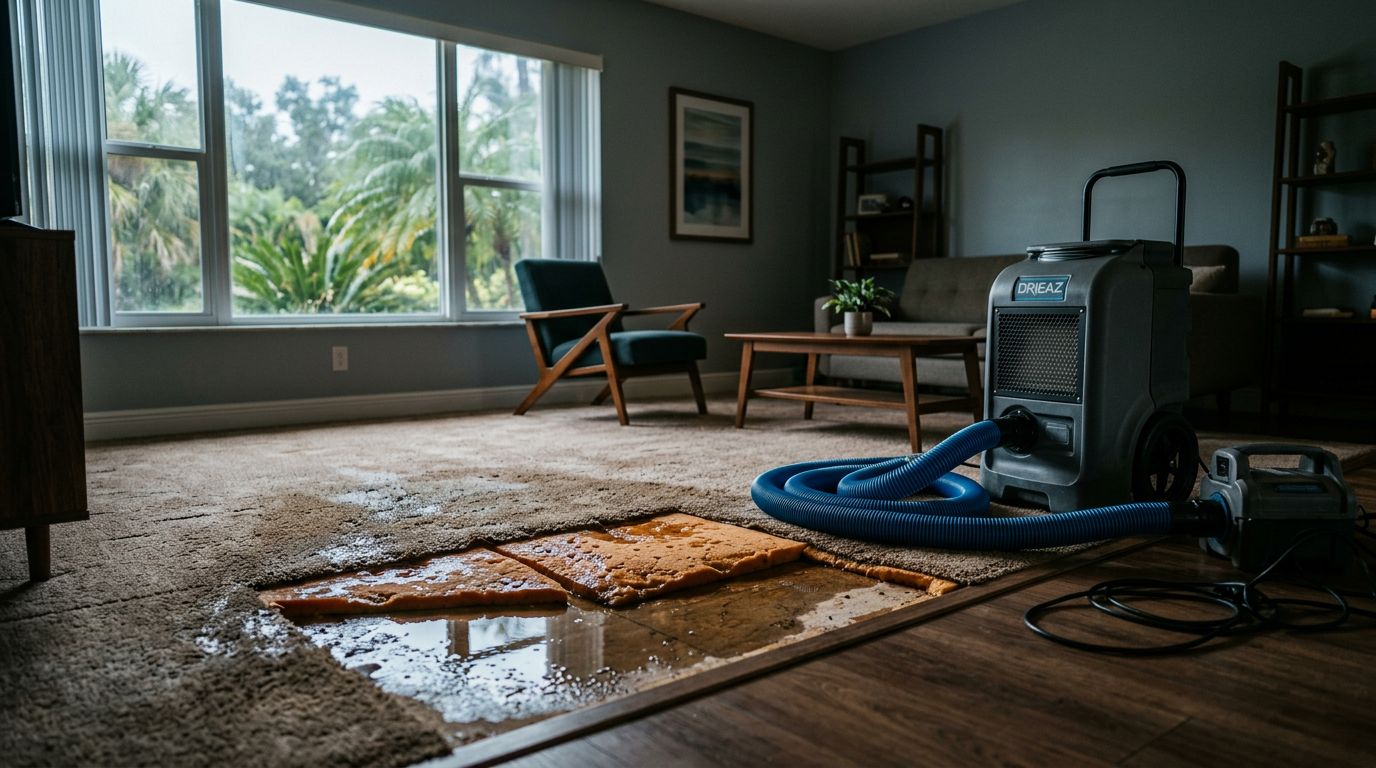
A plumbing leak can leave a carpet looking ruined within minutes, but the visible water doesn’t tell the whole story. Soaked carpet water damage may be repairable when the leak involved clean water and drying starts quickly. However, contaminated water, saturated padding, trapped moisture, and Florida’s high humidity can make replacement the safer choice.
First, stop the leak and protect everyone in the home. Then document the damage before moving, discarding, or cutting anything. The carpet, pad, subfloor, and water source all need evaluation before you decide whether restoration makes sense.
Key Takeaways
- Carpet may be saved after a clean plumbing leak when extraction and controlled drying begin promptly.
- Carpet padding often needs separate evaluation and may require replacement even when the carpet can be cleaned.
- Sewage, toilet overflow, long-term leakage, mold, or electrical hazards require professional help.
- A musty odor, delamination, staining, or damaged subfloor can make replacement safer than restoration.
- Keep photos, videos, receipts, moisture readings, and itemized estimates for your insurance claim.
When Can Water-Damaged Carpet Be Saved?
The answer depends first on the type of water. A broken supply line carrying fresh water creates a different cleanup problem than a backed-up drain or failed toilet.
Clean water from a supply pipe, washing machine hose, or water heater may allow carpet restoration if the leak was discovered quickly. Technicians still need to remove the water, lift the carpet, inspect the padding, and dry the floor below. Clean water can become more contaminated as it sits, so delay changes the decision.
Gray water contains higher levels of contamination. Examples include water from a dishwasher discharge, sump pump failure, or an overflowing appliance with dirty contents. A professional may salvage some materials after proper cleaning, but porous materials often need removal.
Black water includes sewage, rising floodwater, and water with significant biological contamination. Carpet and padding exposed to this water usually require removal. Homeowners shouldn’t walk through it barefoot, run household fans, or carry contaminated materials through clean areas.
Time matters just as much as cleanliness. Wet carpet can hold moisture against the pad and subfloor, while the room’s humidity slows evaporation. If the area stays wet for days, odors, staining, microbial growth, and adhesive failure become more likely.
A small section may look manageable, yet water can spread beneath the carpet well beyond the original puddle. It can also wick into baseboards, drywall, closets, and nearby furniture. The visible outline is often smaller than the actual affected area.
Carpet that feels dry on top may still have wet padding or subfloor beneath it.
Carpet restoration has a reasonable chance when the water was clean, the leak stopped quickly, the carpet and backing remain intact, and professional drying confirms stable moisture levels. No contractor can guarantee salvage before inspecting all layers.
What to Do Immediately After a Plumbing Leak
Your first priority is stopping the water source. Close the local shutoff valve if you can reach it safely. If the leak is hidden, shut off the home’s main water supply and call a licensed plumber. Don’t cut into a wet wall to search for a pipe.
Next, consider electrical safety. Water near outlets, power strips, appliances, floor-level wiring, or the electrical panel creates a shock risk. Don’t touch wet electrical components or plug in equipment. If you smell gas, leave the home without switching lights or appliances on, then call 911 or the gas supplier from a safe location.
If the water is clean and the room is safe, move lightweight furniture and loose items away from the wet area. Place foil or plastic beneath furniture legs that remain in place. Avoid dragging heavy furniture across saturated carpet because it can stretch the carpet and spread moisture.
Take wide photographs of every affected room. Follow with close images of the carpet, pad edges, baseboards, drywall, furniture, and the plumbing source. A short video can show active dripping, water depth, or damage that photographs don’t capture.
Before discarding carpet, pad, or damaged belongings, contact your insurance provider if you plan to file a claim. Ask whether the insurer wants an inspection, photographs, or an inventory before removal. Coverage often depends on whether the event was sudden and accidental or resulted from gradual seepage and maintenance issues. Flooding and storm surge usually require separate flood coverage.
Keep a simple record of the loss:
- Write down when you discovered the leak and when you shut off the water.
- Save receipts for emergency supplies, extraction, drying, disposal, storage, and covered temporary housing.
- Keep the claim number, adjuster correspondence, estimates, and invoices in one folder.
Don’t seal wet carpet beneath plastic for an extended period. That can trap moisture and worsen odor. Also, don’t use a regular household vacuum to remove standing water. A wet-dry vacuum is only appropriate when the equipment, outlets, and surrounding area are safe.
How Professionals Decide Whether Carpet Is Salvageable
A qualified restoration crew starts with an inspection rather than immediately cleaning the carpet. The team identifies the water source, traces how far it traveled, and checks the carpet, pad, tack strips, subfloor, baseboards, and lower drywall.
Technicians may use moisture meters to compare wet materials with nearby dry areas. They can also inspect beneath the carpet and use thermal imaging when hidden moisture is suspected. The goal is to find dampness that a visual inspection or hand touch could miss.
The crew usually lifts the carpet at an edge or doorway. This exposes the padding and subfloor, which often determine whether the carpet can stay. A soaked pad may hold water for much longer than the carpet surface. Some padding materials can dry after limited clean-water exposure, but saturated, compressed, contaminated, or badly odorous pad often needs replacement.
Extraction comes next. Professional equipment removes water from the carpet and pad more effectively than towels or ordinary fans. Air movers direct airflow across and beneath the carpet, while commercial dehumidifiers pull moisture from the room. In a humid Florida home, dehumidification matters because warm air can hold substantial moisture even after standing water disappears.
The crew should monitor progress rather than leave equipment running without a plan. Daily or scheduled readings help show whether the carpet, subfloor, walls, and other materials are drying. Drying is complete when readings reach a stable, acceptable condition compared with unaffected materials.
A reputable company should explain what it plans to save, clean, remove, and replace. For a useful description of moisture mapping, extraction, and structural drying, review this Florida water damage guide.
Carpet cleaning comes after extraction and drying. Depending on the material and water type, the process may include hot-water extraction, antimicrobial treatment, odor control, or specialized cleaning. Carpet should not be reinstalled until the subfloor is dry and the room no longer has a persistent musty smell.
Signs Carpet Replacement Is Safer
Restoration isn’t always the most sensible option. Replacement is often safer when contamination, material damage, or hidden moisture prevents reliable cleaning and drying.
Look for these warning signs:
- Sewage, toilet overflow, drain water, stormwater, or floodwater reached the carpet.
- The carpet stayed wet for more than 24 to 48 hours before drying began.
- The backing has separated, curled, shrunk, or developed bubbles.
- A strong musty or sewage odor remains after extraction and cleaning.
- Mold is visible on the carpet, pad, tack strips, or subfloor.
- The pad has collapsed, crumbled, or remains wet after professional drying.
- The subfloor is swollen, soft, stained, or structurally damaged.
- Water reached drywall, insulation, cabinets, or electrical components.
- The carpet cannot be cleaned without spreading contamination through the home.
Replacement may also make sense when the carpet is old or already worn. Cleaning a damaged floor covering can cost nearly as much as installing a comparable new product, especially when the pad, tack strips, and transition strips also need work.
A professional may recommend removing only the affected section if matching carpet is available. However, patching can produce a visible difference when the existing carpet has faded or worn unevenly. In other cases, replacing a room provides a more consistent result and reduces the chance of retaining odor.
Don’t cover a damp subfloor with new pad and carpet. That cosmetic repair can trap moisture beneath the surface and lead to recurring odor or damage.
Costs, Insurance, and a Realistic Estimate
Water damage restoration prices vary with the affected area, water category, materials, access, and repair scope. In Cape Coral and nearby Florida communities, a small, contained loss may cost hundreds to a few thousand dollars. Broader extraction, demolition, drying, cleaning, and reconstruction can reach several thousand dollars or more.
Some general estimates place average water damage restoration around $1,000 to $4,000, but carpet-only work may fall below or above that range. A large room with saturated padding and damaged drywall costs more than a small hallway with clean water and a dry subfloor. Mold remediation, furniture moving, disposal, storage, and reconstruction add separate charges.
Ask for a line-item estimate that separates:
- Water extraction and carpet handling
- Pad removal or drying
- Equipment setup and rental days
- Moisture monitoring
- Cleaning, sanitizing, and odor treatment
- Disposal and storage
- Carpet, pad, baseboard, drywall, and subfloor replacement
The affected area may be larger than the visible stain. Water can travel sideways beneath carpet and downward into insulation or flooring. That is why a professional estimate should identify the full moisture path rather than price only the discolored section.
Insurance commonly treats sudden, accidental plumbing losses differently from gradual leaks, corrosion, poor maintenance, or repeated seepage. The policy language, deductible, exclusions, and endorsements control the result. Notify the carrier promptly and ask what documentation it requires before removing materials.
Keep the restoration company’s inventory separate from your own records. Check room names, item descriptions, quantities, condition notes, and photographs. Save every invoice and written message, and request copies of moisture readings and drying logs.
Choosing the Right Restoration Professional
Call a water-damage professional when the carpet is heavily saturated, water traveled beneath walls, the source is contaminated, or the home has electrical concerns. Professional assessment is also wise when the leak went unnoticed overnight or longer.
Before hiring a company, ask how it will inspect beneath the carpet and confirm drying. The contractor should explain equipment placement, monitoring visits, removal decisions, and the transition from mitigation to repairs.
Request proof of licensing, insurance, and relevant training. Confirm that the written scope identifies what will be dried, cleaned, removed, or rebuilt. Ask whether the company provides photos, moisture readings, itemized invoices, and claim documentation.
Be cautious when a contractor promises that every carpet can be saved or says the job requires no moisture testing. Surface drying alone doesn’t prove that the pad, subfloor, or wall cavity is dry.
Conclusion
Soaked carpet after a Florida plumbing leak may be salvageable when clean water is removed quickly and every layer dries properly. Contamination, extended saturation, damaged backing, persistent odor, and wet subfloors often make replacement the safer choice.
Stop the leak, protect yourself from electrical and biological hazards, document the loss, and arrange an assessment before making permanent repairs. The carpet’s condition matters, but the hidden pad and subfloor often decide the outcome.
