
Can Laminate Flooring Be Saved After Water Damage?
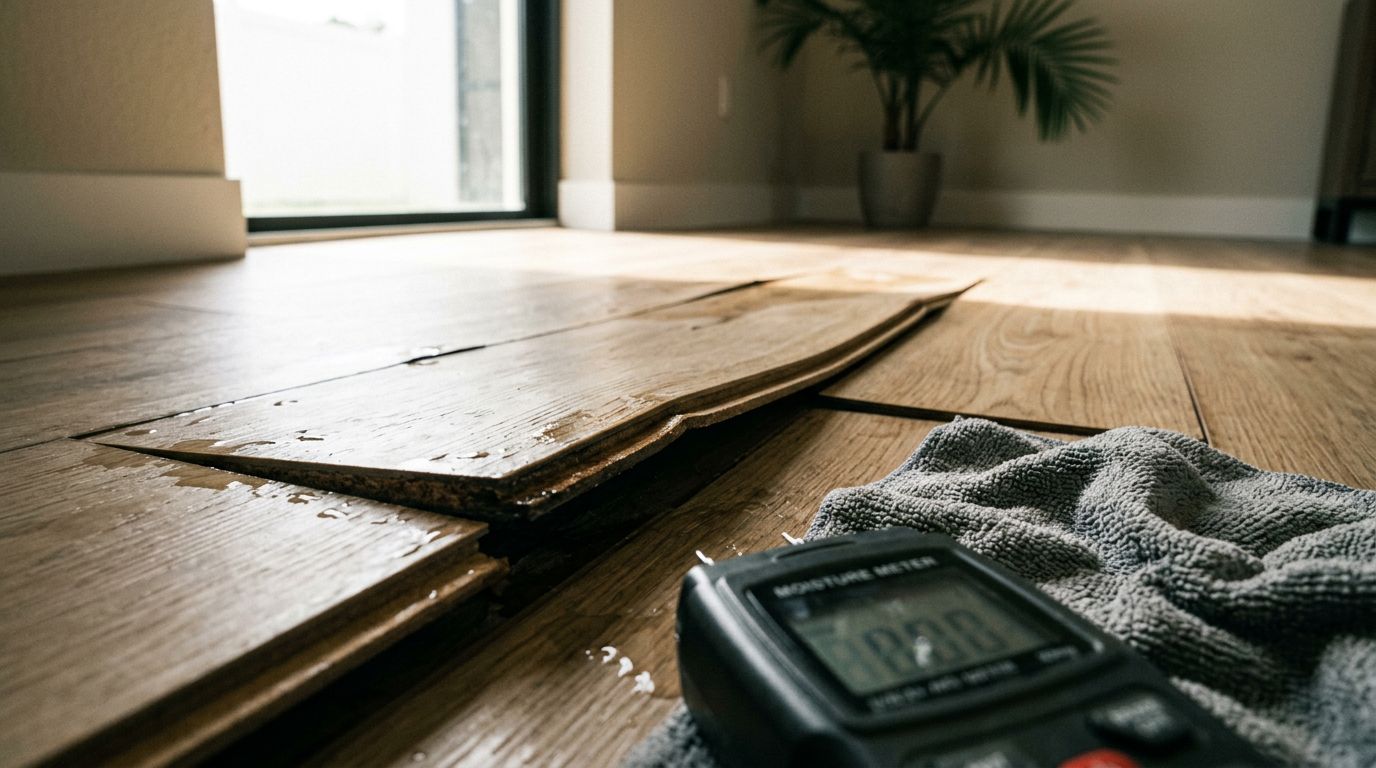
A small leak can turn laminate flooring into a costly repair before the surface looks badly damaged. Water slips through seams, reaches the fiberboard core, and can remain trapped beneath the floor in Florida’s warm, humid air.
So, can laminate flooring be saved after water damage? Sometimes, but only when the exposure was limited, the water was clean, drying started quickly, and the planks show no swelling or separation. Once boards buckle, soften, delaminate, or develop mold, replacement is usually the safer choice.
Key Takeaways
- A few stable planks may be salvageable after a clean, quickly dried leak.
- Swelling, buckling, bubbling, soft spots, and delamination usually mean replacement.
- Floodwater and sewage-contaminated laminate should not be salvaged.
- Professionals should test the planks, underlayment, and subfloor before repairs.
- Photos, moisture readings, receipts, and drying records can support an insurance claim.
When laminate flooring can be saved
Laminate flooring has a decorative top layer over a dense fiberboard core. That core absorbs water quickly. Even when the surface appears intact, moisture may have entered through plank joints or collected underneath the floating floor.
Salvage is possible when the damage affects a small area and the water came from a clean source, such as a supply line or appliance hose. The leak must stop quickly, and drying should begin as soon as the area is safe. A few planks that remain flat, firm, and properly locked together may survive.
The floor also needs a dry, stable base. A damp underlayment or subfloor can continue feeding moisture into the laminate after the visible water disappears. On concrete slabs, moisture can also migrate upward if the slab or vapor barrier has a problem.
As a practical screening point, a wood-based subfloor reading above 20% indicates a serious moisture problem. Readings below 15% are more encouraging, but they don’t prove the laminate is safe. The technician must compare readings with unaffected areas and inspect the boards themselves.
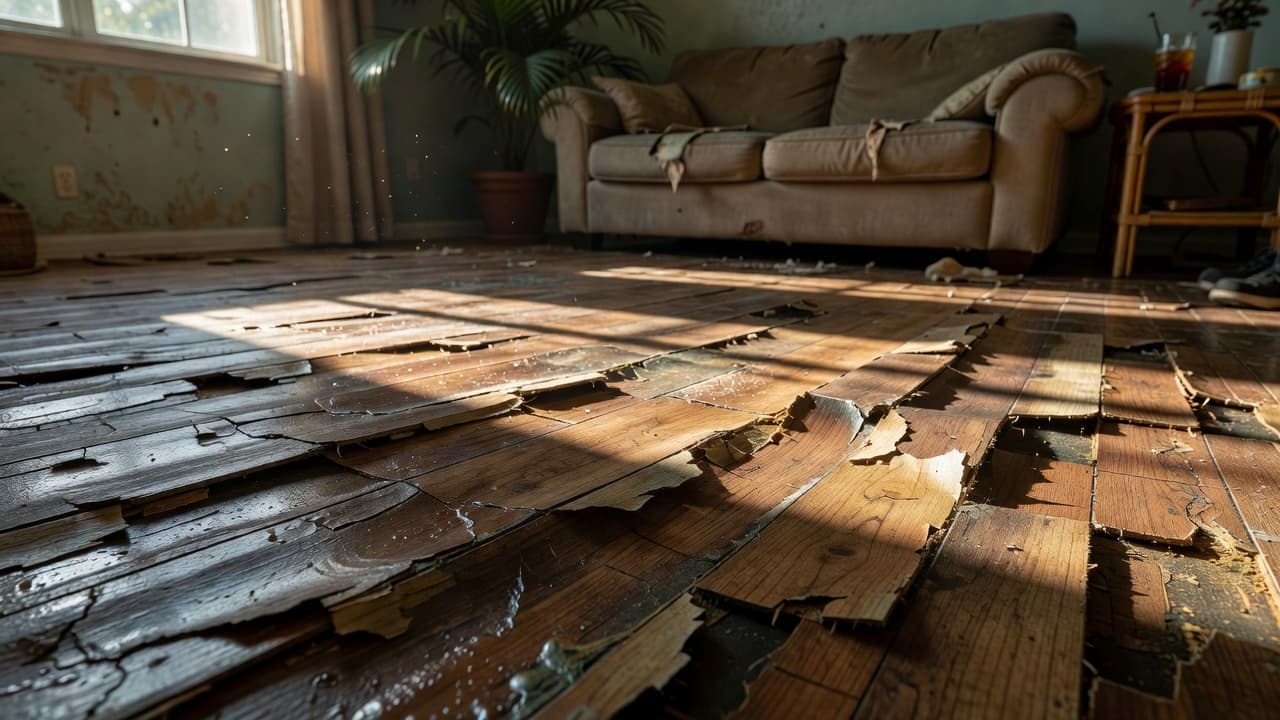
A floor that looks slightly raised may have a larger problem beneath it. For a useful discussion of why damaged boards often need removal instead of surface repair, see this laminate flooring repair discussion.
Replacement becomes more likely when water sat under the floor for more than 24 to 48 hours. Florida’s humidity gives trapped moisture more time to damage the core and support mold growth. Quick action improves the odds, but it doesn’t reverse changes that have already occurred.
Signs water-damaged laminate needs replacement
Laminate usually cannot be sanded and refinished like solid hardwood. Its printed surface and fiberboard center form a manufactured plank. Once the core swells, the board often loses its original shape permanently.
Look for these warning signs:
- Swollen edges: Plank ends or seams rise above the surrounding floor.
- Buckling or tenting: Several boards lift, shift, or form a ridge.
- Bubbling or peeling: The decorative layer separates from the core.
- Soft or spongy areas: The floor feels unstable under normal foot traffic.
- Cracked joints: Locking edges break after the boards expand.
- Dark staining: Discoloration spreads or appears beneath the underlayment.
- Persistent odor: A musty smell remains after surface drying.
- Visible mold: Growth appears along seams, baseboards, or exposed subfloor.
- Subfloor damage: Wood deteriorates, stays wet, or feels weak.
A single damaged plank may be replaceable if you have a matching product. However, floating floors often require removing boards from the nearest wall until the damaged section is reached. The replacement plank may also look different because of sunlight, age, or manufacturing-lot changes.
Large areas create a separate problem. If buckling affects roughly a quarter of the room or more, removing and replacing the affected section may produce a better result than chasing individual boards. A flooring professional can check whether the locking system will survive disassembly.
A dry-looking surface doesn’t prove the floor is dry. Moisture can remain below the plank, inside the underlayment, or along the wall edge.
Mold changes the decision further. Do not cover a musty or contaminated floor with new planks. The source must be removed, the area cleaned safely, and the subfloor tested before reconstruction.
What to do immediately after a leak
First, stop the water if you can do so safely. Shut off the appliance valve or household water supply. If water reached outlets, switches, power strips, or wiring, avoid the area and contact a licensed electrician. Don’t operate electrical equipment while standing on a wet floor.
Next, identify the water type. A broken refrigerator line may release clean water, while a washing machine drain, toilet, sewer backup, or storm flood may spread contaminants. Floodwater can contain bacteria, chemicals, and debris. Sewage and flood-contaminated laminate should be removed rather than dried for reuse.
For a clean leak, remove standing water with towels, a wet vacuum, or a squeegee. Don’t use a household vacuum unless it is designed for wet pickup. Remove rugs, boxes, and furniture that can hold moisture against the floor.
Open doors and use fans only when the water is clean and electrical conditions are safe. A dehumidifier can help lower indoor moisture, but Florida homes may need more controlled drying because outdoor air is often humid. Avoid steam mops, bleach mixtures, and heavy soaking. These can push moisture deeper into the seams or damage the finish.
Do not pull up the entire floor before documenting it. Take wide photographs of each room, close images of swollen seams and wet edges, and a short video showing the affected area. Record when you found the leak, what caused it, when the water stopped, and what cleanup steps you took.
If you rent the property, notify the landlord in writing. Condo owners should also contact the association if a shared wall, slab, roof, or building pipe may be involved.
How professionals test the floor and subfloor
A restoration technician starts by tracing the moisture path. The visible stain may cover only part of the affected area. Water can travel beneath laminate, reach baseboards, and spread into adjacent rooms.
The inspection may include moisture mapping, readings at plank edges, testing of the underlayment, and checks of the subfloor. Technicians may remove a baseboard, threshold, or small section of flooring to inspect the cavity without immediately demolishing the whole room.
Drying equipment often includes air movers, commercial dehumidifiers, moisture meters, and sometimes thermal imaging. Equipment logs should show where machines were placed and how long they operated. Daily readings help confirm whether moisture levels are falling.
The goal is stable drying, not a floor that feels dry on top. Readings should approach nearby unaffected materials, and the source of the leak must remain fixed. If the subfloor stays wet, new laminate can fail soon after installation.
A proper repair estimate should separate water extraction, drying, demolition, sanitizing, flooring replacement, baseboards, and subfloor work. It should also identify what can be repaired and what needs replacement. Vague estimates make it harder to compare contractors and explain the claim.
Professional restoration is the right choice when water reached walls or cabinets, the affected area is large, the source is contaminated, electrical hazards exist, or the floor remains soft after drying. A local team familiar with Cape Coral and Southern Florida homes can also account for humidity, storm exposure, slab construction, and hidden moisture.
Insurance documentation for laminate floor damage
Coverage depends on the cause of loss, policy language, deductible, exclusions, and endorsements. A sudden plumbing failure may receive different treatment than long-term seepage, corrosion, poor maintenance, storm surge, or rising floodwater. Standard homeowners policies often exclude flood damage, which may require separate flood insurance.
Notify your insurer promptly if you plan to file a claim. Ask what it wants before damaged flooring is discarded or walls are opened. Some carriers may request photographs, an inventory, proof of ownership, estimates, and moisture documentation.
Create one claim folder with the claim number in the email subject line. Save the following:
- Original and close-up damage photos
- Videos and a written timeline
- Drying logs and moisture readings
- Contractor scopes and line-item estimates
- Invoices for extraction, equipment, supplies, and disposal
- Plumbing or appliance repair records
- Copies of every email and important phone note
Keep damaged planks until the insurer gives permission to dispose of them, unless they create a health or safety hazard. Save failed hoses, fittings, or appliance parts when practical. A clear record helps show what happened and why removal was necessary.
For another homeowner perspective on replacing water-damaged laminate, you can review this community repair question. Treat online discussions as personal experiences, not a substitute for your policy or an on-site inspection.
Choosing replacement flooring after water damage
If replacement is necessary, match the new material to the room’s moisture exposure. Water-resistant laminate may handle small spills better, but product labeling doesn’t make the entire installation floodproof. Seams, wall edges, transitions, underlayment, and the subfloor still need proper protection.
Ask the installer about expansion gaps, doorway transitions, appliance drip trays, and moisture testing before installation. A lightly damp microfiber mop is safer than a steam mop for routine cleaning. Felt pads under furniture can also reduce scratches that expose vulnerable edges.
When comparing estimates, ask whether the price includes removal, disposal, subfloor repairs, new underlayment, trim, furniture movement, and final moisture checks. Replacing only the visible boards may leave a wet base underneath.
A floor that endured clean water for a short time may need only limited board replacement. A floor affected by sewage, floodwater, mold, prolonged leakage, or subfloor deterioration needs a broader restoration plan.
Conclusion
Laminate flooring after water damage can sometimes be saved, but the decision depends on more than appearance. Clean water, quick drying, stable boards, and a dry subfloor support salvage. Swelling, buckling, delamination, mold, contamination, and soft structural materials point toward replacement.
Act safely, document the damage before removing materials, and test beneath the floor. In Florida, fast drying matters because trapped moisture can keep damaging the flooring after the puddle is gone. The most reliable answer comes from moisture readings, subfloor inspection, and a written repair scope, not from a quick glance at the surface.
