
Can Mold Damage Belongings Stored in Florida Garages?
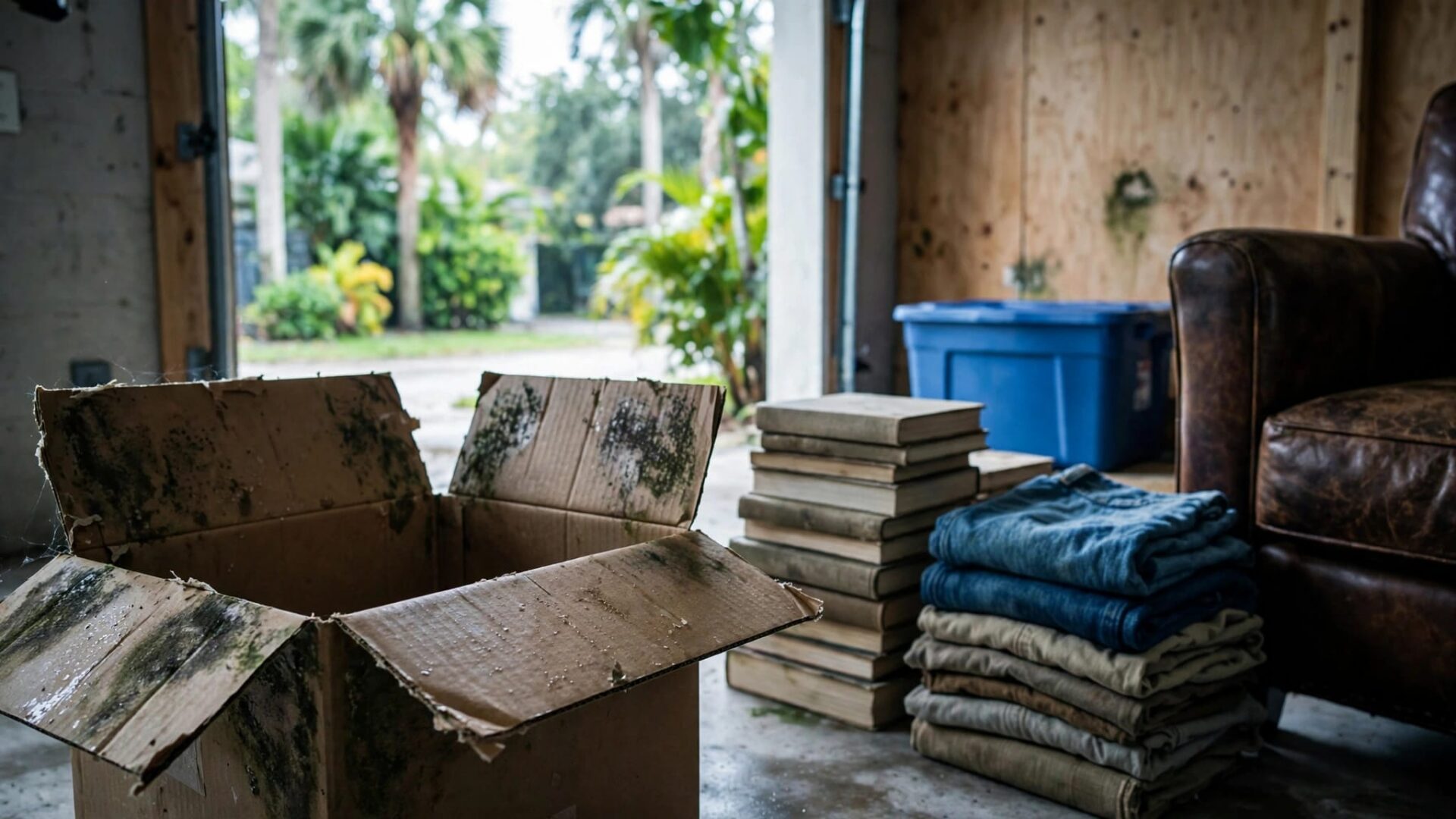
Yes, mold in the garage can damage cardboard, books, clothing, leather furniture, and unfinished wood stored in Florida garages. It can leave lasting odors, stains, and material deterioration.
Treat belongings affected by water damage as time-sensitive because mold can develop within 24-48 hours. Separate salvageable items and find the moisture source.
Key Takeaways
Drying belongings promptly and fixing the moisture source matter more than repeatedly wiping away visible mold.
Why Florida Garage Mold Threatens Stored Items
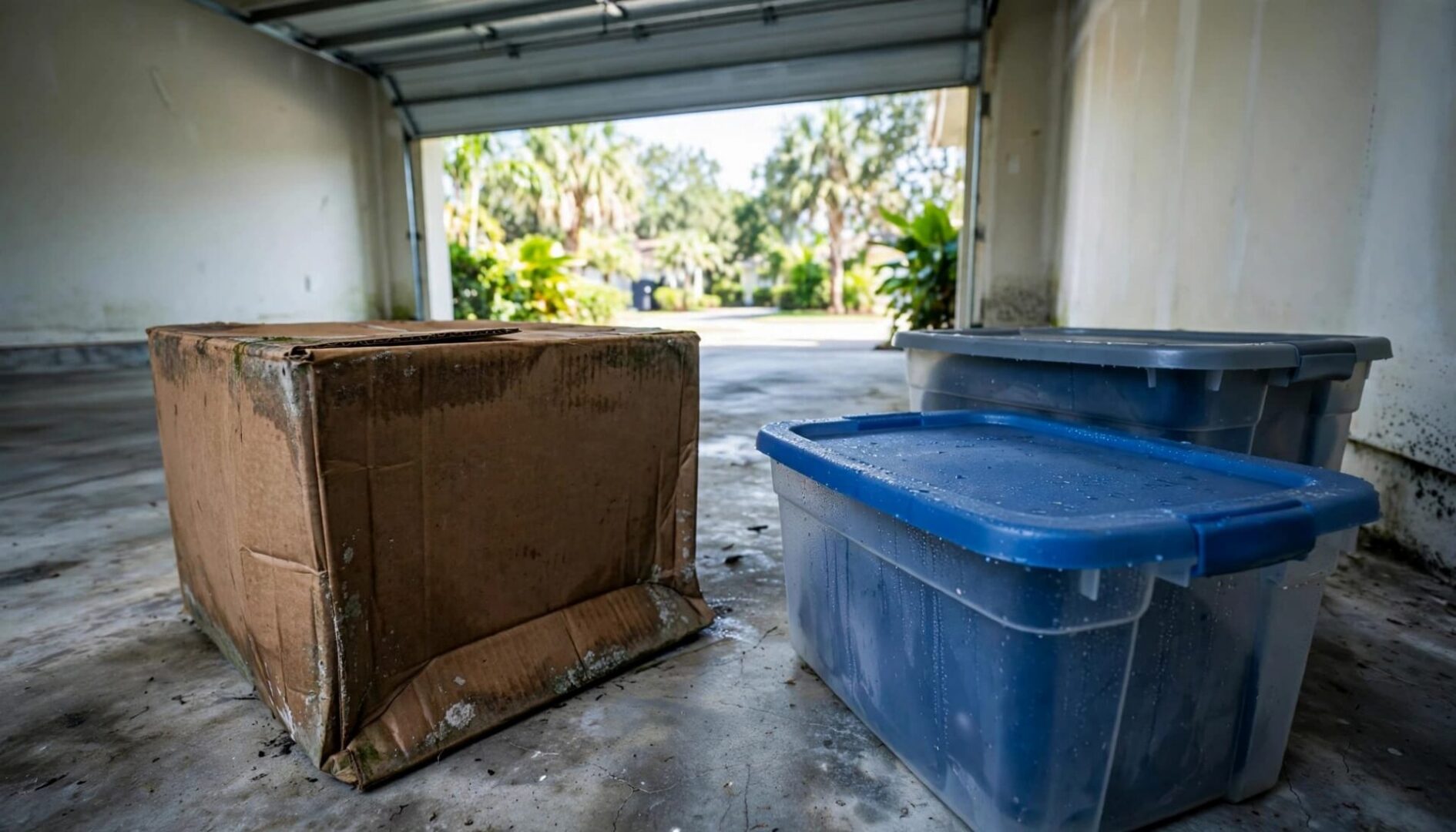
Cardboard boxes absorb moisture and can support mold growth. Upholstery and particleboard can stay damp internally, so surface cleaning may leave contamination behind. Badly affected porous belongings may need disposal. Washable fabrics may be salvageable through laundering and complete drying.
Mildew often appears white or gray, while a dark patch may be called black mold. Color alone can’t identify mold or establish its danger.
On metal garage panels, widespread condensation suggests humid air meeting cool surfaces. Localized dripping near seams suggests a leak. Damp insulation or staining on the garage ceiling can point to a hidden moisture problem. Check the source.
When Is Professional Mold Removal Safer?
The EPA’s mold cleanup guidance treats about 10 square feet, roughly a 3-by-3-foot patch, as a decision point. Contact a mold removal professional for larger areas, after flooding, or when growth returns.
For small areas on hard surfaces, wear an N95 respirator, gloves, and goggles. Dampen the growth instead of dry-scrubbing it, clean with detergent and water, then dry completely. Never mix cleaning chemicals.
Don’t aim fans at visible mold because airflow can spread mold spores.
How Can Stored Belongings Stay Mold-Free?
- To prevent mold, measure humidity with a hygrometer. Aim for 45-50% when practical and keep it below 60%.
- Repair any roof leak, address drainage problems, and check for slab moisture. Check the garage door bottom seal for rain entry. A dehumidifier won’t repair water entry.
- Use sealed plastic bins instead of cardboard, but dry everything before packing. Raise storage off the concrete slab.
- Use ventilation only when outdoor air is drier; during humid weather, run a dehumidifier with the doors closed.
After Southwest Florida storms, inspect box bottoms, lower shelving, and wall bases. These areas can remain damp even when the garage floor looks dry.
Garage Mold FAQ
Should There Be an Inspection?
A musty smell, hidden dampness, or recent storm flooding warrants an inspection. Moisture readings help identify damage beyond visible stains. Routine air testing isn’t always necessary when mold is already visible.
Is Garage Mold a Health Concern?
CDC mold health guidance identifies possible irritation and breathing symptoms. People with asthma, mold allergies, or weakened immunity shouldn’t handle cleanup. Keep children away from disturbed mold.
Protect Belongings Before Damage Spreads
We provide mold remediation in Cape Coral, Fort Myers, and Naples, backed by over 20 years of experience. Our licenses are CRC1333503, MRSA2528, and MRSR2717.
We’re available 24/7 for emergencies and work with insurance companies when applicable. For lasting protection, moisture control must follow cleanup.
Call (239) 633-6494 to schedule an appointment with our team.
