
Black Water vs Gray Water Damage: What It Means for Your Home
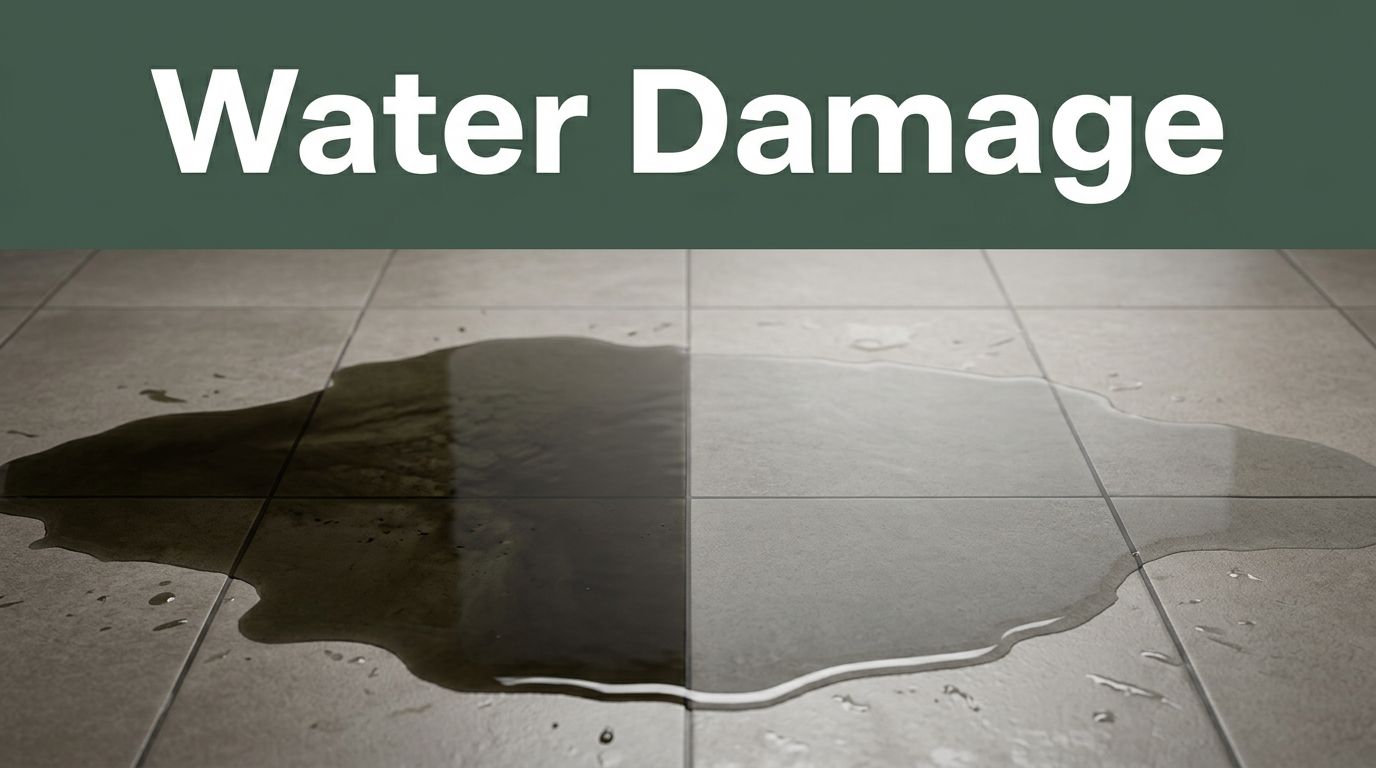
Water on the floor always looks the same at first. Still, the source matters more than most people think. Black water damage can bring serious health risks and often requires removal of materials, not just drying.
Gray water damage can also be a problem, but it usually starts as a “cleaner dirty” situation. The catch is time. If gray water sits, it can turn into a higher-risk mess fast.
Below is a clear, homeowner-friendly way to tell the difference, what to do right away, and when to stop DIY and call a pro.
Key differences between gray water and black water (quick comparison)
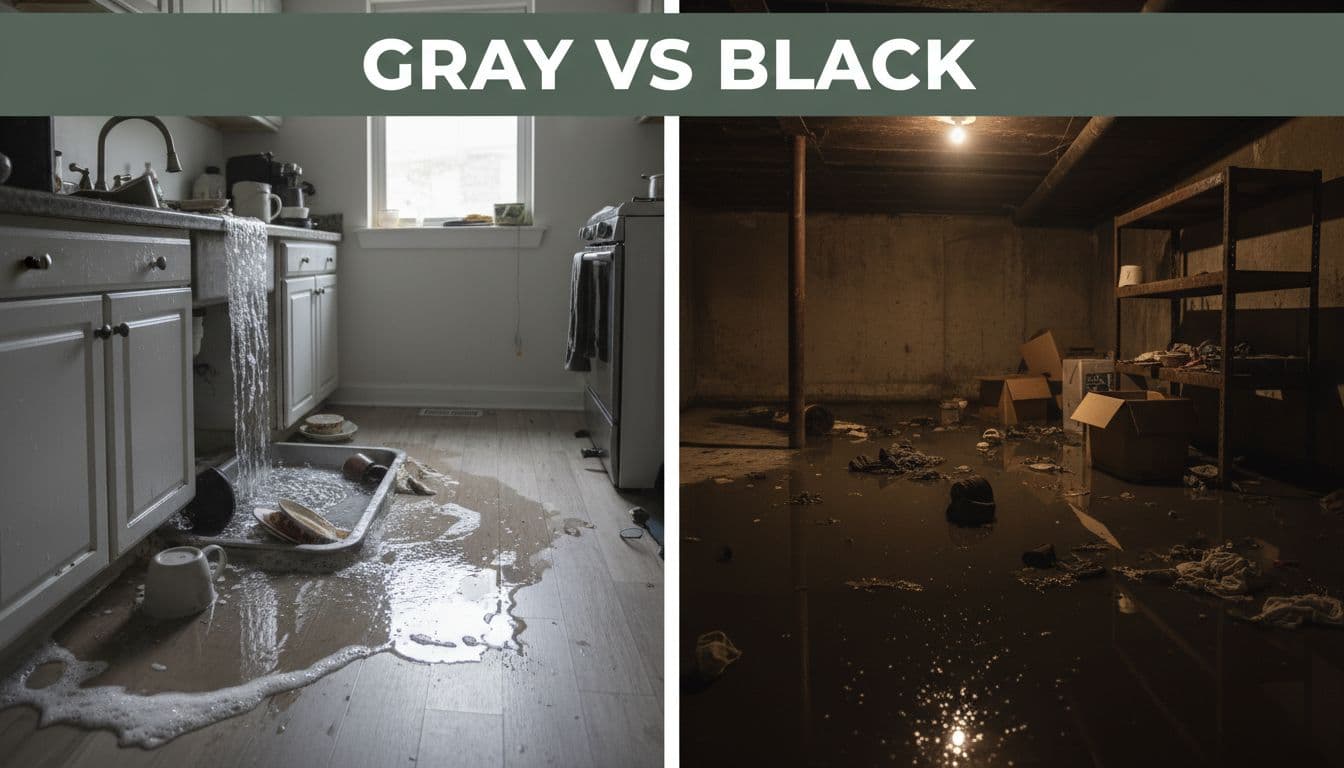
Here’s a fast side-by-side to help you size up the situation.
| Category | Common sources | Main risks | Typical required actions | Salvageability (typical) | Urgency |
|---|---|---|---|---|---|
| Gray water | Shower, tub, bathroom sink, washing machine discharge | Germs, soaps, organics, can worsen over time | Stop source, extract water, dry fast, sanitize, monitor for mold | Often salvageable if handled quickly | High, same day |
| Black water | Sewage backup, toilet overflow with waste, storm surge, floodwater | Pathogens, parasites, chemicals, serious illness risk | Containment, PPE, remove porous materials, deep cleaning, disinfection, controlled drying | Lower, many porous items must go | Immediate, treat as hazardous |
A more detailed explanation of water categories (clean, gray, black) can help if you’re sorting out a tricky source, see types of water damage explained.
What gray water damage usually looks like in a home
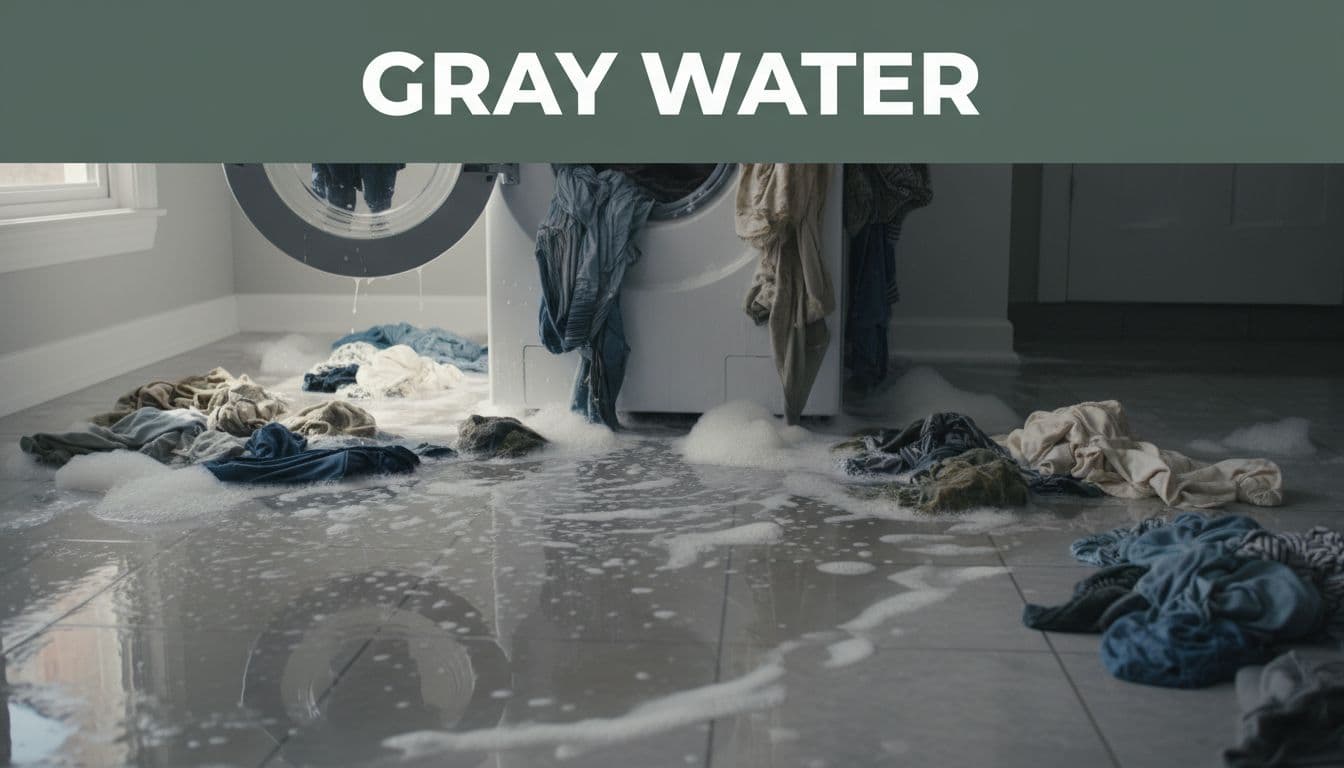
Gray water is like dishwater in a sink. It’s not sewage, but you wouldn’t drink it. In homes, it often comes from a washing machine overflow, a shower pan leak, or a bathroom sink drain issue.
At the start, the biggest risks are slips, hidden moisture, and fast mold growth. After that, bacteria becomes the concern, especially if the water touched dirty laundry, a clogged drain, or a backup line.
Gray water damage can become a bigger issue when:
- It sits more than a day, especially in warmth and humidity.
- It soaks into carpet pad, drywall, baseboards, or insulation.
- It spreads under cabinets or behind walls where you can’t see it.
- It mixes with toilet area runoff or exterior floodwater.
If you catch it early, quick extraction and fast drying often prevent major tear-out. If it smells sour, looks cloudy, or has visible grime, treat it more cautiously.
Understanding black water damage (Category 3 risk)
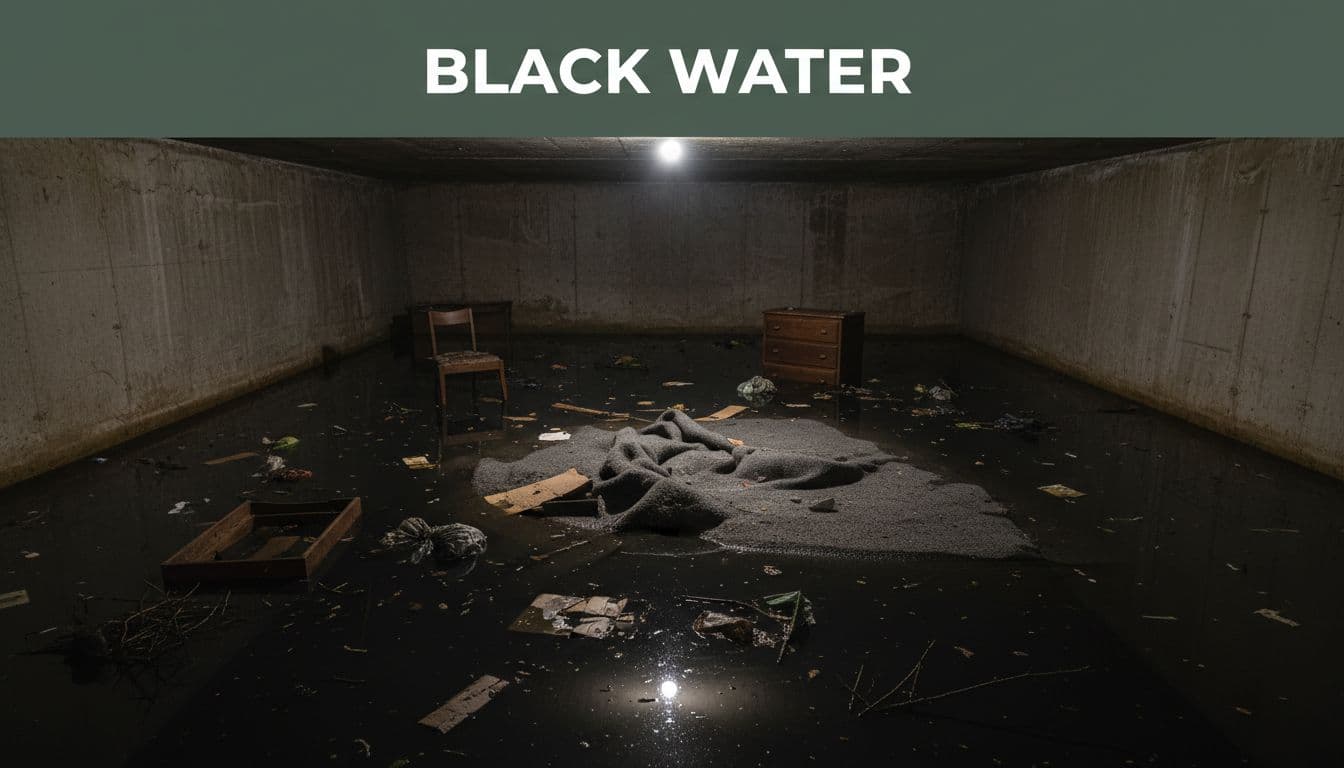
Black water is the “open sewer” version of a water loss. It includes sewage, waste, and contaminated floodwater. When people talk about black water damage, they’re talking about a scenario where the water itself is unsafe to touch.
Common causes include sewer line backups, toilet overflows that contain waste, and storm-related flooding that carries runoff. In coastal Florida, storm surge and heavy rain can also push contamination where it shouldn’t be.
Safety disclaimer: If you suspect sewage or floodwater contamination, limit exposure. Keep kids and pets out, avoid splashing, and don’t run fans that can blow contaminants around. When in doubt, treat it as black water until a professional confirms otherwise.
Guidance on safely cleaning and re-occupying flood-damaged homes is discussed in this EPA flood-related cleaning report (PDF), which reflects why controlled cleanup and proper removal matter.
Health risks, vulnerable occupants, and what you should not do
With gray water, the main health issue is exposure over time. With black water, the issue is exposure at all. That’s why the “DIY line” changes so sharply.
Be extra careful if anyone in the home is vulnerable:
- Infants and young kids
- Older adults
- Pregnant people
- Anyone immunocompromised (including some cancer treatments)
- People with asthma or severe allergies
If that’s your household, consider relocating until cleanup and drying are complete, especially after black water damage.
A few “don’ts” that prevent bigger problems:
Don’t use a regular shop vac for sewage water. Don’t assume bleach alone makes everything safe. Also, don’t keep running HVAC if return vents may pull in contaminated air.
Gotcha: Gray water can “upgrade” to black water if it sits, warms up, or contacts sewage residue. Time and materials change the risk.
For practical building-focused response steps, this quick reference on water damage response in buildings is a helpful baseline.
What cleanup typically requires (and what’s usually unsalvageable)
Think of your home like a sponge in some places and a dinner plate in others. Tile and sealed concrete are closer to a plate. Drywall, carpet pad, and insulation act like a sponge.
With gray water damage, pros often focus on rapid extraction, targeted removal (only where needed), and aggressive drying. With black water damage, removal is often the main event because porous items can hold contamination even after surface cleaning.
Items that are commonly unsalvageable after black water damage include carpet and pad, upholstered furniture, drywall (especially low sections), insulation, and particleboard cabinets. Hard surfaces may be salvageable, but only with correct cleaning and disinfection steps.
If you’re managing a property, document everything early. Take photos of the source, the spread, and the wet materials before removal. That helps with insurance conversations later, even when coverage depends on the cause (supply line leak vs flood vs sewer backup rider).
Emergency step-by-step checklist (first 60 minutes)
Use this as a calm, simple playbook.
- Keep people safe first. Move kids, pets, and vulnerable occupants away from the area.
- Stop the source if you can do it safely (shutoff valve, appliance supply, main water).
- Cut power to wet areas at the breaker if water is near outlets or appliances.
- Avoid contact if you suspect sewage or floodwater. Close doors, block off the area.
- Ventilate only when appropriate. For suspected black water, avoid blowing air through the space.
- Call your insurance and start a photo log right away.
- Get professional help for sewage, widespread losses, or water inside walls and floors.
When to call a professional immediately
Call right away if any of the below is true:
- The water may be sewage, toilet overflow with waste, or storm floodwater (treat as black water damage).
- Water reached HVAC returns, ducts, or electrical outlets.
- You see swelling drywall, buckled floors, or water under cabinets.
- The affected area is larger than a small room.
- Anyone in the home is high-risk health-wise.
- The smell is strong, sour, or sewage-like, even if the water looks “clean.”
In Cape Coral and nearby areas, a 24/7 restoration team can also coordinate drying, containment, and documentation for insurance when eligible.
Conclusion
Gray water can be urgent, but black water is hazardous. The faster you identify the category, the better your odds of protecting your home and your health. When sewage or flood contamination is possible, treat it seriously and prioritize safe cleanup over saving materials. The goal isn’t just drying, it’s getting the home truly safe to live in again.
