
Stucco Water Intrusion Signs Florida Homeowners Shouldn’t Ignore
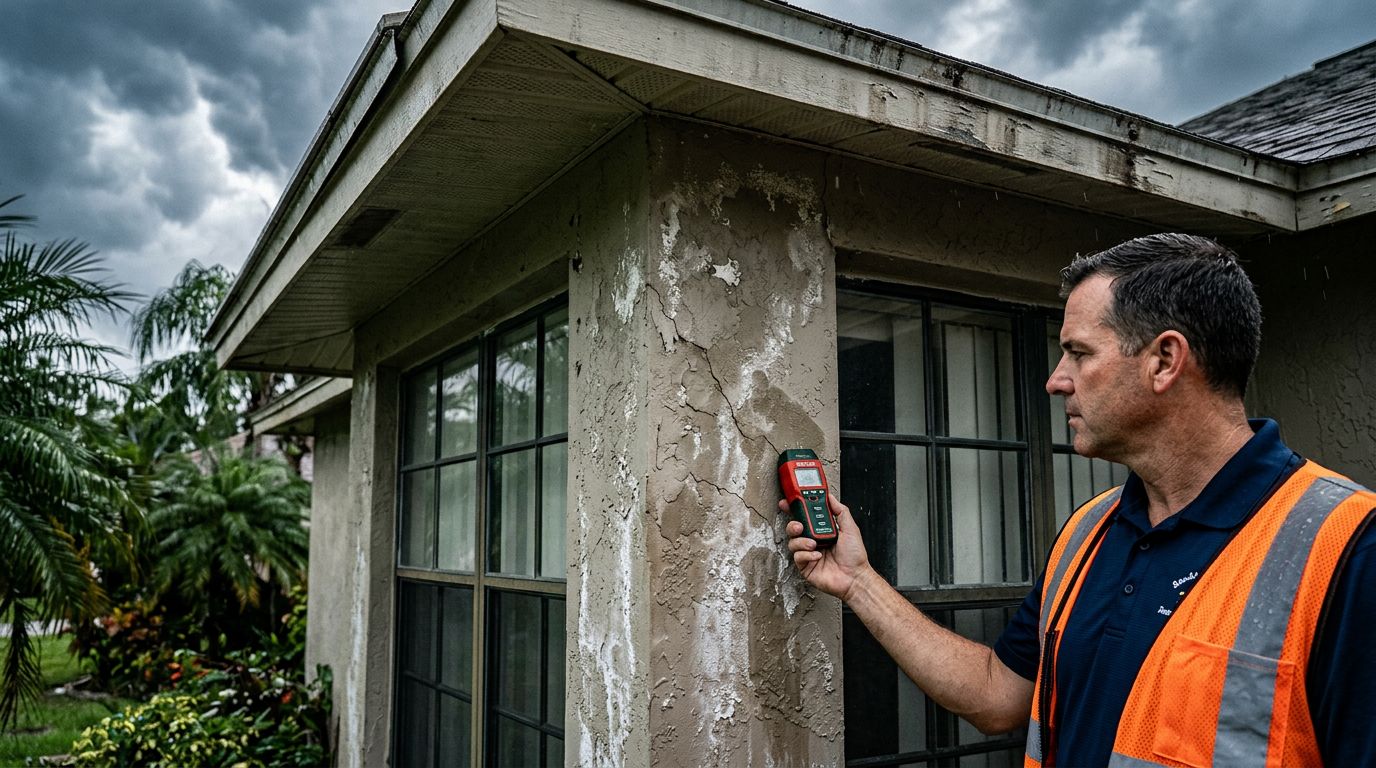
When stucco water intrusion begins, the first clue may appear far from the actual leak. A faint ceiling stain, swollen baseboard, or musty closet can point to moisture moving behind the exterior finish.
Florida homes face extra exposure from heavy rain, hurricanes, high humidity, strong sun, and coastal air. Because water can travel sideways through wall assemblies, a clean-looking stucco surface doesn’t prove the wall is dry. Watch for patterns, document changes, and arrange professional moisture testing when signs persist.
Key Takeaways
- Cracks, staining, efflorescence, bubbling paint, and musty odors can indicate hidden moisture, but no single sign proves water intrusion.
- Florida rain can enter around windows, doors, roof edges, vents, utility penetrations, and poorly sealed repairs.
- Moisture meters, thermal imaging, and selective invasive inspection can reveal damp insulation, framing, or drywall behind stucco.
- Avoid cutting walls or disturbing suspected mold near electrical components without professional guidance.
- A detailed inspection report should include moisture readings, photographs, suspected entry points, and repair recommendations.
Why Florida Homes Are Vulnerable to Stucco Moisture Problems
Stucco is durable, but it depends on proper drainage, flashing, sealants, and installation details. If water gets behind the finish, it needs a path to drain and dry. Gaps around windows, failed caulk, damaged trim, or blocked drainage details can hold moisture inside the wall.
Florida weather increases the pressure on these systems. Wind-driven rain can enter small openings around windows and doors during tropical storms. Intense summer downpours can overwhelm roof flashing, gutters, and exterior penetrations. In coastal areas, salt air can also accelerate corrosion around metal components and fasteners.
High humidity slows evaporation after a leak. A wall may feel dry on the room side while insulation and wood framing remain damp. Air conditioning can reduce indoor humidity, but it won’t dry a sealed wall cavity that lacks airflow.
Stucco cracks also have several possible causes. Normal movement, settlement, impact, thermal expansion, and poor workmanship can all create cracks. A crack becomes more concerning when it spreads, widens, appears near an opening, or occurs with interior staining.
For additional Florida-specific examples, this stucco damage inspection overview describes visual clues that inspectors commonly investigate. These clues help decide where to look, but they don’t replace moisture testing.
Common stucco water intrusion signs to check first
Exterior changes often provide the earliest warning. Walk around the home after rain and inspect the stucco from several angles. Look for discoloration beneath windows, dark vertical streaks, patches that stay damp longer than surrounding areas, and areas where the finish looks swollen or uneven.
Cracks deserve attention when their pattern changes. Hairline cracks may come from ordinary movement, but wider cracks, recurring cracks, or cracks that extend from window and door corners can allow rain to reach deeper layers. Record their location and photograph them with a ruler for scale. Don’t fill them before identifying why they formed.
White, chalky deposits are called efflorescence. They occur when water moves through masonry or cement-based materials and carries dissolved minerals to the surface. Efflorescence doesn’t prove that active leaking is occurring, but repeated deposits after rain suggest moisture is moving through the wall.
Paint and interior finishes can reveal a problem behind the stucco. Watch for bubbling paint, peeling wallpaper, discolored drywall, soft baseboards, swollen trim, or stains that return after repainting. A musty smell in one room, closet, or wall area also deserves attention, especially when the odor becomes stronger after storms.
Other possible warning signs include:
- Interior cracks or discoloration near windows and doors
- Damp carpet edges or flooring along exterior walls
- Caulk that has separated, shrunk, or pulled away
- Rust-colored marks around fasteners or metal openings
- Doors or windows that become difficult to operate
- Visible mold growth on drywall, trim, or stored items
These conditions can have other explanations. Condensation, plumbing leaks, irrigation spray, dirty runoff, and old paint can create similar symptoms. A useful inspection looks for several clues together rather than treating one mark as proof.
Where water commonly enters a stucco wall
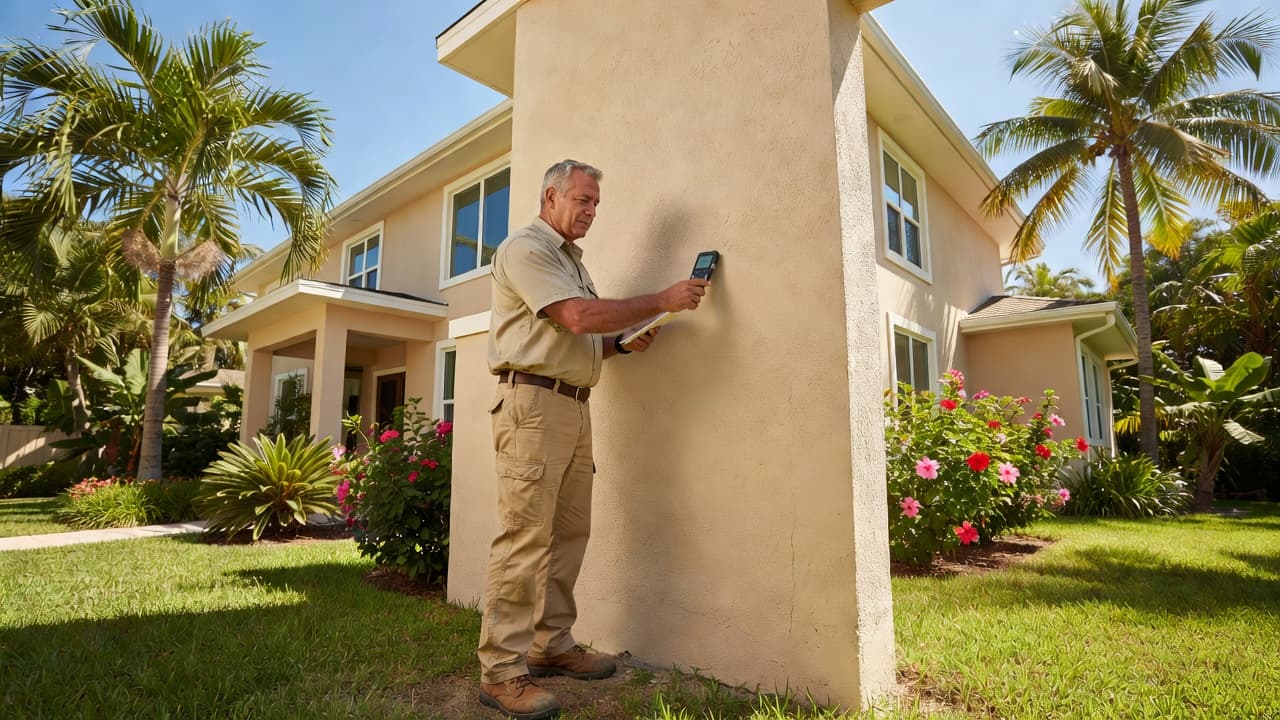
Windows and doors are frequent inspection points because they combine stucco, flashing, sealants, trim, and wall openings. Failed caulk can let rain enter at the perimeter. Improperly installed flashing can direct water into the wall instead of away from it.
Roof-to-wall intersections also deserve close attention. Missing or damaged flashing, roof leaks, clogged gutters, and overflow at soffits can wet the upper wall. Water may then follow framing downward before appearing inside the home.
Inspectors should also examine:
- Hose bibs, outdoor faucets, and utility penetrations
- Electrical boxes, light fixtures, and vents
- Balcony edges, railings, and attachment points
- Stucco transitions near slab lines and roofs
- Areas below roof valleys and downspouts
- Sprinkler heads that spray directly against the wall
Landscaping can hide damage and keep the lower wall wet. Shrubs pressed against stucco reduce drying, while soil or mulch placed too high can expose the wall to repeated splashback. Downspouts should direct water away from the structure instead of dumping it beside the foundation.
A repaired area may also become a weak point if the patch doesn’t match the surrounding system. A surface coating can improve appearance, but applying it over damp materials may trap water. The source must be addressed before sealing or repainting.
One Florida stucco repair guide lists recurring cracks, indoor stains, musty odors, efflorescence, and bubbling surfaces among the signs that warrant further evaluation. Its Florida stucco water intrusion reference can help homeowners compare visible symptoms before scheduling an inspection.
How professionals confirm hidden moisture behind stucco
A visual inspection is a starting point, not a complete diagnosis. Hidden moisture may require a moisture meter, thermal imaging, borescope, or selective invasive inspection. Each tool answers a different question.
Moisture meters help identify abnormal readings in drywall, wood, and other materials. Reliable testing compares the suspect area with nearby materials that appear dry. A single reading has limited meaning without location, material type, and comparison data.
Thermal imaging can show temperature patterns that suggest wet areas or missing insulation. It doesn’t measure moisture by itself. A cool patch may result from airflow, shade, plumbing, or insulation differences, so the pattern needs confirmation with moisture measurements.
If readings remain elevated or the wall assembly cannot be assessed from the surface, an inspector may recommend a small opening. Removing trim or a limited section of drywall can reveal wet insulation, damp studs, deteriorated sheathing, or mold growth.
The inspection should map the full moisture path. Water can travel farther inside a wall than the visible stain suggests. The affected area may extend horizontally beneath drywall or downward through insulation and framing.
If damaged drywall must be removed, the cut line should follow moisture readings, contamination, insulation condition, material damage, and applicable building requirements. There is no universal flood-cut height for every wall. The purpose is to expose enough of the cavity to inspect and dry it without removing sound material unnecessarily.
A useful report should include:
- Photos of exterior and interior conditions
- Moisture readings by material and location
- Suspected entry points and contributing conditions
- Areas tested but not opened
- Recommendations for monitoring, repair, or further inspection
A wall can look dry at the surface while insulation and framing remain damp. Testing should continue until the affected materials reach a stable, acceptable condition.
What to do when you suspect stucco water intrusion
Start by documenting the condition. Take wide photos of each affected room and close photos of cracks, stains, bubbling paint, damaged trim, and exterior openings. Note when you first noticed the problem, whether it followed rain, and whether the odor or staining changes over time.
Don’t paint over stains or apply exterior sealant before finding the source. A cosmetic repair can hide evidence and trap moisture inside the wall. If a leak is active, stop it only when you can do so safely. A roofer, window contractor, stucco specialist, or restoration professional may need to address the entry point.
Protect people before property. Keep children and pets away from damaged areas. If water has reached outlets, switches, wiring, or an electrical panel, don’t touch the components or plug in equipment. Contact a licensed electrician when electrical damage is possible.
Suspected mold requires care as well. Don’t dry-brush, scrape, or cut into moldy drywall without containment and protective equipment. Small surface areas may require appropriate respiratory, eye, and skin protection, but extensive growth, recurring odors, contaminated water, or health concerns call for professional mold assessment and remediation.
Soft walls, sagging ceilings, exposed framing, or doors that suddenly bind can indicate more than a finish problem. Stay clear of unstable areas and contact a qualified structural professional.
What homeowners and buyers should ask for
If you’re buying a Florida home with stucco concerns, ask for records of prior leaks, repairs, warranties, permits, and insurance claims. A standard visual inspection may recommend further evaluation when the exterior or interior shows signs of moisture.
Property managers should record the location and date of every repair. Recurring staining around the same window or wall deserves a new investigation, even if an earlier patch looked successful.
When comparing inspection or restoration proposals, request a written scope. It should state what the company will test, whether it will open any wall areas, how readings will be documented, and which repairs are excluded. Avoid contractors who promise a definitive answer without taking moisture readings or who recommend surface drying alone.
Repair costs depend on the size of the affected area, access, insulation, drywall, framing, mold, finishes, and the source of the leak. Insurance treatment also depends on the cause, policy language, deductible, exclusions, and endorsements. Notify your insurer promptly if you may file a claim, and ask what documentation it needs before materials are discarded or removed.
Conclusion
Stucco water intrusion can begin with a small crack or failed seal and remain hidden behind the wall. Florida’s rain, humidity, storms, and coastal exposure make recurring moisture harder to dismiss.
A stain, odor, or crack doesn’t prove the cause by itself. Professional moisture testing and, when needed, invasive inspection can show how far water traveled and whether drywall, insulation, framing, or sheathing needs attention. Early documentation and controlled repairs protect both the home and the quality of the final restoration.
