What Happens During Structural Drying After Water Damage In Florida
When water gets into your home or business, it doesn’t stay where you can see it. It wicks into drywall, sinks under flooring, and hides in framing and insulation. That’s why structural drying matters, even after the puddles are gone.
In Florida, this process has extra pressure. Warm air holds more moisture, and our humidity can slow drying if it’s not managed. The goal isn’t to “dry it out” with a few fans. The goal is to dry the structure in a controlled way, with measurements guiding each decision, so wet materials don’t turn into bigger repairs later.
Below is what you can expect from a professional drying job, how long it often takes, and what you should (and shouldn’t) do while equipment runs.
Why structural drying in Florida is a controlled process (not just adding fans)
Think of wet building materials like a soaked sponge inside a sealed box. If you only blow air around, the sponge may keep releasing moisture, and the box air may stay damp. Real drying needs two things at the same time: evaporation (moving moisture out of materials) and dehumidification (pulling that moisture out of the air).
Florida’s climate raises the stakes. Outdoor air often carries high humidity, so “airing it out” with open windows can backfire. Instead, restoration teams try to create a stable indoor drying environment where air movers, dehumidifiers, and temperature work together.
A reputable company will also follow industry guidance for water damage work, often referencing the IICRC S500 standard. You don’t need to read the standard to benefit from it, but it helps to know that drying is meant to be documented, measured, and adjusted, not guessed. If you want a plain-language explanation of the term itself, see what structural drying means in restoration work.
One more Florida wrinkle: many homes have materials that trap moisture in layers, like tile over cement board, laminate over underlayment, or drywall with insulated cavities behind it. Water can spread sideways and down before it shows a stain. As a result, a good drying plan focuses on what’s wet, not just what looks wet.
If the crew isn’t taking moisture readings and checking progress, you’re not seeing a real drying process. You’re seeing noisy air.
What a professional structural drying job looks like from day one to “dry standard”
Every loss is different, but most jobs follow a similar path. The big idea is simple: measure, remove water, dry with the right equipment, then verify.

Photo by Helena Jankovičová Kováčová
Here’s what typically happens:
- Inspection and moisture mapping: Technicians locate affected areas using moisture meters, and sometimes thermal imaging. They’ll check walls, baseboards, cabinets, and subfloors, not just the obvious spot.
- Water extraction (if needed): Pumps and extraction tools remove bulk water fast. This step often shortens the whole drying timeline.
- Protective steps and containment: In some cases, crews protect floors, isolate work areas, and remove small sections of wet materials that can’t be dried safely (like swollen baseboards or saturated insulation).
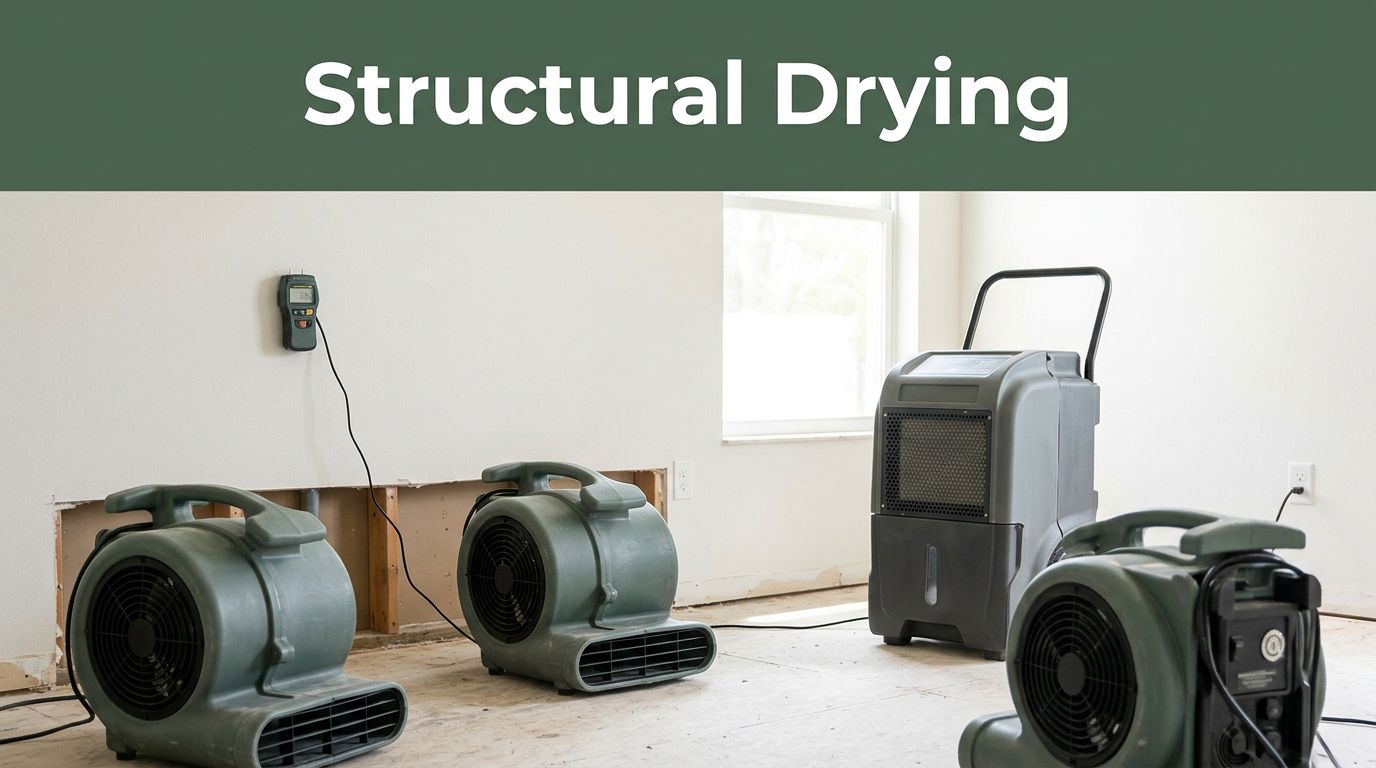
- Equipment setup: Air movers push air across wet surfaces to speed evaporation. Dehumidifiers pull moisture from the air so evaporation can keep going. Depending on the situation, crews may add HEPA air filtration, drying mats for hardwood, or wall cavity drying systems.
- Daily monitoring and adjustments: This is where “controlled” becomes real. Techs track temperature, humidity, and moisture content, then adjust equipment placement or capacity as the structure dries.
- Final verification: When readings show materials are back to a dry target (often compared to unaffected areas), equipment is removed and repairs can begin.
For a deeper walkthrough of methods and equipment, this complete structural drying guide provides helpful background without requiring technical know-how.
How long structural drying takes in Florida, plus what to do (and what to avoid) while it’s drying
Many Florida drying jobs take about 3 to 5 days, but that’s a rough range, not a promise. The timeline changes based on how much water was involved, how long it sat, and what materials got wet. Dense materials (plaster, thick wood, concrete) can take longer to release moisture. Enclosed spaces (behind cabinets, under tile, inside wall cavities) also slow things down.
This is why two homes can have the same “square footage” and wildly different drying schedules. If you’re curious about the factors that shift the clock, this overview on how long it can take for a home to dry lays them out clearly.
While equipment runs, you can help the process, or accidentally fight it.
What you can do while drying
- Keep the HVAC running as advised: If the crew says run your AC, do it. Cooler air plus dehumidification often helps control indoor humidity.
- Keep doors open inside the drying zone: Better air circulation helps, unless the team has set up containment.
- Report changes fast: New stains, odors, or warping can signal hidden moisture migration.
- Secure pets and kids: Air movers and cords create trip hazards.
What to avoid during structural drying
- Don’t open windows to “help it dry”: In Florida, that often brings in wetter air.
- Don’t unplug equipment: Even a few hours can slow progress and raise mold risk.
- Don’t use household fans as a substitute: They move air, but they don’t control humidity.
- Don’t ignore electrical safety: If outlets, panels, or appliances were exposed to water, wait for professional guidance before using them.
The documentation you’ll see (and why it helps with insurance)
Professional drying usually comes with paperwork. It might feel excessive until you need it. Common items include moisture readings (by room and material), psychrometric readings (temperature and humidity), daily drying logs, equipment lists, and photos of affected areas and setups.
This documentation does two important things. First, it shows the drying plan was based on measurements, not guesswork. Second, it creates a timeline of conditions and progress that can support an insurance claim. Property managers and condo owners often rely on these logs when multiple units are involved, or when a leak source isn’t immediately clear.
If you’re working with a local restoration company in Cape Coral or elsewhere in Florida, ask where you’ll receive these records and how often they update them. Clear documentation usually means clearer communication.
Conclusion
Structural drying after water damage in Florida is part science, part discipline. Crews measure moisture, control humidity, and keep adjusting until materials reach a safe dry level. That’s why equipment runs day and night, and why open windows can make things worse. Most importantly, delayed drying raises mold risk, and each property behaves differently based on materials and exposure time. If you’re facing water damage, start drying quickly, keep the setup running, and ask for the daily readings and logs so you can track real progress.
