
Florida Exterior Door Leak: Stop Rain Before It Spreads
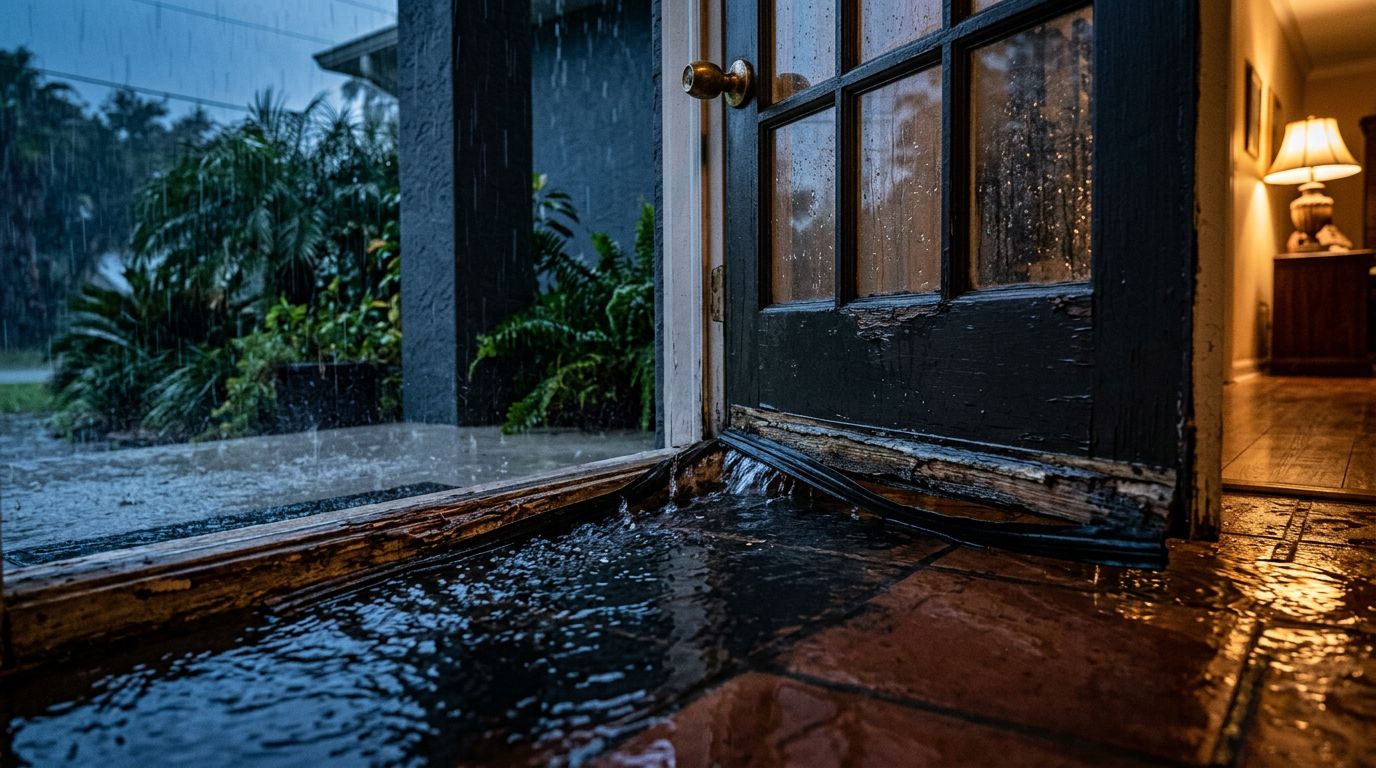
Heavy Florida rain can push under a door in minutes, but the puddle inside may be only the visible part of the problem. If you have a Florida exterior door leak, stop the water, protect your family from electrical hazards, and document the damage before cleaning or opening anything.
A worn sweep may need a simple replacement. Water behind the frame can point to failed flashing, a damaged threshold, poor drainage, or wet framing. Start with the immediate steps below.
Key Takeaways
- Move furniture and belongings away from the wet area, but avoid electrical hazards.
- Find whether water enters beneath the door, through the threshold, around the frame, or from nearby walls.
- Replace worn weatherstripping and correct minor threshold problems, but don’t seal drainage openings.
- Repeated leaks may involve flashing, pan protection, framing, grading, or mold.
- Photograph the damage, save receipts, and ask your insurer what it needs before discarding materials.
Stop the Water and Protect the House
If rain is still entering, place towels or absorbent pads on the inside of the threshold. Move rugs, boxes, furniture, and electronics away from the wet area. Use a bucket for active dripping, but don’t create a tripping hazard near the doorway.
Safety comes first when water reaches an outlet, switch, extension cord, doorbell wiring, or electrical panel. Don’t touch wet electrical components. If you can safely shut off power to the affected area from a dry location, do so. Otherwise, call a qualified electrician or emergency service.
Avoid using a household vacuum on standing water if electricity may be involved. Rainwater also becomes more hazardous after it passes through dirty pavement, landscaping, sewage-contaminated areas, or floodwater. Keep children and pets away until the water source and contamination risk are clear.
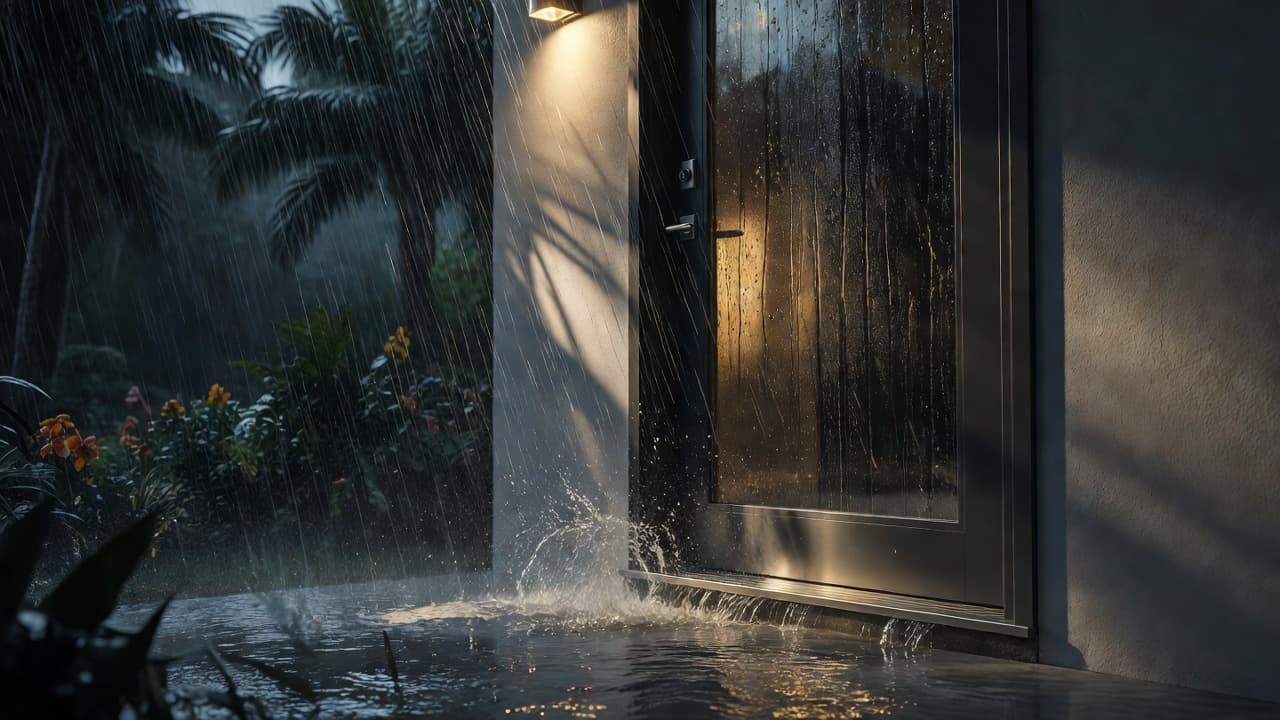
If the storm is active, don’t climb onto a wet roof or use a ladder in high winds to inspect the exterior. A temporary towel barrier can limit interior damage, but don’t cover or fill door drainage openings with tape, foam, or caulk.
Take photos before moving damaged items. Capture the entire doorway, close-ups of the threshold and trim, water marks, flooring, baseboards, and any visible exterior defect. A short video can show active water movement during the storm.
How to Trace a Florida Exterior Door Leak
Water may enter at one location and travel to another. Begin with the lowest interior point, then inspect the full door assembly. Look for water at the bottom gap, the threshold seam, both jambs, the upper corners, and the joint where the frame meets the wall.
Close the door and inspect the seal. A simple flashlight test can help. With the room darker, have someone slowly move a flashlight around the closed door from outside. Light visible inside indicates a gap in the weatherstripping, sweep, alignment, or frame.
Check the exterior surface as well. Look for cracked sealant, separated trim, damaged stucco, missing mortar, gaps around fasteners, and water collecting beside the sill. Downspouts, sprinklers, roof runoff, and landscaping can send water directly toward the doorway.
Sliding doors need a separate inspection. Remove leaves and dirt from the track, then check the sill’s drainage openings. If water cannot escape through the weep holes, it may rise into the track and cross the interior seal. Never caulk over working weep holes. They are part of the drainage design.
Florida’s building requirements also matter when a door is replaced or substantially repaired. The 2023 Florida Building Code exterior door provision addresses water-infiltration testing for certain exterior door assemblies. A door’s approval, label, installation method, and exposure all affect how it should be repaired.
Fix Simple Door and Threshold Problems
Some leaks come from parts that wear out in Florida’s heat, humidity, and strong sun. Weatherstripping can flatten, crack, or pull away from the jamb. A door sweep may stop touching the threshold, leaving a continuous gap under the slab.
Replace damaged weatherstripping with a product that matches the door system. It should seal the top and both sides without forcing the door shut. Replace a worn sweep or shoe when the bottom edge no longer makes even contact with the threshold.
A threshold can also settle or lose compression. On many doors, you can loosen the adjustment screws slightly, raise the threshold until it meets the door seal, and retighten the screws. Make small adjustments. Excessive pressure can make the door difficult to operate or damage the seal.
If the threshold is loose, cracked, or poorly seated, removing it may be necessary. A proper repair includes cleaning away debris and failed sealant, inspecting the surface below, applying a continuous exterior-grade sealant beneath the threshold, and sealing the side joints. Caulking only the visible top edge often leaves the original leak path untouched.
Use sealant on clean, dry surfaces and follow the product’s curing time. Don’t hose-test the doorway during a storm or before the sealant has cured. Water pressure can push uncured material out of place.
The ground outside must also direct water away from the sill. Soil, pavers, or concrete that slope toward the door can overwhelm even a good seal. A contractor may need to correct the transition, improve drainage, extend a downspout, or install a suitable drain.
Know When Caulk Is Not Enough
A recurring Florida exterior door leak deserves a wider inspection when new weatherstripping and threshold adjustments don’t solve it. Water may be entering behind the frame through failed flashing, missing pan protection, deteriorated sheathing, or an opening where the door meets the wall.
The frame-to-wall joint is especially important. Caulk can close a surface gap, but it can’t replace concealed flashing or repair rotted framing. If water is coming from behind the frame, sealing the outside edge alone may trap moisture inside the wall.
Warning signs include swollen jambs, soft trim, peeling paint, rusty fasteners, staining above the doorway, musty odors, cracked drywall, loose flooring, and repeated dampness after every storm. Water can move sideways beneath flooring and downward through insulation, so the visible stain may not show the full moisture path.
Don’t paint over a stain or install new trim until the cavity is dry. A professional may use moisture meters or thermal imaging, remove trim, or make a controlled drywall opening to inspect insulation, studs, and the bottom plate. The opening must be dried and cleaned before new drywall is installed.
Mold concerns require extra care. If materials stayed damp, the affected area smells musty, or stormwater entered wall cavities, contact a qualified water-damage or mold professional. Keep the area contained and avoid disturbing visibly moldy materials.
Document the Damage for Insurance
Notify your insurance company promptly if you may file a claim. Coverage depends on the policy language, deductible, exclusions, endorsements, and the cause of loss. A sudden wind-driven rain event may receive different treatment than long-term seepage, poor maintenance, storm surge, or rising floodwater.
Don’t assume a policy will pay for every repair. Ask the carrier what it needs before you discard damaged materials, open walls, or authorize extensive reconstruction. Request instructions about emergency mitigation, photographs, estimates, moisture readings, and temporary repairs.
Create a simple claim folder containing:
- Wide and close-up photos taken before cleanup
- A short video of active water entry, when safe
- The date and time you noticed the leak
- Recent storm details and steps taken to limit damage
- Contractor reports, moisture readings, drying logs, estimates, invoices, and receipts
- The claim number and written communication with the insurer
Ask for a line-item estimate rather than a single total. It should separate extraction, drying, demolition, cleaning, sanitizing, disposal, and reconstruction. It should also state whether hidden moisture checks are included and which repairs are excluded.
A small sweep replacement or threshold adjustment may cost far less than repairs involving flooring, drywall, framing, or mold. Once water reaches concealed materials, the estimate should describe what will be repaired, what must be replaced, and why.
Prevent the Next Rainwater Entry
Inspect the doorway at least once a year and after major storms. During Florida’s rainy season, check sliding-door tracks and drainage openings more often. Remove leaves, sand, and dirt without blocking the weep holes.
Keep gutters and roof valleys clear. Downspouts should discharge away from the doorway and foundation. Adjust sprinkler heads so they don’t spray the door, frame, or lower wall. Trim plants that press against stucco or hold moisture beside the threshold.
Watch how water moves during a heavy rain. If the slab, pavers, soil, or walkway directs runoff toward the door, replacing weatherstripping won’t solve the underlying problem. A drainage contractor or qualified builder can evaluate grading, swales, channel drains, and threshold transitions.
For replacement doors, ask for documentation showing the product’s Florida approval, impact rating when required, installation instructions, and compatible sill drainage. The Florida Building Commission’s window and door mitigation guidance explains why approved testing and labeling matter for exterior openings.
Conclusion
A Florida exterior door leak can be a worn sweep, a blocked drainage path, or evidence of hidden damage behind the frame. Stop the water safely, trace its entry point, and correct simple seal problems before applying any finish.
Don’t rely on caulk as the only repair when moisture comes from behind the door assembly. Document the condition, protect the home from further damage, and bring in a qualified professional when water reaches walls, flooring, framing, electrical components, or potentially moldy materials.
