
How to Protect Water Damaged Documents Before They’re Lost
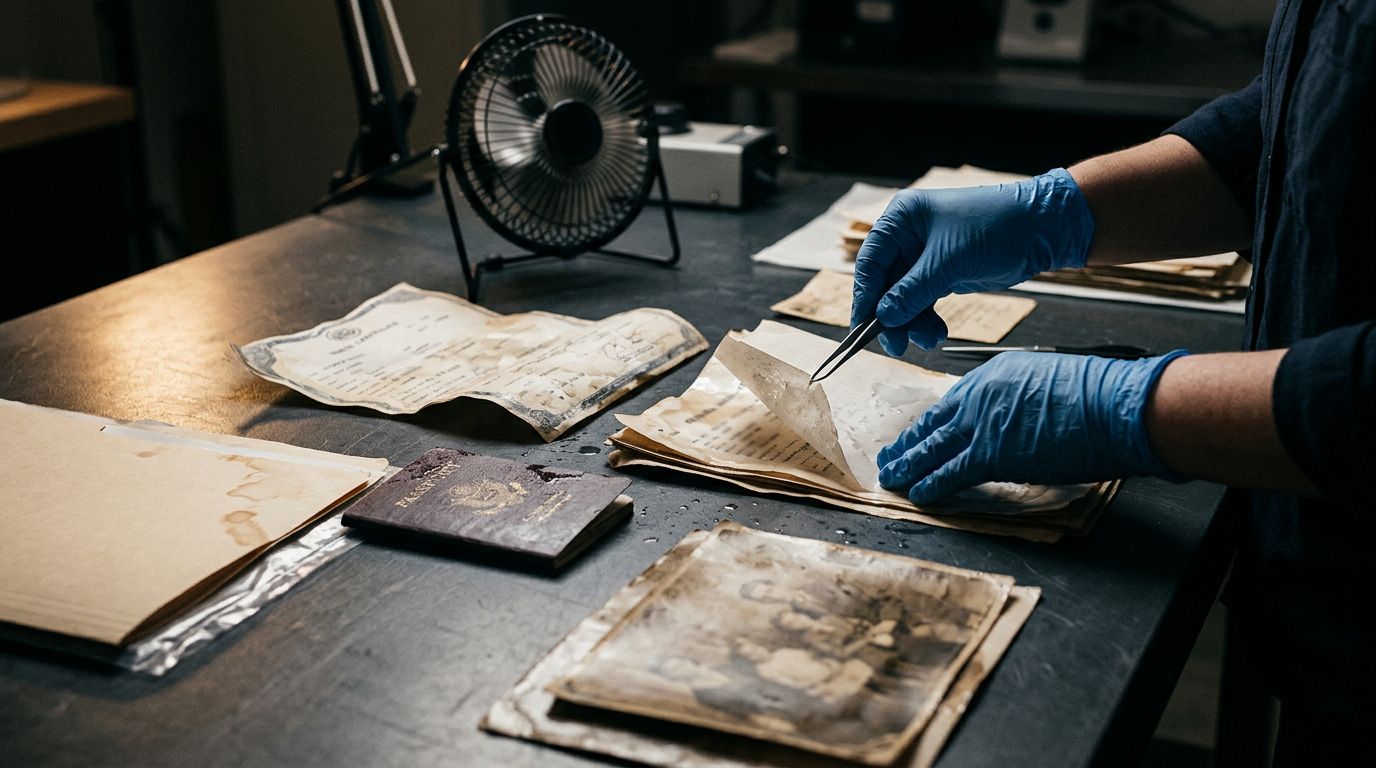
A burst pipe or flood can ruin important papers within hours, especially when ink runs, pages stick together, or mold begins growing. Knowing how to protect water damaged documents gives you a better chance of preserving records such as passports, deeds, birth certificates, tax files, contracts, and family photographs.
Start with safety, then stop further exposure, document the condition, and separate items by urgency. Some clean-water damage may be manageable at home, while contaminated water, large losses, and irreplaceable records require professional help.
Key Takeaways
- Keep away from floodwater, sewage, unstable areas, and wet electrical equipment.
- Photograph documents before moving them, then remove them from standing water.
- Air-dry loose pages with cool airflow, but never use high heat or force stuck pages apart.
- Don’t seal damp papers in plastic, because trapped moisture encourages mold.
- Contact your insurer, a document-restoration specialist, conservator, or issuing agency when the damage is extensive or the record cannot be replaced.
Water Damaged Documents Need Fast, Careful Triage
Protect people before property. Floodwater and sewage may contain bacteria, chemicals, sharp debris, and other hazards. Leave the area if water has reached outlets, electrical panels, appliances, or damaged ceilings. Keep children and pets away from the affected space.
If the water came from a clean supply line and the area is electrically safe, wear waterproof gloves and move the documents to a dry location. Gray water from appliances or drains requires more caution. Sewage, storm surge, and floodwater should be treated as contaminated. Don’t handle those materials without suitable protective equipment and professional guidance.
Before moving anything, take wide photographs of the room and close photographs of each document group. Record the date, time, water source, and the approximate duration of exposure. If pages contain visible mold, heavy dirt, or sewage residue, avoid shaking, brushing, or dry-scrubbing them.
Handle wet paper from both sides with clean, rigid support underneath. Wet sheets tear easily because the fibers lose strength. Place stacks in shallow trays or on boards rather than carrying them by one corner.
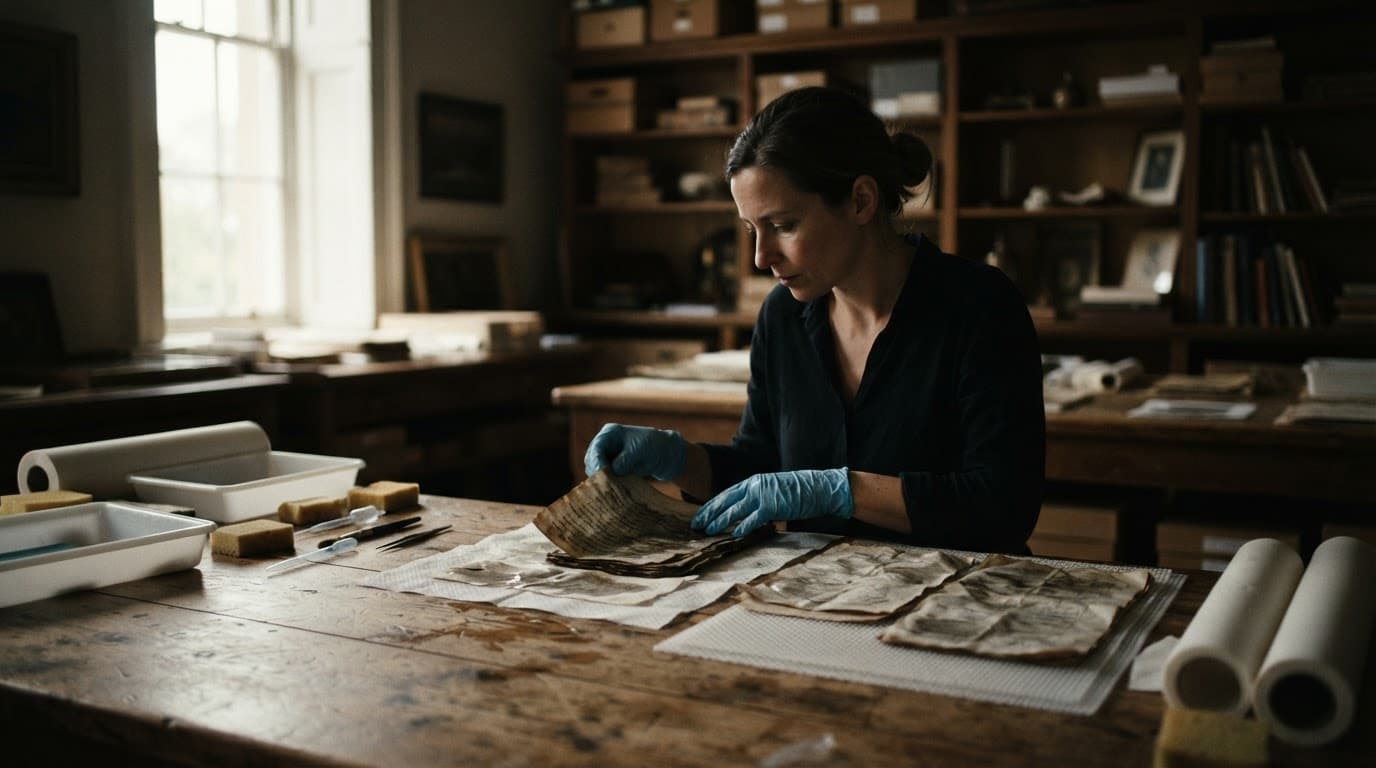
The National Archives salvage procedures also recommend documenting and stabilizing damaged family papers before attempting detailed cleaning. Their guidance is useful for deciding what you can safely handle and what needs specialized care.
Sort documents without forcing them apart
Separate items by condition, material, and importance. Keep photographs, loose paper, books, laminated records, receipts, and documents with raised seals in separate groups. Remove only items that come apart easily.
If pages are stuck, leave them together. Pulling them apart can tear fibers, remove ink, or destroy signatures. A conservator may be able to separate them after controlled drying, but success depends on the paper, ink, water type, and exposure time.
Prioritize records that are difficult to replace:
- Passports, immigration records, and birth or death certificates
- Property deeds, titles, leases, and mortgage documents
- Business contracts, licenses, payroll records, and tax files
- Medical, legal, and insurance records
- Wills, estate papers, military records, and family photographs
How to Dry Paper Records Without Causing More Damage
For loose, lightly wet pages, place each sheet flat on a clean surface. Use blotting paper, plain paper towels, or unprinted newsprint beneath the document. Replace the absorbent material when it becomes wet.
Increase air movement with a fan positioned nearby, not directly against the pages. Cool, circulating air helps moisture leave gradually. Keep the room as dry as possible with air conditioning or a dehumidifier, provided the electrical system is safe.
Avoid direct sunlight, hair dryers, heat guns, ovens, radiators, and irons. High heat can distort paper, set stains, make pages brittle, and cause photographs to curl. Strong airflow can also scatter loose pages or spread contamination.
Don’t stack wet papers. Stacking slows drying and transfers ink between pages. If a stack cannot be separated safely, keep it supported and call a specialist.
Damp documents should also stay out of sealed bags, bins, and plastic sleeves. Plastic may protect a dry paper from later spills, but it can trap water against a wet page. That enclosed moisture creates conditions for mold and odor.
A document can feel dry on the outside while its folded sections, envelopes, bindings, or layered photographs remain wet inside.
Use clean, dry containers for transport. Place wet materials in a single layer when possible. If immediate drying isn’t possible, ask a document-restoration company or conservator about cold storage or freezing. Freezing can sometimes pause deterioration, but it isn’t a complete repair and may be unsuitable for certain materials.
The National Archives general recovery guidelines cover additional handling methods for family papers, photographs, books, and heirlooms.
When Professional Document Restoration Is the Safer Choice
Call a water-damage restoration professional when water affected multiple rooms, walls, flooring, cabinets, or storage areas. Hidden humidity can keep documents damp after the visible water disappears. A restoration team can help dry the surrounding space and reduce the risk of mold spreading through the property.
A document-restoration specialist or paper conservator is the right choice when records are unique, historically important, signed, bound, or badly damaged. This includes wills, original artwork, family archives, business ledgers, and documents with seals or embedded photographs.
Professional help is also appropriate when:
- Water came from sewage, floodwater, storm surge, or a chemical source
- Documents show mold, strong odor, mud, or widespread staining
- Pages are fused together or ink has transferred between sheets
- Photographs, negatives, film, or bound volumes are affected
- The papers are needed for a legal, insurance, immigration, or government matter
- You cannot dry the collection quickly without damaging it
A restoration company may photograph, inventory, pack, transport, dry, clean, and store the documents. Ask for a written scope describing each service. It should explain which items will be dried, scanned, cleaned, frozen, stored, or recommended for replacement.
If the company performs a pack-out, compare its inventory with your own records. Check room names, quantities, item descriptions, condition notes, photographs, and any special handling instructions. Report errors while the documents remain tracked.
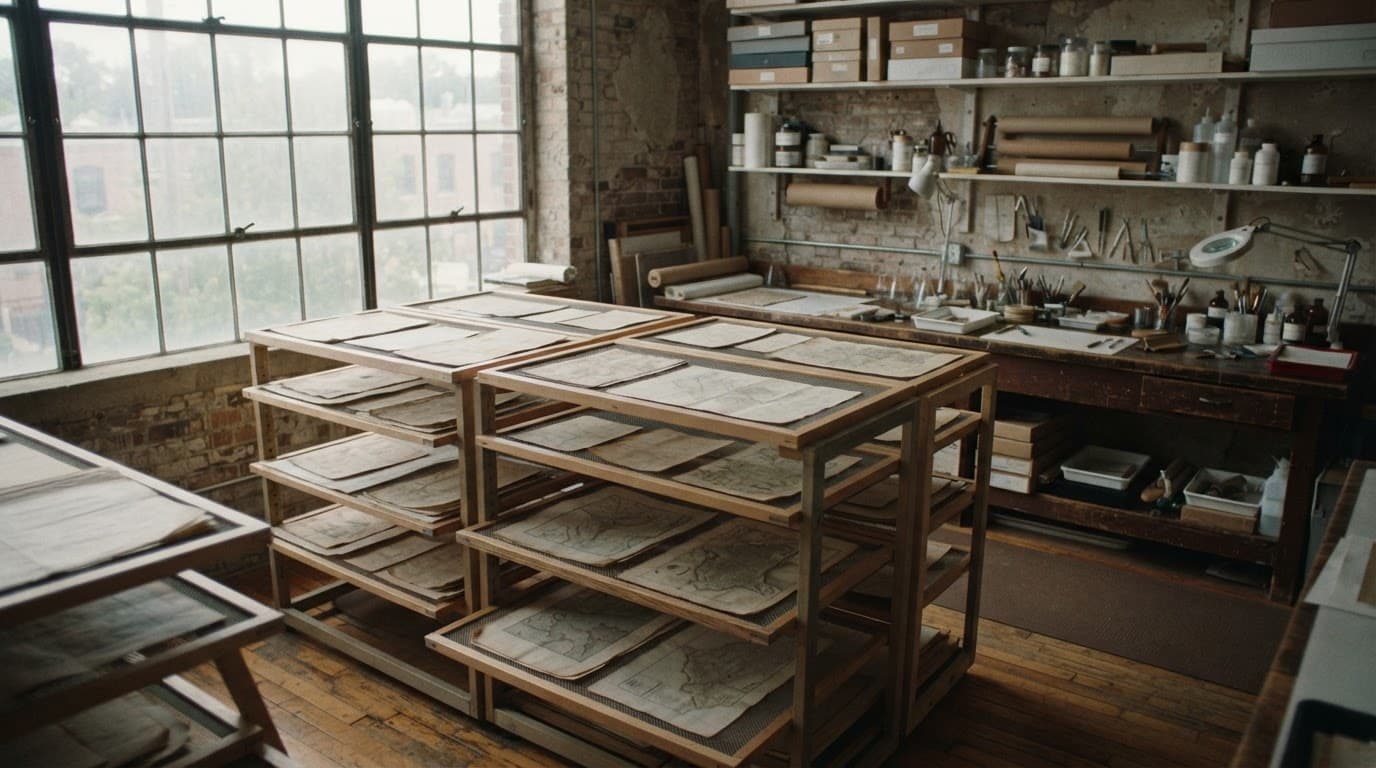
Restoration is different from replacement
Some documents can be dried and stabilized but still show stains, distortion, fading, or odor. No company can guarantee that every item will return to its original condition.
Ask whether the company has experience with paper conservation, not only building drying. A general restoration crew may handle the room and moisture source, while a conservator handles delicate records. For contaminated materials, ask how the company protects workers, separates affected items, and disposes of unsafe papers.
Avoid anyone who promises complete recovery without inspecting the documents. Be cautious if a provider wants to seal damp papers immediately, stack them tightly, or apply heat.
Protect Your Insurance Claim and Important Records
Contact your insurance provider promptly if you may file a claim. Coverage depends on the policy language, deductible, exclusions, cause of loss, and endorsements. A sudden plumbing failure may receive different treatment from long-term seepage, corrosion, poor maintenance, storm surge, or rising floodwater.
Ask the insurer what it needs before you discard, clean, scan, or send documents away. The carrier may request photographs, estimates, receipts, proof of ownership, an itemized contents list, or a restoration inventory.
Create one claim folder with:
- The claim number and adjuster’s contact information
- Photos and videos of the room and documents
- A document inventory with condition notes
- Restoration estimates, invoices, and drying records
- Storage, transportation, scanning, and disposal receipts
- Emails and written messages about approvals or instructions
Keep communication in writing whenever possible. If you speak by phone, record the date, representative’s name, and main instructions in your claim log.
Don’t throw away damaged records before receiving direction unless they create a health or safety hazard. If disposal is necessary, photograph them first and keep the disposal receipt. Ask whether the insurer wants an inspection or written authorization before permanent handling.
A restoration estimate should separate document handling from room cleanup. It should identify extraction, drying, contents packing, transportation, storage, cleaning, scanning, and reconstruction as separate costs. This detail makes it easier to compare proposals and explain the claim.
Replace Records Through the Correct Agency
Some government and business records can be replaced, but the process varies. Contact the agency or organization that issued the document. Ask whether it accepts a damaged original, a photograph, a certified copy, or a notarized statement.
For example, a passport agency, state vital-records office, county clerk, court, motor vehicle department, school, employer, bank, or insurance company may have its own replacement procedure. Keep the damaged document in a clean, dry folder unless the issuing agency tells you to surrender it.
Scanned copies can help with identification and future claims, but they don’t always replace an original. Scan dry documents at a clear resolution and store copies in two separate locations. Use a secure cloud account and an offline drive kept away from the property.
Never laminate a damaged document to hide stains or flatten distortion. Lamination can interfere with later examination and may make agency replacement more difficult. Store recovered papers in archival-quality folders after they are fully dry.
Prevent Another Document Loss
Once the immediate damage is under control, change how essential records are stored. Keep originals above floor level and away from garages, laundry rooms, bathrooms, exterior walls, and areas beneath plumbing connections. Use closed containers that protect dry documents from ordinary spills, but don’t place damp papers inside them.
Maintain a digital index with the document name, location, issue date, and replacement contact. Review the folder twice a year. Include photographs of serial numbers, account records, property papers, and insurance information where privacy and security allow.
In humid areas such as Cape Coral and Southern Florida, air conditioning and moisture control matter. Repair roof leaks, plumbing problems, failed seals, and drainage issues before returning documents to the same storage area. A repaired stain doesn’t prove the space is dry.
For valuable collections, consider a professional archival box, an off-site safe-deposit arrangement, or secure digital backup. Keep the backup separate from the home and update it after major purchases, moves, or legal changes.
Conclusion
Water damaged documents need careful handling, not speed alone. Protect yourself from contaminated water and electrical hazards, photograph the loss, separate loose pages gently, and dry them with cool air. Never use high heat, force stuck pages apart, or seal damp papers in plastic.
When records are irreplaceable, contaminated, badly fused, or tied to an insurance or legal matter, contact the right professional early. Fast, documented decisions give important papers their best chance of recovery while helping you replace the records that cannot be saved.
