Water Damaged Electrical Panel: Florida Safety Steps
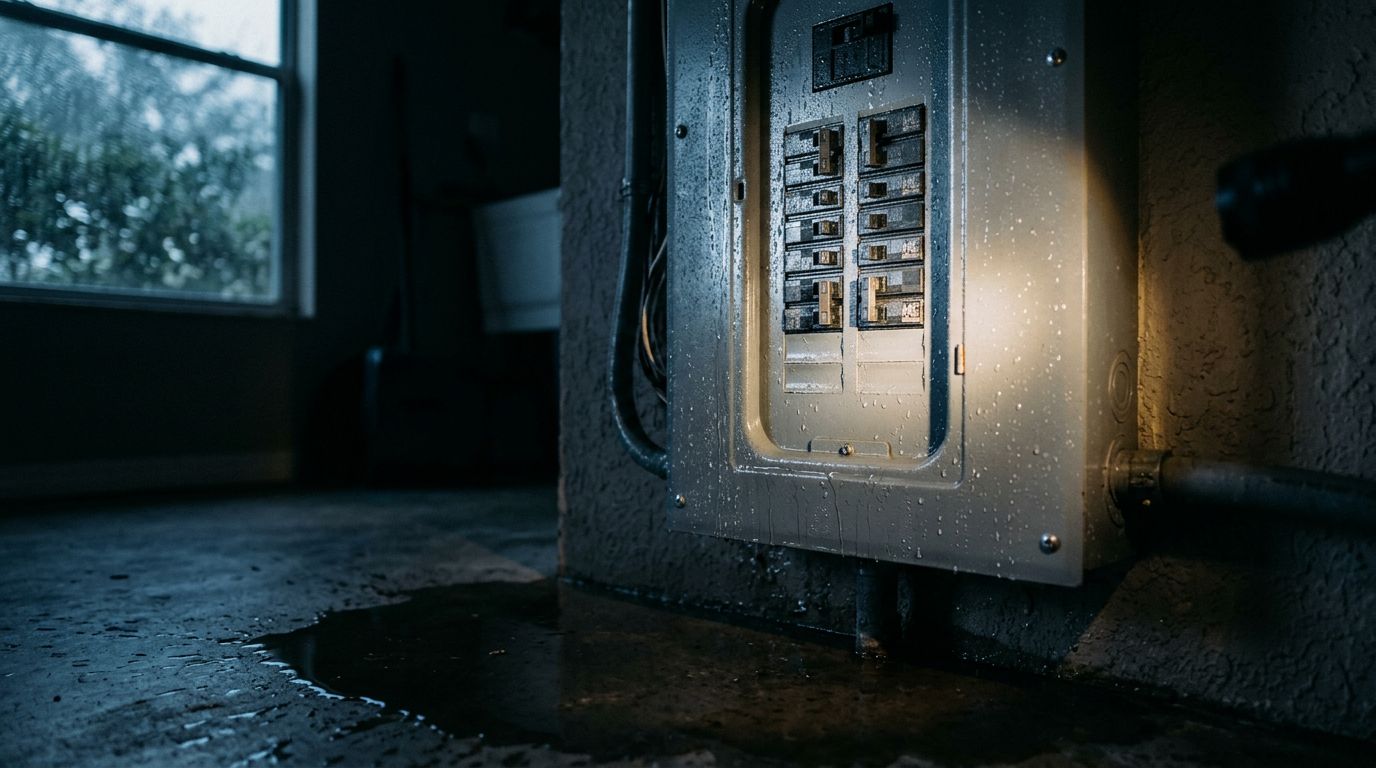
A water damaged electrical panel can remain dangerous after the visible water disappears. Floodwater, roof leaks, burst pipes, and storm intrusion may affect breakers, wiring, busbars, and connections behind the panel cover.
Florida homeowners should never touch, open, reset breakers in, or try to dry a wet electrical panel. The safe response depends on whether the home has an active electrical emergency or needs a prompt inspection after moisture exposure.
Key Takeaways
- Stay away from a wet panel, even if the power appears to be off.
- Call 911 for sparks, smoke, fire, burning odors, standing water, or downed lines.
- A licensed electrician must inspect any panel exposed to water before power returns.
- Drying alone may not make flooded breakers and internal components safe.
- Document the damage from a safe location and notify your insurer promptly.
What to Do When You Have a water damaged electrical panel
First, keep everyone away from the panel and the surrounding floor. Move children and pets to a dry area. Don’t touch the panel door, cover, breakers, conduit, nearby outlets, or electrical devices with wet hands.
Never stand in water while attempting to reach a breaker box. Don’t remove the panel cover to look for moisture. You also shouldn’t use a fan, hair dryer, shop vacuum, towel, or dehumidifier near the equipment. These actions can expose you to energized parts or spread contaminated water.
If the panel is wet or water may have entered it, leave the power controls alone and call a licensed electrician. If the situation involves flooding, contact your electric utility from a safe location. The utility may need to disconnect service before an electrician examines the equipment.
Take photographs only if you can do so without entering water or approaching exposed wiring. Use a phone from a dry location. Record the suspected source, the time you noticed the water, and whether the panel, meter, outlets, or wiring appear affected.
The Electrical Safety Foundation’s water-damaged equipment guidance warns that equipment can remain a long-term fire and shock risk even after it appears dry. That warning applies to more than the panel itself. Flooded switches, receptacles, breakers, disconnects, and wiring may also require professional evaluation or replacement.
Do not assume that a power outage makes the area safe. A home can lose normal service while parts of the electrical system remain energized. Downed utility lines can also energize puddles, fences, vehicles, and other conductive objects.
Active electrical emergencies after flooding or leaks
Some warning signs require immediate action rather than a routine service appointment. Leave the area and call 911 when you see or hear:
- Sparks, flashes, smoke, or visible arcing
- A burning plastic or electrical odor
- Buzzing, crackling, popping, or unusual heat
- Standing water near the panel, meter, outlets, or appliances
- A fire, rapidly worsening leak, or collapsing ceiling
- Downed power lines or wires touching water
- A person receiving an electrical shock
If you smell burning or see smoke, leave the home if you can do so safely. Don’t turn lights on or off, unplug appliances, or use switches near the problem. Call 911 from outside or from a safe location.
For downed lines, stay far away and assume every line is energized. Don’t drive over a line or approach a vehicle, fence, puddle, or tree touching it. Report the hazard to 911 and your local electric utility.
Storm surge and floodwater create additional risks because the water may contain sewage, chemicals, fuel, or sharp debris. Avoid walking through it, even with rubber boots. Household footwear doesn’t provide reliable protection from electrical current.
If the panel is dry and the emergency is elsewhere, don’t assume you can reset a tripped breaker. A breaker may trip because water reached a downstream circuit, appliance, junction box, or hidden wire. Resetting it can energize damaged equipment.
When no immediate danger is visible, arrange a licensed electrical inspection as soon as possible. Prompt inspection is still necessary if water reached the panel, entered the wall behind it, caused a breaker to trip, or left rust, staining, or moisture nearby.
Why drying a flooded electrical panel isn’t enough
Water can damage electrical equipment in ways that aren’t visible from outside. Moisture may corrode metal contacts, weaken insulation, contaminate components, and leave mineral deposits that affect future operation. Floodwater can also carry dirt and chemicals into small spaces.
FEMA guidance for flooded building systems calls for a thorough inspection before re-energizing equipment. A service panel must be cleaned and dried throughout, damaged breakers and components must be replaced, and busbars must show no corrosion or oxidation before power returns.
That standard is different from wiping the outside of a metal cabinet. A homeowner may see a dry cover while moisture remains inside the panel or in the wall cavity behind it.
Flooded molded-case circuit breakers, switches, and receptacle devices often require replacement rather than simple drying. Electronic controls and components with semiconductor parts can also be damaged by water exposure. The electrician will decide what must be replaced based on the equipment, water depth, contamination, corrosion, and manufacturer requirements.
A panel affected by clean water from a supply line still needs inspection. Floodwater and sewage make the risk greater, but clear-looking water can also damage electrical components.
The Institute of Electrical and Electronics Engineers’ electrical safety discussion explains why qualified electricians should evaluate water-damaged equipment. The inspection may include the panel, breakers, service conductors, grounding and bonding, nearby junction boxes, and circuits that run through wet areas.
Don’t ask a restoration worker to open or test the panel unless that person is also properly licensed for electrical work. Restoration technicians can remove water, dry building materials, and document moisture. Electrical repairs belong to a qualified electrical professional.
When to call an electrician, utility, or restoration company
The electric utility may need to disconnect service when flooding affects the meter, service entrance, overhead wires, or equipment on the utility side of the system. A licensed electrician can then assess the panel and the home’s wiring.
Call an electrician promptly when:
- A leak occurred above or beside the panel
- Water entered the panel cabinet or conduit
- A breaker tripped during the leak or storm
- The panel shows rust, discoloration, swelling, or corrosion
- Outlets, switches, lights, or appliances became wet
- The home experienced storm surge or rising floodwater
- Power behaves unpredictably after water intrusion
A restoration company becomes useful when water also reached drywall, insulation, flooring, cabinets, or framing. Water can travel sideways beneath flooring and downward into wall cavities. The stained area may be smaller than the actual moisture path.
Ask the restoration professional to separate extraction, demolition, drying, sanitizing, and reconstruction in the written scope. The estimate should identify moisture readings, equipment monitoring, materials removed, and work that isn’t included.
Electrical safety comes first. Don’t allow cleanup crews to place equipment in a wet electrical area or move contents through contaminated water before the electrician and restoration team agree on a safe plan.
Insurance documentation and Florida repair planning
Notify your insurance carrier promptly if you may file a claim. Ask what the insurer needs before damaged materials, appliances, or contents are discarded. Coverage depends on the cause of loss, policy language, deductible, exclusions, and endorsements.
A sudden pipe break may receive different treatment from corrosion, poor maintenance, repeated seepage, storm surge, or rising floodwater. Standard homeowners insurance often treats flood damage differently from sudden plumbing losses. Separate flood coverage or a water-backup endorsement may apply in some situations.
From a safe location, document the date, suspected source, affected rooms, and visible damage. Save:
- Wide and close photographs
- Videos of active leaking or water levels
- The electrician’s inspection report
- Moisture readings and drying logs
- Itemized estimates and invoices
- Receipts for emergency supplies and approved services
- Written messages with the insurer and contractors
Keep the claim number with every document. A line-item estimate makes it easier to compare the electrical work with the restoration work and identify hidden repairs.
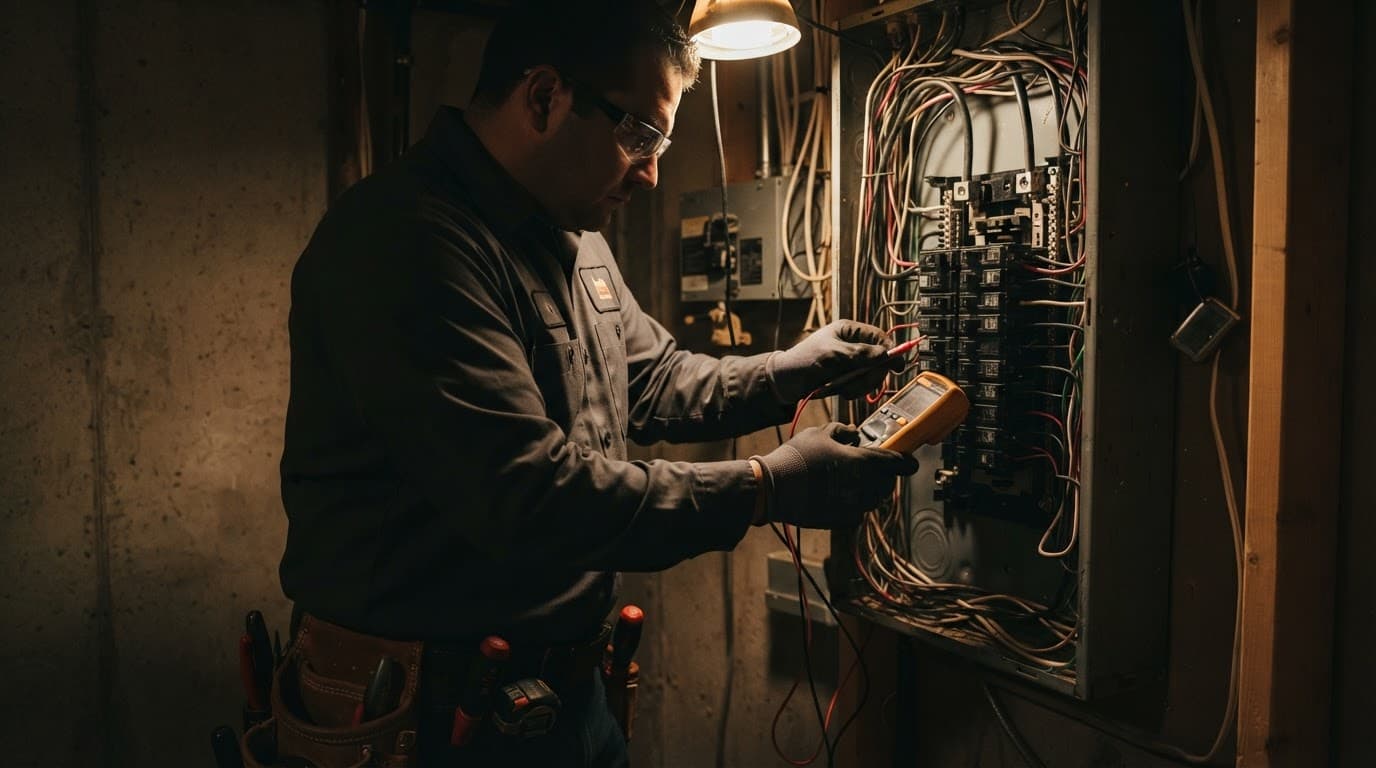
Florida homeowners should verify that the electrician holds the proper state or local license for the work. Ask for proof of licensing, insurance, and permits when required. FEMA’s flood recovery guidance states that electrical repairs and replacements require an electrical permit. Local building departments and utilities may also require inspection before reconnection.
For future protection, ask an electrician whether the panel, meter, and service connections can be placed above the applicable flood elevation. FEMA also identifies GFCI protection for certain circuits below flood levels as a flood-safety measure. These changes require site-specific design and code review.
A safer response before the next storm
Keep the electrical panel area clear of stored boxes, cleaning products, and furniture. That space needs to remain accessible to emergency personnel without forcing anyone to step around clutter or water.
Repair roof leaks, plumbing leaks, failed seals, and drainage problems before the next storm. Check whether downspouts discharge away from the home and whether landscaping directs water toward exterior walls. Moisture near the panel deserves attention even when the cabinet itself looks dry.
After a major storm, inspect the area from a safe distance. Look for new staining, damp drywall, water around the meter, tripped breakers, and unusual odors. Don’t test the system yourself if any concern exists.
A licensed electrician should decide when the system is safe to energize. The decision may require cleaning, drying, replacement, testing, permits, and utility coordination.
This article provides general safety information and isn’t a substitute for a licensed electrician’s on-site assessment.
Protect people before property
A water damaged electrical panel is an electrical hazard until a qualified professional confirms that the equipment and connected circuits are safe. Keep away from the panel, avoid resetting breakers, and treat sparks, smoke, burning odors, buzzing, standing water, and downed lines as emergencies.
Even when the home looks stable, water may have reached hidden wiring or internal components. Professional inspection, careful documentation, and controlled restoration protect your household and help prevent a small leak from becoming a larger loss.
