Mold Behind Kitchen Cabinets in Cape Coral: What to Do
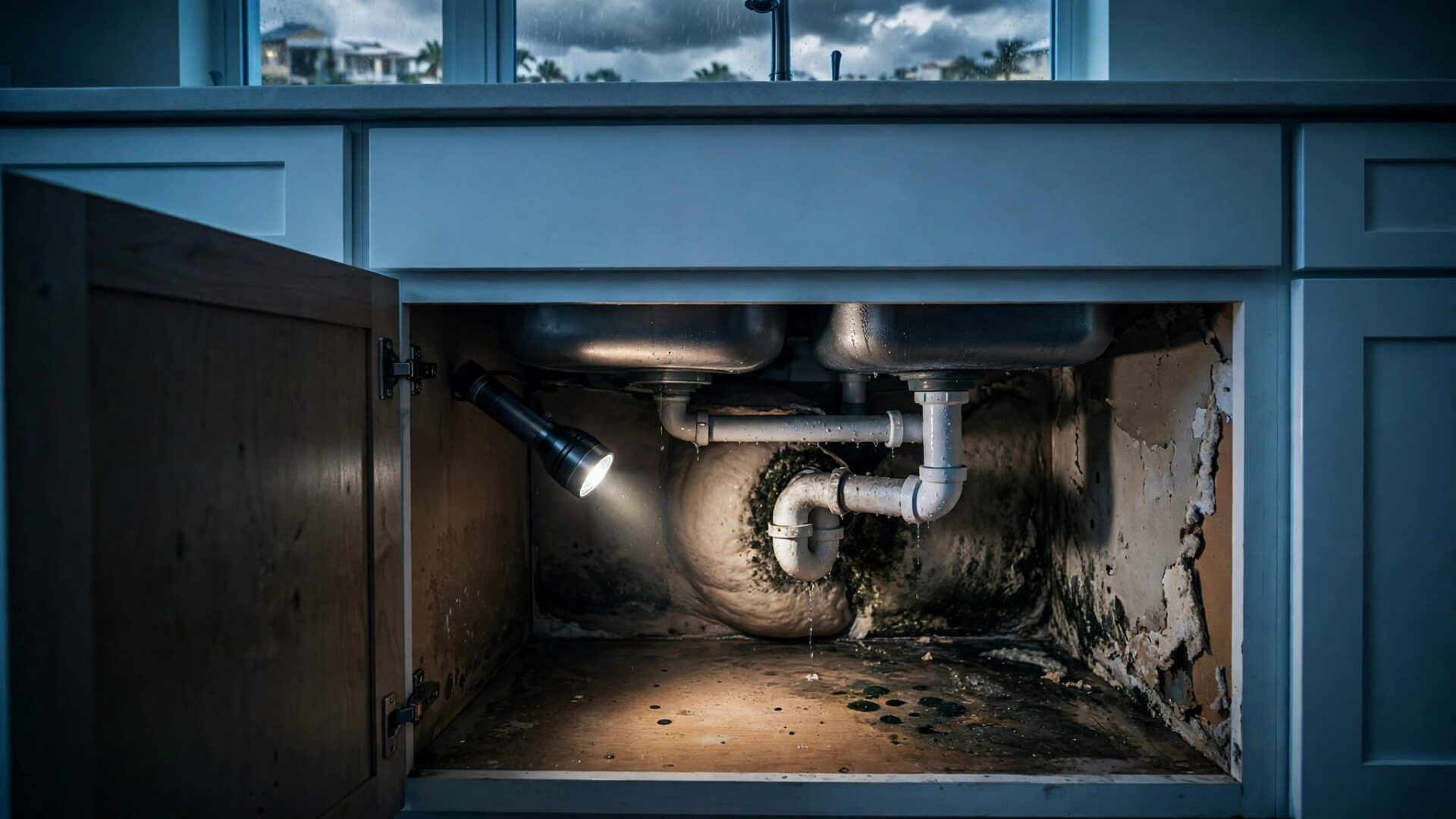
A faint musty smell near the sink can signal a larger problem behind the cabinetry. In Cape Coral, heat, high humidity, storm-driven water, and small plumbing failures can create damp, concealed conditions.
Quick answer: The usual fix is to stop the cause of dampness, assess concealed materials, and clean or remove damaged porous items. Covering a visible spot alone won’t resolve the problem. A small patch of surface mildew may need careful cleaning, while concealed growth can require opening the area and removing affected materials.
Water can travel through drywall, insulation, cabinet backing, and flooring before discoloration appears. We help homeowners trace the damp area, remove affected materials carefully, and rebuild without sealing a wet problem behind new finishes.
Key Takeaways
- Mold behind kitchen cabinets is usually a moisture problem caused by plumbing leaks, condensation, storm-driven rain, or high indoor humidity.
- A musty odor, swollen cabinet materials, staining, soft flooring, and recurring dampness can point to concealed moisture, even when the cabinet surface feels dry.
- Stop the water source before cleaning, and avoid dry-brushing, sanding, or blowing air across affected areas because these actions can spread particles.
- Small areas of mold on hard, non-porous materials may be cleaned after the moisture source is corrected, but damaged porous materials such as drywall, insulation, and particle board may need removal.
- Professional remediation should document moisture, contain the work area, remove unsalvageable materials, dry the cavity, and verify stable moisture levels before cabinets and walls are rebuilt.
Why does mold develop in kitchen cabinetry in Cape Coral?
Kitchen cabinets create dark pockets against walls. Particle board can swell after a leak and lose its integrity. Wood framing, drywall paper, and dust can support mold growth.
In Cape Coral, humid months and storms can add pressure. An air conditioner that can’t keep up, rain entering an exterior wall, or a dripping sink line can leave cabinets damp for days.
How do leaks create cabinet moisture?
Plumbing leaks are the most common cause. They often start at supply valves, P-traps, disposal connections, dishwasher lines, refrigerator water lines, or sink caulk. A tiny drip may swell the cabinet floor before it creates a puddle.
Cabinet boxes often hide early warning signs, but a damp cabinet box doesn’t confirm mold. Watch for soft flooring, peeling laminate, rusted screws, staining near toe kicks, or drawers that no longer glide smoothly.
How can appliance temperature changes and storm moisture contribute?
Dishwashers and refrigerators create temperature differences that cause condensation on nearby walls or floors.
Wind-driven rain can enter through storm openings, including damaged roof areas, window seals, stucco cracks, or other exterior penetrations.
The U.S. Environmental Protection Agency recommends keeping indoor relative humidity below 60 percent, with an ideal range of 30 to 50 percent. In Southwest Florida, working air conditioning and properly sized dehumidification can help prevent recurring dampness. These measures don’t guarantee a dry cabinet.
A cabinet surface can feel dry while the wall cavity, drywall, insulation, or wall plate behind it remains damp.
How can you find hidden mold before it spreads?
An unexplained odor deserves attention, even if you don’t see a stain. Mold behind kitchen cabinets may be concealed from view.
Visible patches can be limited to exposed edges, while concealed mold may affect cabinet backs, drywall, insulation, flooring, or toe kicks. An odor or stain doesn’t identify the moisture source, so inspect nearby materials and fixtures.
What signs point to hidden moisture?
Look for changes that don’t belong in a dry kitchen:
- A persistent musty smell, especially after the kitchen has been closed overnight.
- Cabinet floors that bow, feel soft, or show swollen edges near plumbing.
- Dark speckling, fuzzy patches, bubbling paint, or yellow-brown staining around toe kicks and backsplashes.
- Repeated damp baseboards, loose flooring, or rust on supply valves and cabinet hardware.
- A higher indoor humidity reading near the kitchen than in other rooms.
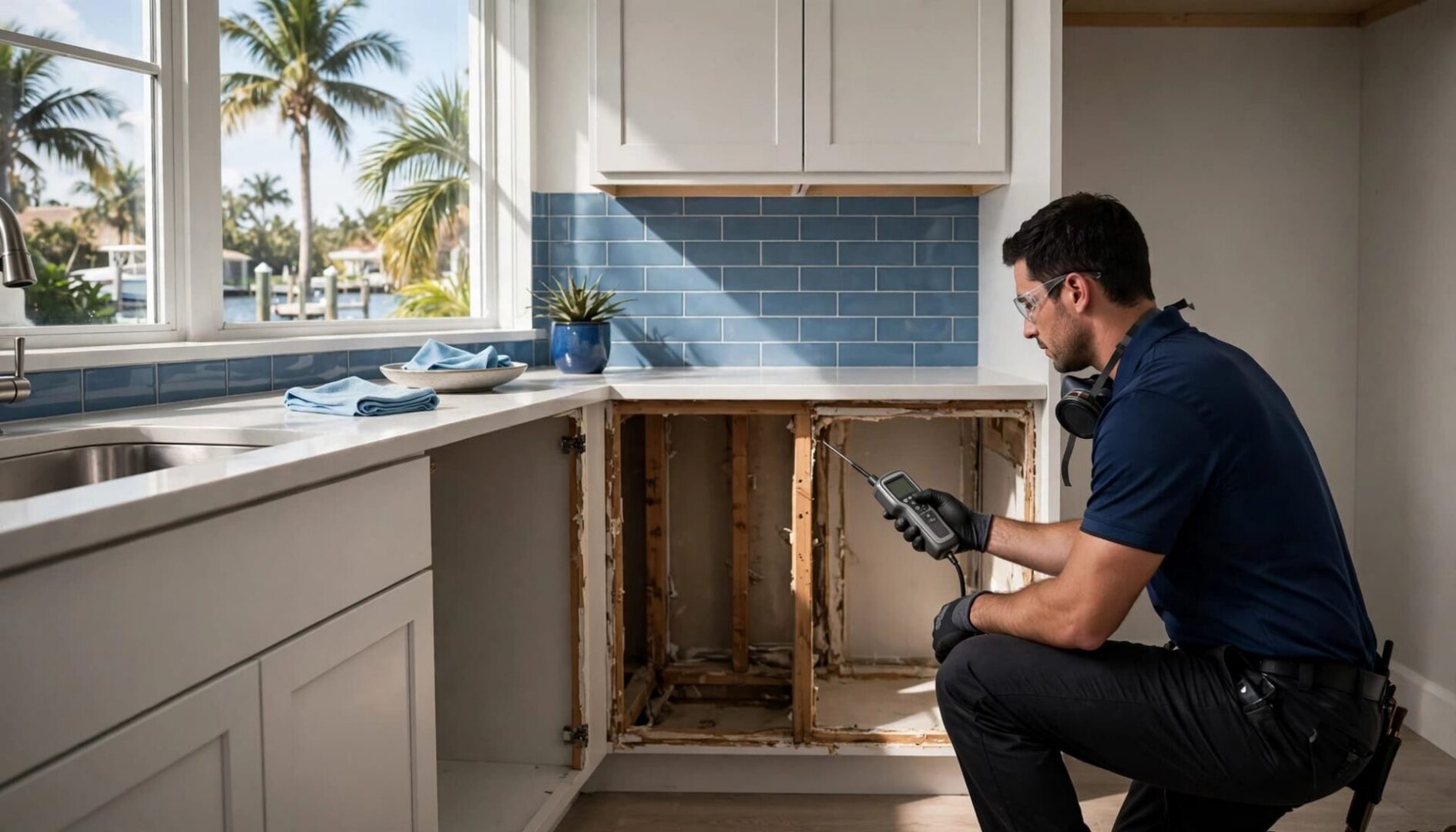
A basic humidity meter can help monitor the room, but it can’t show whether drywall or cabinet backing is wet. Mold testing isn’t always required and can’t replace visual inspection, moisture investigation, or source correction. We use moisture meters and targeted inspection methods to compare suspect materials with nearby dry areas.
How should you inspect without spreading particles?
First, stop any active leak. Don’t use affected appliances, including the dishwasher or disposal, until the source is known. Photograph the condition before moving items.
Next, empty the sink base or adjacent cabinet and use a flashlight to inspect seams, pipe openings, and the cabinet floor. Avoid dry-brushing visible patches, sanding damaged material, or using a household fan across the area. These actions can disturb mold spores and move them into the kitchen or adjoining rooms.
If the suspected area extends into walls or insulation, involves electrical systems or standing water, or covers a large area, stop and arrange a professional inspection. If a qualified professional determines that panels must be removed, photograph the area first. This record can help support a later insurance claim.
What health risks can mold create?
Mold exposure affects people differently. Some people may experience irritation of the eyes, nose, throat, or skin. Others may notice allergy-like symptoms or worsening respiratory discomfort. These possible health risks don’t diagnose a condition. Strong odors alone don’t identify a species or prove a danger level.
“Black mold” is a visual description often used for dark growth. Color can’t identify species or toxicity, and stachybotrys chartarum can’t be confirmed by appearance alone. Professional inspection considers dampness, material condition, affected area size, and whether growth has reached enclosed spaces. Mold testing has limits and isn’t routinely needed to decide whether damp materials require attention.
How should vulnerable people be protected during cleanup?
Children, older adults, people with asthma, and anyone with respiratory sensitivities shouldn’t spend time near active cleanup. Disturbing materials can release mold spores, so keep doors closed if possible and avoid handling affected items. Arrange a professional inspection when the odor or visible growth persists.
Current CDC guidance recommends reducing exposure, while the EPA’s mold cleanup guidance emphasizes a simple rule that matters most: correct the moisture problem. Air quality testing may be considered in unusual or disputed situations, but it doesn’t replace correcting the moisture problem or prove a health condition. Anyone with significant symptoms should consult a healthcare professional.
When is DIY mold removal reasonable, and when is professional help needed?
A small amount of surface mold on a hard, non-porous material may be manageable after you correct the moisture source. For example, limited mold growth on a sealed cabinet hinge or tile surface can often be cleaned with detergent and water, then dried completely.
Porous materials are different. Cabinet backing, swollen particle board, drywall, insulation, and toe kicks affected by water damage may hold growth below the surface. Painting, caulking, or spraying fragrance over these materials only hides the evidence without correcting the damage.
When is a small cleanup appropriate?
Only consider cleaning when the area is small, the water was clean, the material is non-porous, and you’ve repaired the moisture source. Wear gloves, eye protection, and a properly fitted mask. Keep the area ventilated without blowing air across the surface.
Use cleaning solutions such as detergent and water, or a product approved for the material. Then dry the area fully. Don’t mix chemicals, especially bleach with ammonia or acids. Avoid an unverified bleach recipe, vinegar, or peroxide on cabinet finishes unless the manufacturer approves it.
When should you call a certified mold remediator?
Call for professional mold remediation in Cape Coral when you find hidden mold around kitchen cabinets, wet drywall, extensive staining, recurring odor, or a leak lasting more than a day or two. The same applies after floodwater, sewage, or storm surge enters the kitchen, or when electrical hazards or suspected damage to framing are present.
Professional help is also safer when cabinet removal may disturb a large area. Mold testing isn’t always required, but targeted testing may help clarify an uncertain scope. Water can move beyond the stain, so repairs should follow documented moisture readings rather than the darkest visible patch.
Services 321 lists CRC1333503, MRSA2528, and MRSR2717 for its team. A private certification is separate from any Florida license or regulatory designation, so verify current credentials through official sources, including Florida DBPR or the Florida Department of Health. Florida law addresses paid mold assessment and remediation requirements under Florida Statute 468.8413, but current rules should be confirmed through those official sources.
What does professional kitchen mold repair involve?
A proper mold remediation job protects the rest of the home while workers remove affected materials around kitchen cabinets. The first priority is locating and stopping the leak or intrusion, because replacement materials can become wet again without that repair.
We document conditions, map moisture, and assess the affected cabinet, wall, flooring, and adjacent rooms. Then we prepare a written scope for the work. It separates mold remediation from reconstruction and reflects current EPA, CDC, and Florida Department of Health guidance.
How are containment, removal, and drying handled?
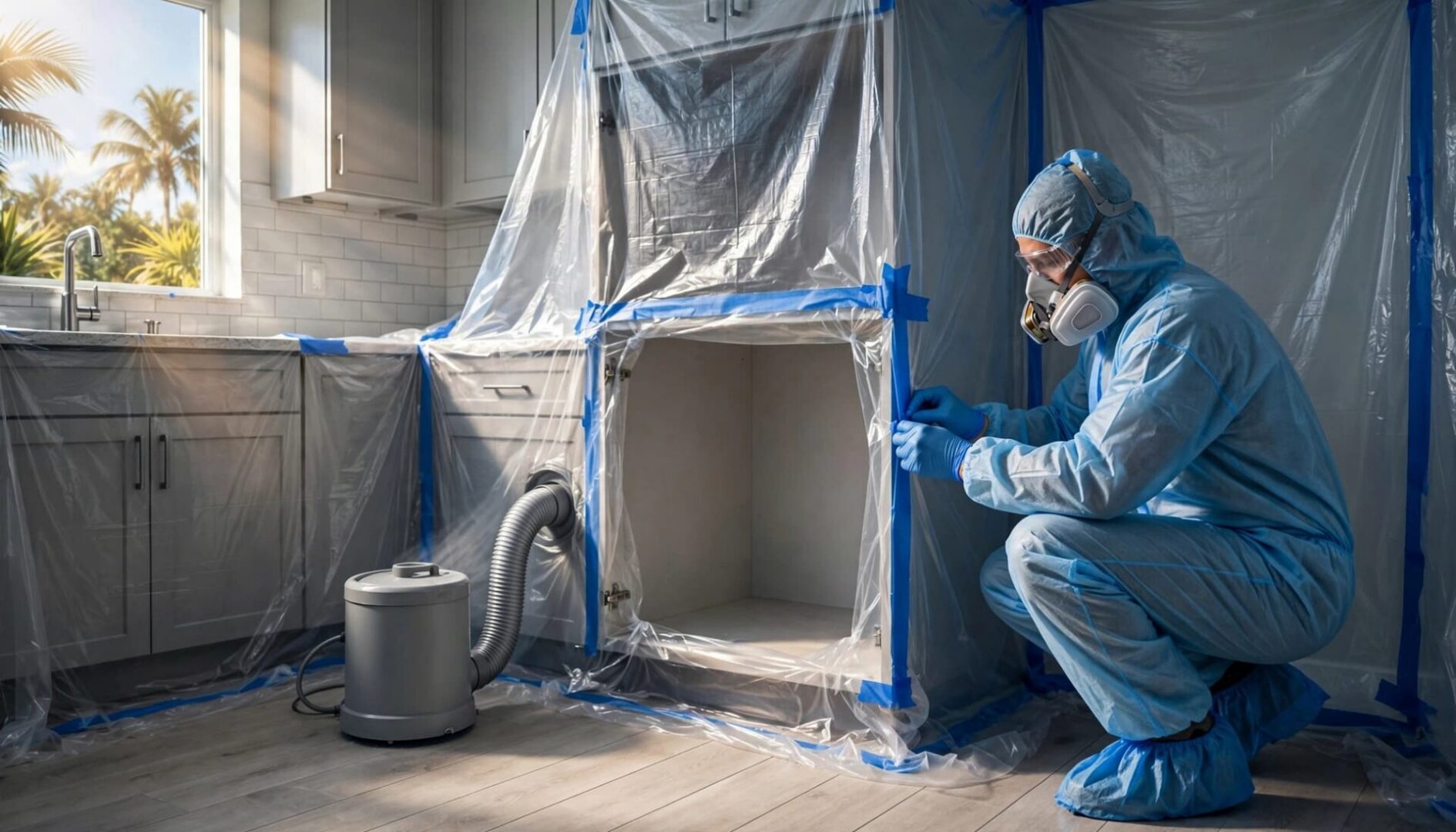
For concealed cabinet contamination, crews may isolate the kitchen section with plastic containment when appropriate. Visible surface contamination may be cleaned on accessible materials. Crews remove unsalvageable porous materials, including soaked cabinet backing, drywall, insulation, or baseboards.
After gross removal, a HEPA vacuum may collect settled dust or debris from suitable dry surfaces. It can’t extract contamination from saturated drywall or replace containment. This controlled mold remediation process cleans accessible structural surfaces, then dries the cavity with dehumidification and air movement. Moisture readings guide the work, and a wall isn’t ready for closure merely because it feels dry.
How can you rebuild without trapping moisture?
Once readings verify stable, acceptable moisture levels, repairs can begin. If cabinet removal or wall opening reveals structural damage, the broader wall assembly may need assessment before rebuilding.
Repairs may include insulation, drywall, texture, paint, baseboards, flooring repairs, cabinet installation, and plumbing connections. Where appropriate, mold-resistant drywall can replace damaged drywall, but it doesn’t substitute for drying.
This sequence matters during kitchen remodeling. Installing new units against a damp wall can ruin custom finishes and create another concealed contamination problem. Restoration and reconstruction should be sequenced together, even when separate teams handle each phase.
How should you document mold and water damage for homeowners insurance?
A sudden pipe break may be handled differently from a slow leak, corrosion, neglected maintenance, storm surge, or rising floodwater. Coverage depends on policy language, the cause of loss, deductible, exclusions, endorsements, and carrier instructions. Don’t assume mold alone determines the claim outcome.
Notify your carrier promptly if you may file a claim. Before discarding damaged cabinet pieces or opening a wall, ask what the adjuster needs. Carriers often request photos, videos, dates, invoices, receipts, and a timeline of when you noticed the damage.
What should go in a claim file?
Take wide photos of the kitchen and close photos of swollen materials, visible staining, active drips, and damaged contents. Record the apparent cause and relevant dates. Save the failed plumbing part if practical, since it may help document the event.
Keep your claim number, emails, moisture readings, drying logs, and receipts in one folder. Ask your contractor for detailed records showing where moisture was found and what work was necessary.
What should a repair scope include?
A credible estimate separates emergency mitigation from rebuilding. It should identify extraction, demolition, moisture checks, drying equipment, cleaning, disposal, cabinet work, flooring, drywall, paint, and items excluded from the price.
Low bids can look appealing until additional damage appears after cabinets are reinstalled. Florida licensing requirements depend on the services performed and current state rules. Ask the provider for applicable credentials and current liability insurance documentation, then review the DBPR mold remediator requirements before hiring.
How can you prevent mold after the cabinet repair?
Prevention begins with fast drying. The EPA recommends drying wet materials within 24 to 48 hours when possible. Prompt drying reduces the chance of a recurring problem.
Check beneath sinks monthly, especially before and after the summer storm season. Inspect appliance connections, and repair failed caulk, slow drains, and leaking shutoff valves promptly. Maintain the air conditioner, and keep indoor relative humidity below 60%, ideally between 30% and 50%. Use kitchen ventilation or exhaust fans while cooking, and run a dehumidifier when needed.
In Cape Coral, prepare for humid seasons and storms by checking exterior walls and nearby openings after heavy rain. Address outside water entry quickly, especially near the cabinet area. If a future wall replacement is needed, mold-resistant drywall may be a useful choice. It doesn’t make a wet wall safe, so correct the leak or outside entry first.
For rentals and managed properties, document reports of leaks or odors promptly and arrange an inspection. A quick response can preserve cabinets and limit the repair area.
Frequently Asked Questions
What is the most common cause of mold behind kitchen cabinets?
Plumbing leaks from sink connections, supply valves, P-traps, dishwashers, disposals, and refrigerator lines are common causes. Condensation, storm-driven rain, and high indoor humidity can also leave the wall or cabinet materials damp.
Can I clean mold behind a kitchen cabinet myself?
DIY cleaning may be reasonable for a small amount of surface mold on a hard, non-porous material after the moisture source is repaired. Swollen particle board, wet drywall, insulation, recurring odors, or concealed growth usually require professional assessment and possible material removal.
Should I test for mold before removing a cabinet?
Mold testing is not always needed to decide whether visibly damaged or damp materials require attention. Moisture investigation, visual inspection, and source correction are generally more useful, while targeted testing may help clarify an uncertain scope.
When should I call a mold remediation professional?
Arrange professional help when mold is hidden around cabinets, drywall or insulation is wet, staining is extensive, the odor keeps returning, or the area involves floodwater, sewage, storm surge, electrical hazards, or suspected framing damage. Professional assistance is also safer when cabinet removal could disturb a large contaminated area.
How do I know the area is ready to rebuild?
The leak or outside water entry must be corrected, affected porous materials must be cleaned or removed, and moisture readings should show stable, acceptable conditions. A wall or cabinet area is not ready for closure simply because it feels dry.
How do you know the cabinet wall is truly dry?
Mold behind kitchen cabinets signals a moisture problem, not just a cleaning task. The repair isn’t complete until the cause is corrected, affected porous materials are cleaned or removed, and the wall and cabinet area are dry before closure.
Services 321 can assess water damage in Cape Coral, document moisture conditions, and outline mold remediation when needed. Contact the team for an assessment and a practical repair plan before the area is closed.
