Cleaning Mold on Leather Furniture in Fort Myers
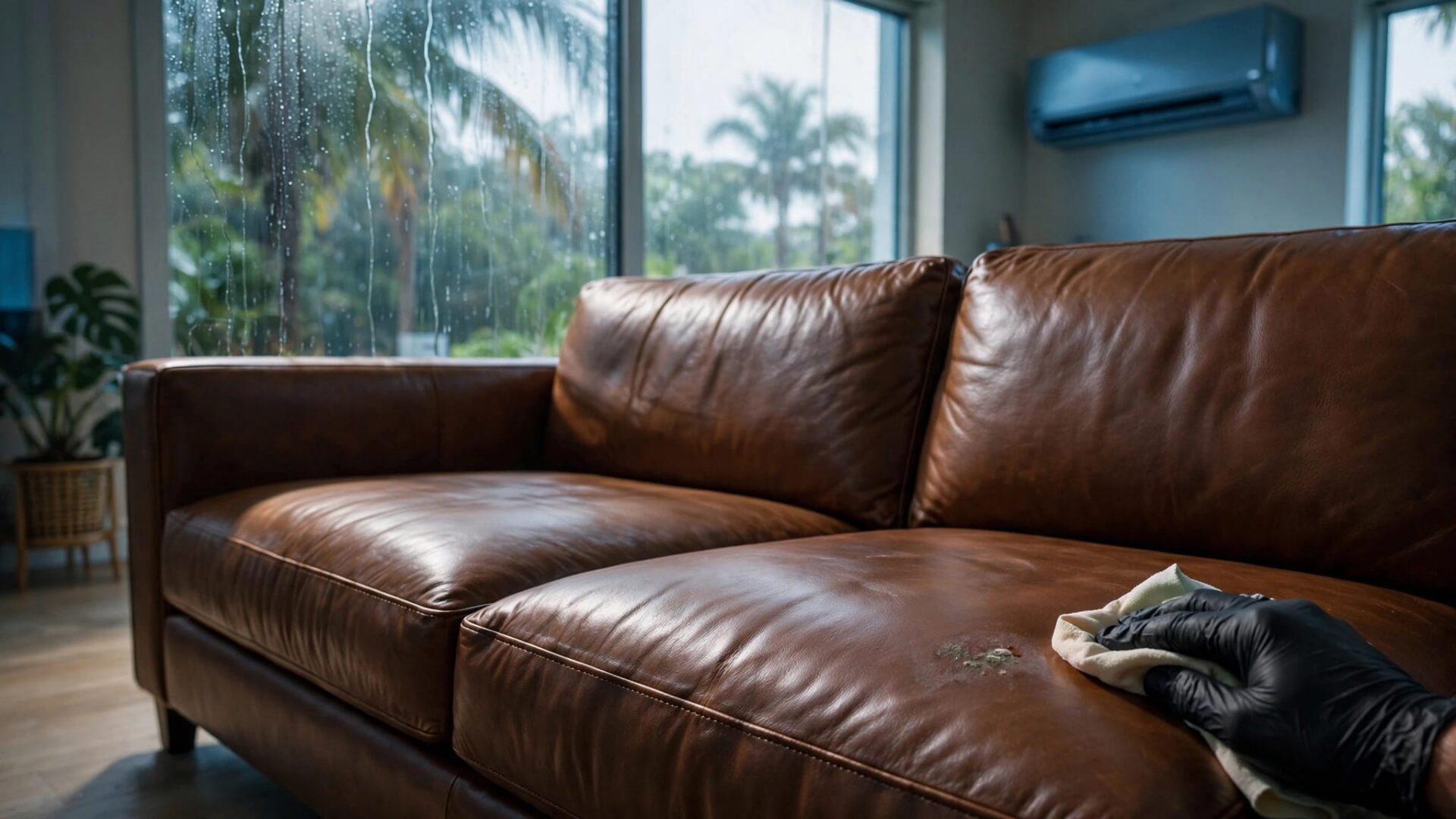
You can clean a small mold patch on a leather couch only if the finish and manufacturer’s instructions permit it. Test a hidden area first, use minimal moisture, and seek professional advice for widespread growth, soaked cushions, or unknown finishes.
In Fort Myers, moisture control matters as much as cleaning. Humid air, storm leaks, and AC condensation can keep leather furniture damp, so check the room and the leather to help prevent mold.
The safest starting point is identifying what you can clean without damaging the furniture.
By the Services 321 Restoration Team | Updated October 2026
Key Takeaways
A small surface patch and a flood-soaked couch need different responses. Before reaching for a household cleaner, keep these priorities in mind:
- For mold on leather, follow the furniture maker’s instructions and test any permitted cleaning method where it won’t show.
- Avoid universal vinegar, alcohol, or bleach recipes because leather finishes and dyes react differently.
- Investigate recurring mold and mildew, musty cushions, or nearby water damage instead of repeatedly wiping the same spot.
We treat furniture mold as a reason to check moisture conditions throughout the affected room.
Why Mold on Leather Keeps Coming Back
Mold and mildew grow when moisture and humidity remain available. Upholstery can collect dust, body oils, and other residue, while seams and cushion undersides can stay damp longer than exposed surfaces, leaving a musty smell.
Humidity and AC Problems
Fort Myers homes face humid outdoor air and long cooling seasons. However, a cool room can still have excessive humidity.
Clogged AC drain lines, condensation, and weak airflow around a leather couch deserve attention. In seasonal homes, check humidity while the property is unoccupied rather than assuming the thermostat controls moisture.
We also recommend inspecting the wall and floor behind the couch. Wiping may remove surface growth, but it won’t remove mold from damp building materials nearby.
Storm Water and Hidden Dampness
Wind-driven rain, plumbing leaks, and power outages can leave upholstery and surrounding materials wet. The Conservation Center for Art & Historic Artifacts recommends prompt drying and dehumidification when managing mold after water exposure.
Act within 24 to 48 hours where possible to reduce the opportunity for growth. That timing is a drying priority, not a guarantee that mold will or won’t appear.
Color alone doesn’t reliably distinguish mold species or establish whether furniture is safe to clean.
Check the Leather Before Cleaning
Identify the upholstery type before applying water or cleaner. A method suitable for protected leather can stain or damage a more absorbent finish.
Finished Leather Versus Absorbent Leather
Protected or pigmented leather generally has a surface coating. Aniline leather has less protection, while suede and nubuck have textured surfaces that need different care when cleaning mold on leather.
Appearance alone isn’t enough to identify the finish. Check the purchase paperwork, upholstery label, or manufacturer’s instructions for your leather couch.
American Leather’s leather care guidance recommends hidden-area testing and warns against products such as saddle soap, solvents, abrasive cleaners, and detergent soaps. These are general care instructions, not approval for a particular mold treatment.
If you can’t identify the material, consult the manufacturer or a leather upholstery specialist before wet cleaning.
Protective Equipment and a Hidden-Area Test
For mold cleanup, wear gloves, protective goggles, and at least a NIOSH-approved N95 respirator. Keep children and pets away, and don’t aim a fan at visible growth.
Apply a tiny amount of the permitted cleaner beneath or behind the furniture. Let the test area dry completely before evaluating it.
Stop if the test changes the color, texture, or sheen. Dye transfer, tackiness, or swelling also means the method isn’t suitable.
The University of Georgia’s home mold removal guidance provides broader cleanup context. Leather still requires material-specific instructions.
How to Clean a Small Surface Patch
Limit cleaning mold to a small, accessible patch of confirmed finished leather, and only when the manufacturer permits the method. This may remove mold from the permitted surface patch, but it won’t show whether mold and mildew remain inside the upholstery.
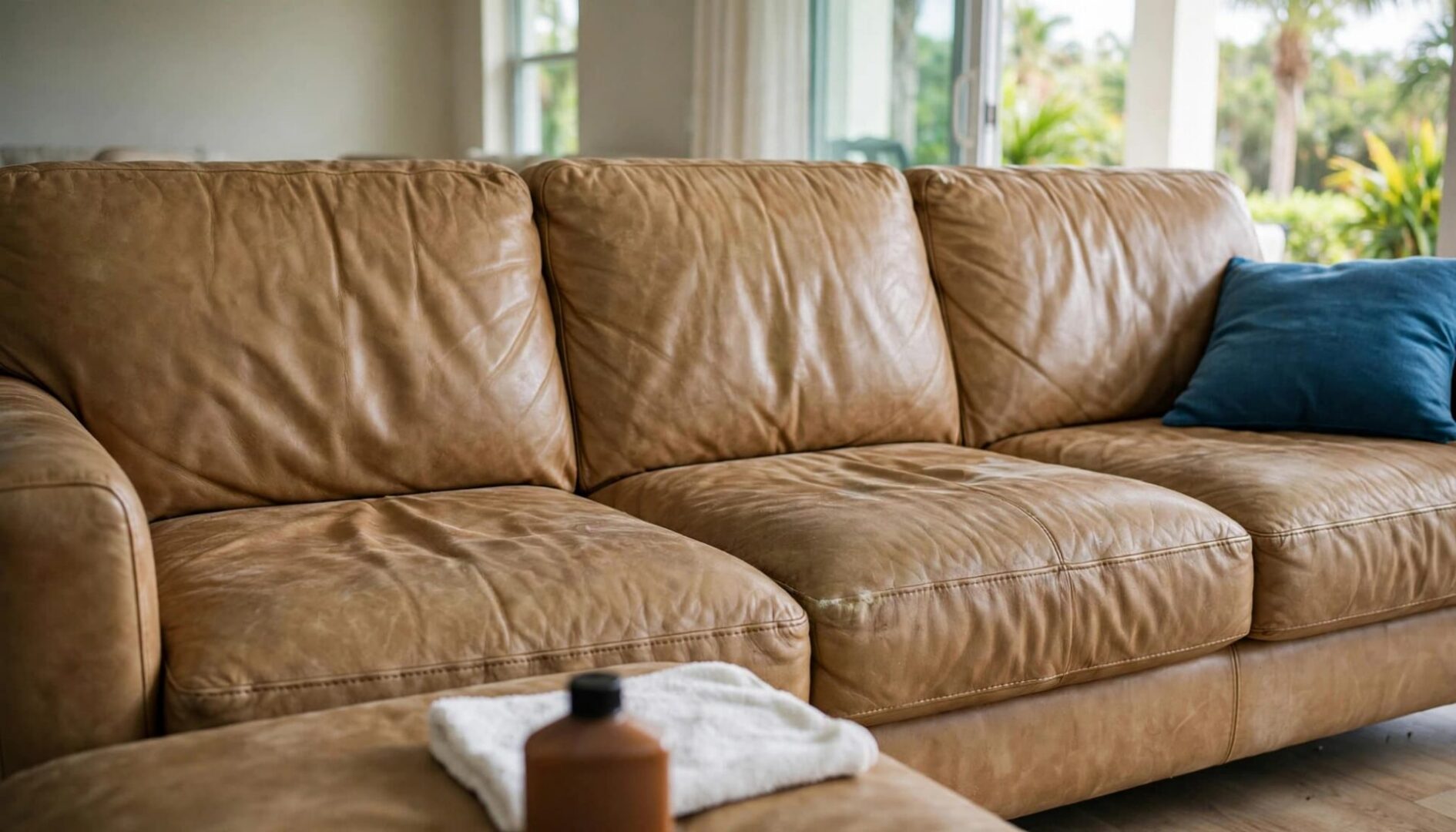
- Photograph the affected area on the leather couch before cleaning. Check accessible seams, cushion undersides, and nearby flooring without cutting open upholstery.
- Complete the hidden-area test using the manufacturer’s permitted method. If instructions don’t address mold, ask the manufacturer before proceeding.
- Gently wipe the affected surface with a clean white cloth and the minimum permitted moisture. Apply cleaner to the cloth when instructions allow, rather than soaking seams or spraying the couch.
- Change cloths as they collect residue. Don’t scrub aggressively, dry-brush growth indoors, or use an ordinary household vacuum on moldy material.
- Remove remaining cleaner as directed, then let the leather dry in a humidity-controlled room. Avoid hair dryers, heaters, direct sunlight, and fans blowing across remaining growth.
Use clean cloths so you can see whether the dye transfers. If the patch spreads, the leather becomes sticky, or the finish changes, stop.
We recommend checking the furniture again after it dries. A persistent musty smell or returning growth calls for investigation, not another stronger cleaner.
A leather conditioner may be appropriate afterward if the manufacturer recommends it. Conditioning doesn’t treat mold or replace complete drying.
Which Cleaners Are Safe for Leather?
No household solution safely disinfects every leather finish. For leather care, follow the furniture maker’s instructions, and test any permitted product on a hidden area first.
Common options have different limits.
| Product or Method | Main Concern | Recommended Approach |
|---|---|---|
| Manufacturer-approved leather cleaner | Ordinary cleaning approval may not cover mold | Confirm the maker permits it for mold, then test on a hidden area |
| Mild soap and warm water | The maker may prohibit soap or water | Use only if expressly permitted, then test on a hidden area |
| White vinegar | Acid can affect dyes or finishes | Don’t assume a diluted mixture is safe |
| Rubbing alcohol | Solvents can remove color or damage coatings | Avoid without explicit manufacturer approval |
| Bleach or hydrogen peroxide | Risk of discoloration and finish damage | Don’t use a general mold recipe on leather |
| Saddle soap or heavy oils | May be unsuitable for furniture upholstery | Follow the maker’s care instructions |
The safest choice depends on the finish and extent of contamination.
EPA detergent-and-water advice concerns hard surfaces. It doesn’t establish a leather-cleaning method. A commercial leather cleaner isn’t automatically a mold disinfectant.
Never mix cleaning chemicals. Don’t machine-wash cushions or leather upholstery, and don’t mask a musty smell with fragrance. Leather conditioner doesn’t disinfect or treat mold. Cleaning visible residue doesn’t prove the cushion interior is clean.
Prevent Mold From Returning in Fort Myers Homes
Keep furniture dry by controlling moisture and humidity in the room. Prevention depends more on room conditions than repeated chemical treatment.
Measure Humidity Instead of Guessing
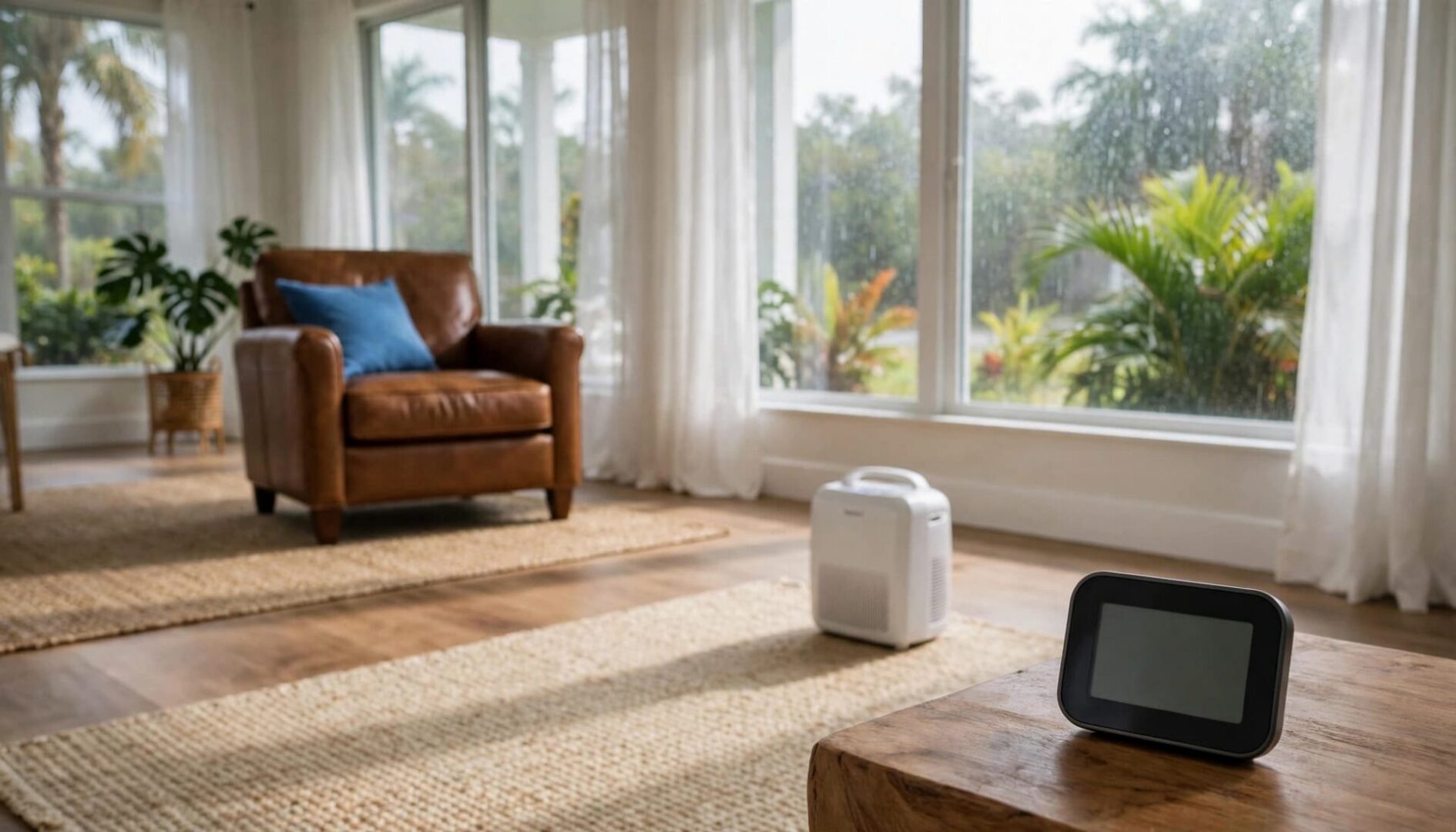
The EPA recommends keeping indoor humidity below 60 percent, ideally between 30 and 50 percent. A hygrometer gives you a clearer picture than room temperature alone.
For Southwest Florida homes, aim for around 40 to 50 percent when practical. Check readings near the furniture and during unattended periods.
Run AC or a dehumidifier as needed. Also maintain filters, condensate drains, and exhaust fans that discharge outdoors.
Opening windows after a humid Fort Myers storm can add moisture. Ventilate with outdoor air only when it’s drier than indoor air.
Improve Airflow Without Spreading Growth
Leave space behind a leather couch so you can inspect the wall and allow air to circulate. Avoid keeping valued leather pieces in unconditioned garages or enclosed lanais.
Once visible mold and mildew have been addressed, ordinary room circulation can support drying. However, fans don’t remove water vapor unless ventilation or dehumidification also removes moisture.
Clean spills promptly and inspect after leaks. Use leather conditioner according to the manufacturer’s schedule, not a fixed interval found online.
If storm water reached flooring or walls, our Fort Myers water damage restoration team can assess trapped moisture. A dry-looking floor doesn’t prove the materials beneath it are dry.
When Professional Inspection Is the Better Choice
Get professional advice when mold and mildew reach the seams, cushions, or underside of a leather couch. Floodwater or sewage exposure needs a different response than a small surface patch.
EPA’s general 10-square-foot cleanup threshold doesn’t determine whether moldy leather furniture is salvageable. Internal contamination and material sensitivity matter even when the visible patch is small.
We recommend mold inspection in Fort Myers when a musty smell persists, growth returns, or nearby walls and flooring show moisture damage. A leather specialist can separately assess furniture cleaning and restoration options.
OSHA’s mold remediation guidance emphasizes correcting moisture problems and removing contaminated materials. If you need to remove mold from a building, cleanup may require a different specialist than furniture restoration.
Services 321 brings more than 20 years of experience to property restoration and repair. Based in Cape Coral, we serve Fort Myers, Cape Coral, and Naples under licenses CRC1333503, MRSA2528, and MRSR2717.
We offer 24/7 emergency availability and work with insurance-company partners when applicable. Photograph damage, save receipts, and confirm coverage with your insurer before assuming furniture restoration or replacement is covered.
For building cleanup, our Cape Coral mold remediation services address moisture and contamination. Furniture restoration decisions may require a separate upholstery specialist.
Frequently Asked Questions
Does White Vinegar Kill Mold on Leather?
White vinegar may kill some surface mold, but it isn’t a universally safe leather disinfectant. Even diluted vinegar can affect certain dyes and finishes.
We don’t recommend substituting a household mixture for the manufacturer’s care instructions. A lighter-looking stain after wiping doesn’t prove contamination inside the furniture has been removed.
Can a Moldy Leather Couch Be Saved?
Some furniture with limited surface growth may be salvageable, but the finish, moisture history, and cushion condition determine the options. Deep contamination, deteriorated leather, or flood-soaked padding makes restoration more difficult.
A leather specialist can assess whether the couch can be treated to remove mold, but restoration isn’t guaranteed. A musty smell or visible growth may mean mold and mildew are inside the cushions, which need assessment.
We recommend comparing a leather specialist’s assessment with replacement costs. Persistent odor deserves investigation rather than repeated deodorizing. Inspection of nearby building materials can also help determine whether the couch is the only affected item.
Protect the Furniture by Fixing the Moisture
Cleaning mold on leather starts with identifying the finish and following its care instructions. Lasting protection depends on dry conditions and correcting the moisture source to prevent mold from returning.
We can help identify the moisture source and assess whether you need to remove mold after a leak, storm damage, or wider contamination.
Call Services 321 at (239) 633-6494 to schedule an appointment in Fort Myers, Cape Coral, or Naples. Our team is available 24/7 for emergency restoration needs.
