Bathroom Ceiling Mold in Naples: Condensation or a Leak?
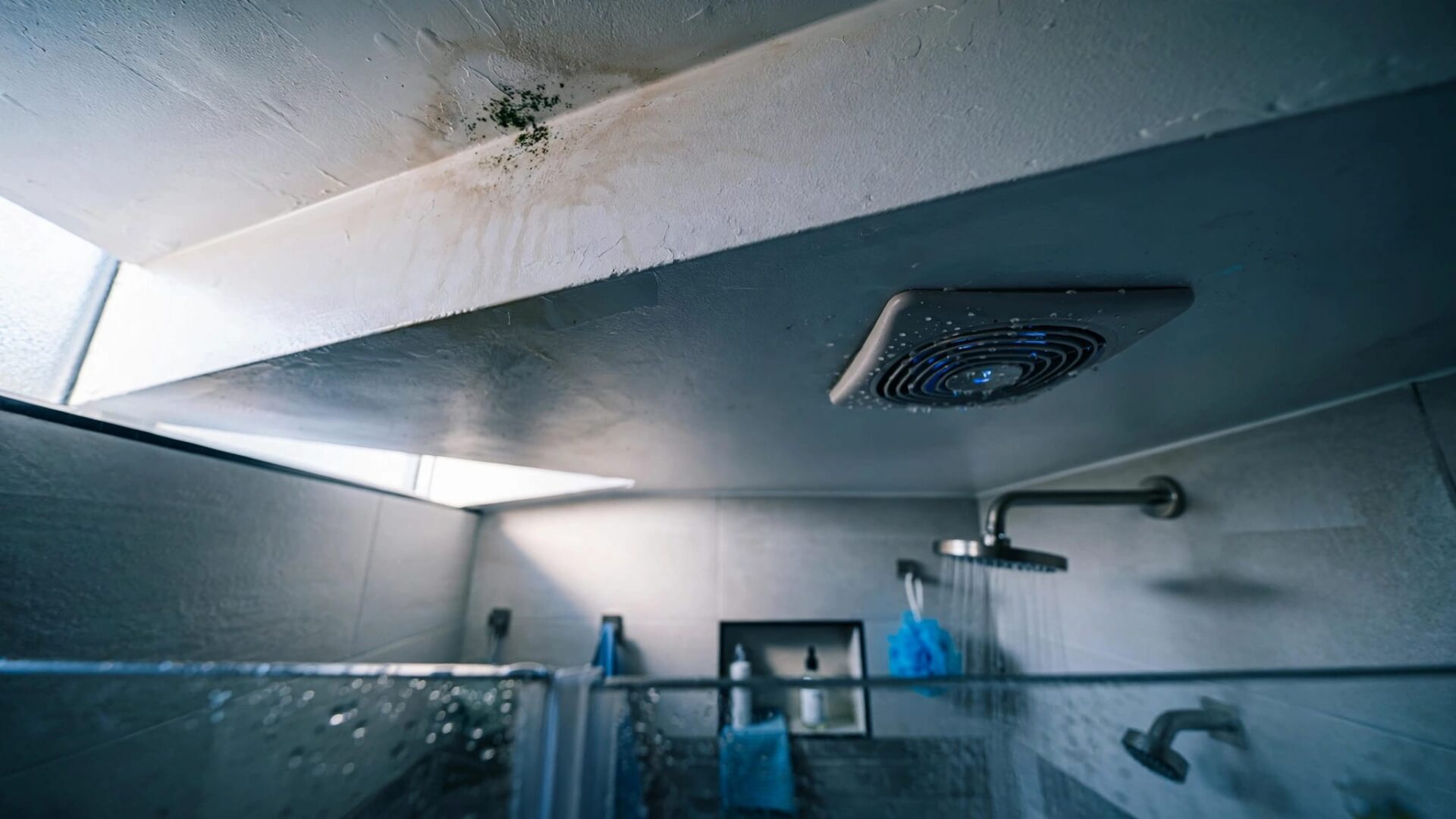
Bathroom ceiling mold in Naples often comes from shower condensation, but an isolated stain, persistent dampness, or growth after rain can indicate a leak. Timing and ceiling condition help distinguish the causes, although appearance alone can’t confirm the source.
We recommend finding the moisture source before cleaning or repainting, since bathroom ceiling mold can return if dampness persists. In Southwest Florida, steam and humid outdoor air can raise humidity even without a plumbing problem, so a dehumidifier may help.
Key Takeaways
- Mold spots after showers may point to condensation, while staining, persistent dampness, or changes after rain or plumbing use may point to a leak. These clues don’t confirm the cause.
- Find and fix the moisture source before cleaning or repainting. Keep indoor relative humidity around 40% to 50% when practical, and run the bathroom exhaust fan during showers and for at least 20 minutes afterward.
- A small patch on a sound, washable surface may be suitable for DIY cleanup after the moisture problem is corrected. Porous, softened, swollen, or persistently damp ceiling materials need professional assessment.
- Paint only after mold removal or remediation is complete, the moisture source is fixed, and the ceiling is dry. Mold-resistant primer and paint won’t repair a leak or dry wet materials.
How to Tell Condensation From a Leak
To assess bathroom ceiling mold, compare its location and timing with bathing, rainfall, and nearby plumbing. These clues can point to condensation or water leaks, but they don’t confirm the cause. Photograph the area before disturbing it.
What Points to Shower Condensation?
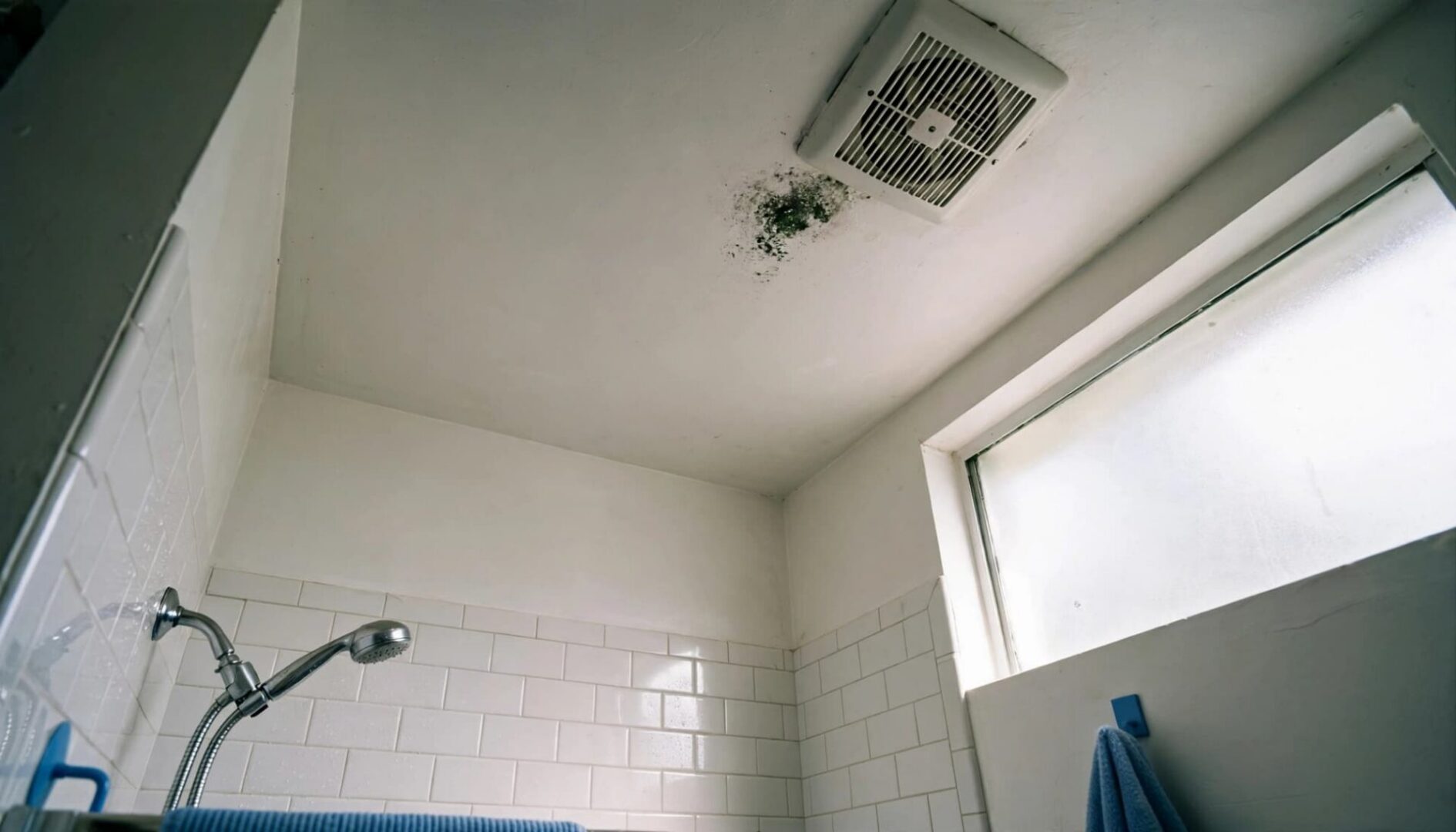
Condensation is more likely when mold appears in small spots across the ceiling above the bathing area or along cool corners. Mirrors may stay foggy, and the room may feel damp after bathing.
Warm, moisture-heavy air deposits water on cooler ceilings. Repeated dampness can affect paint, plaster, and drywall. Poor ventilation or an exhaust fan that moves too little air can leave the room damp or discharge air into the attic.
However, mold around an AC vent also warrants attention to HVAC condensation. A location near a vent doesn’t prove bathing caused it.
What Points to a Hidden Leak?
A concentrated yellow or brown stain, bubbling paint, soft drywall, or dripping can point to a leak, but none confirms it. Growth that worsens after Naples thunderstorms may suggest roof intrusion; changes after upstairs bathroom use may point to plumbing.
Our guide to plumbing versus roof leak signs explains those patterns.
Stop using a suspected leaking fixture. Stay clear of sagging ceilings or water near lights, and arrange prompt professional help. Renters should photograph the damage and notify their landlord or property manager immediately.
When Is Small-Patch Cleanup Safe?
DIY cleanup may suit a small patch of mold on a sound, washable surface after you correct the moisture problem. The EPA’s small-area cleanup guidance says homeowners can usually handle less than about 10 square feet, but size isn’t the only consideration.
Porous, softened, swollen, or persistently damp ceiling material needs professional assessment for mold remediation. Don’t scrape or cut into affected drywall to investigate hidden damage.
For limited mold removal:
- Keep other people away, and wear an N95 respirator, gloves, and goggles. Use secure footing rather than overreaching.
- Follow the surface manufacturer’s cleaning instructions. On a suitable hard, washable surface, use detergent and water gently without soaking the ceiling or dry-brushing growth.
- Dry the surface completely. Seal contaminated disposable cleaning materials in bags before disposal, then monitor for returning spots or dampness.
Bleach isn’t a routine cleaner for porous drywall because it doesn’t reliably remove growth within the material. Use bleach only on suitable nonporous surfaces, such as tile or porcelain. Never mix bleach with vinegar, ammonia, or other cleaners.
Mold exposure can cause nasal irritation, sore throat, coughing, wheezing, burning eyes, or rash in some people. Anyone with asthma or weakened immunity should avoid cleanup and seek medical advice about symptoms.
How to Keep Bathroom Ceiling Mold From Returning
Lasting prevention of bathroom ceiling mold requires dry materials and controlled indoor moisture. Surface cleaning won’t compensate for an unrepaired leak.
What Humidity and Fan Settings Help?
We recommend aiming for 40% to 50% indoor relative humidity when practical. The EPA’s moisture-control guidance recommends staying below 60%, ideally between 30% and 50%.
Use a digital hygrometer to track conditions. Brief spikes after bathing matter less than readings that stay high. Run AC consistently, maintain condensate drains, and use a dehumidifier when needed. Opening windows during muggy Naples weather can add moisture. If readings stay high, run the dehumidifier longer and check for hidden leaks.
HVI recommends 1 CFM per bathroom square foot for bathrooms under 100, with a 50 CFM minimum. Good ventilation requires an exhaust fan sized to the room. Run the exhaust fan while you shower and for at least 20 minutes afterward. Confirm its duct sends air outdoors, not into an attic or wall cavity, and check that airflow clears moisture after use.
When Is the Ceiling Ready for Paint?
Wait to paint until mold removal and any needed mold remediation are complete. The moisture source must be fixed, and the ceiling must be dry. Our guidance on what to do before repainting explains why covering active growth isn’t a repair.
Use a mold-resistant primer on a repaired ceiling, then choose mold-resistant paint designed for bathrooms. A mold-resistant finish can protect the surface, but it can’t dry wet insulation or stop water intrusion.
Begin drying wet materials immediately, aiming for the EPA’s 24-to-48-hour prevention window. That window is guidance, not a guaranteed deadline for growth. If the cavity stays wet, the surface can look dry while damage continues behind it.
When Does a Naples Bathroom Need Professional Help?
Seek a professional assessment if bathroom ceiling mold covers more than about 10 square feet or returns after cleaning. Porous ceiling materials, flooding, contaminated water, suspected HVAC involvement, and hidden moisture also warrant help. Appearance alone doesn’t prove the cause.
Our mold testing and remediation services provide mold remediation focused on the source of dampness and affected materials. Depending on the scope, mold removal may include containment, damaged-material removal, HEPA filtration and vacuuming, and controlled drying before repairs.
We provide these services in Naples, Cape Coral, and Fort Myers, with more than 20 years serving local communities. Our licenses include CRC1333503, MRSA2528, and MRSR2717.
For sudden leaks or storm damage, our professional team is available 24/7. We work with insurance companies when applicable. Preserve photos, repair estimates, invoices, and drying records; coverage depends on your policy and the cause of damage.
Frequently Asked Questions
How can I tell whether bathroom ceiling mold comes from condensation or a leak?
Spots above the bathing area, foggy mirrors, and dampness after showers may point to condensation. A concentrated stain, bubbling paint, soft drywall, or changes after rain or upstairs bathroom use may point to a leak, but appearance alone can’t confirm the source.
Can I clean a small patch of bathroom ceiling mold myself?
DIY cleanup may be suitable for a patch smaller than about 10 square feet on a sound, washable surface, once you’ve corrected the moisture problem. Wear an N95 respirator, gloves, and goggles, and get professional help for porous or damaged ceiling materials.
When should I call a professional about bathroom ceiling mold?
Arrange a professional assessment if the mold covers more than about 10 square feet, returns after cleaning, or involves porous materials, flooding, suspected HVAC condensation, or hidden moisture. Stay clear of sagging ceilings or water near lights, and seek prompt help for a suspected leak.
When can I repaint a ceiling after mold removal?
Wait until mold removal or any needed remediation is complete, the moisture source is fixed, and the ceiling is dry. Mold-resistant primer and bathroom paint can protect a repaired surface, but they won’t stop water intrusion or dry wet insulation.
Get the Moisture Source Fixed First
Scattered spotting after showers may point to condensation; concentrated staining or persistent wetness may point to a leak. Treat these as clues, and address the moisture source before cosmetic ceiling repairs.
We can assess recurring bathroom ceiling mold, identify its moisture source, and plan the necessary cleanup and repairs.
Call (239) 633-6494 to schedule an appointment with Services 321, or contact our team immediately for an active leak or storm-related water damage.
