
Plumbing Leak vs Roof Leak: How to Find the Source
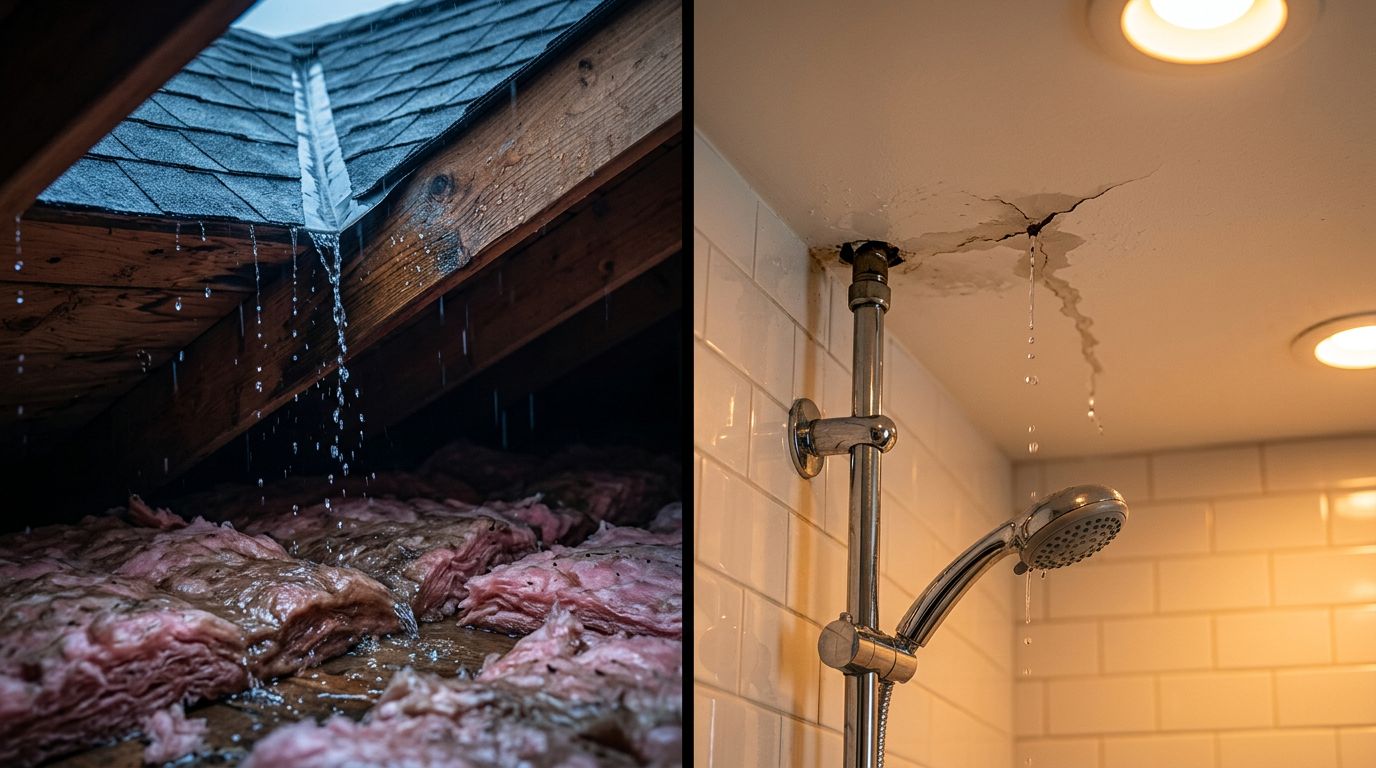
Rain-linked ceiling moisture usually points to the roof, while a stain beneath a bathroom, kitchen, or laundry fixture usually points to plumbing. In a plumbing leak vs roof leak check, timing, location, water-meter movement, and attic evidence provide the fastest answer.
Water can travel along rafters, pipes, insulation, and drywall before it appears. That means the drip or stain may sit several feet away from the entry point. We recommend finding the source before patching the ceiling or arranging the wrong repair.
The Quickest Plumbing Leak vs Roof Leak Comparison
Use these clues together rather than relying on the stain alone.
| Clue | More likely a plumbing leak | More likely a roof leak |
|---|---|---|
| Timing | Appears during dry weather or after using a fixture | Appears during or shortly after rain |
| Location | Beneath a bathroom, kitchen, laundry room, or water heater | On the top floor, attic ceiling, or near an exterior wall |
| Water meter | Moves when all faucets and appliances are off | Usually remains still when plumbing is isolated |
| Nearby evidence | Damp cabinets, pipe sounds, wet floors, or fixture moisture | Wet roof decking, damp insulation, flashing stains, or roof debris |
| Stain pattern | A concentrated spot near a pipe route or fixture | Broad brown rings or irregular marks spreading across the ceiling |
A ceiling stain alone cannot identify the source. Water from a broken pipe can rise through a ceiling, and rainwater can travel sideways before dripping. PlumbAtlanta’s pipe-versus-roof leak guide also emphasizes timing and the area directly above the damage.
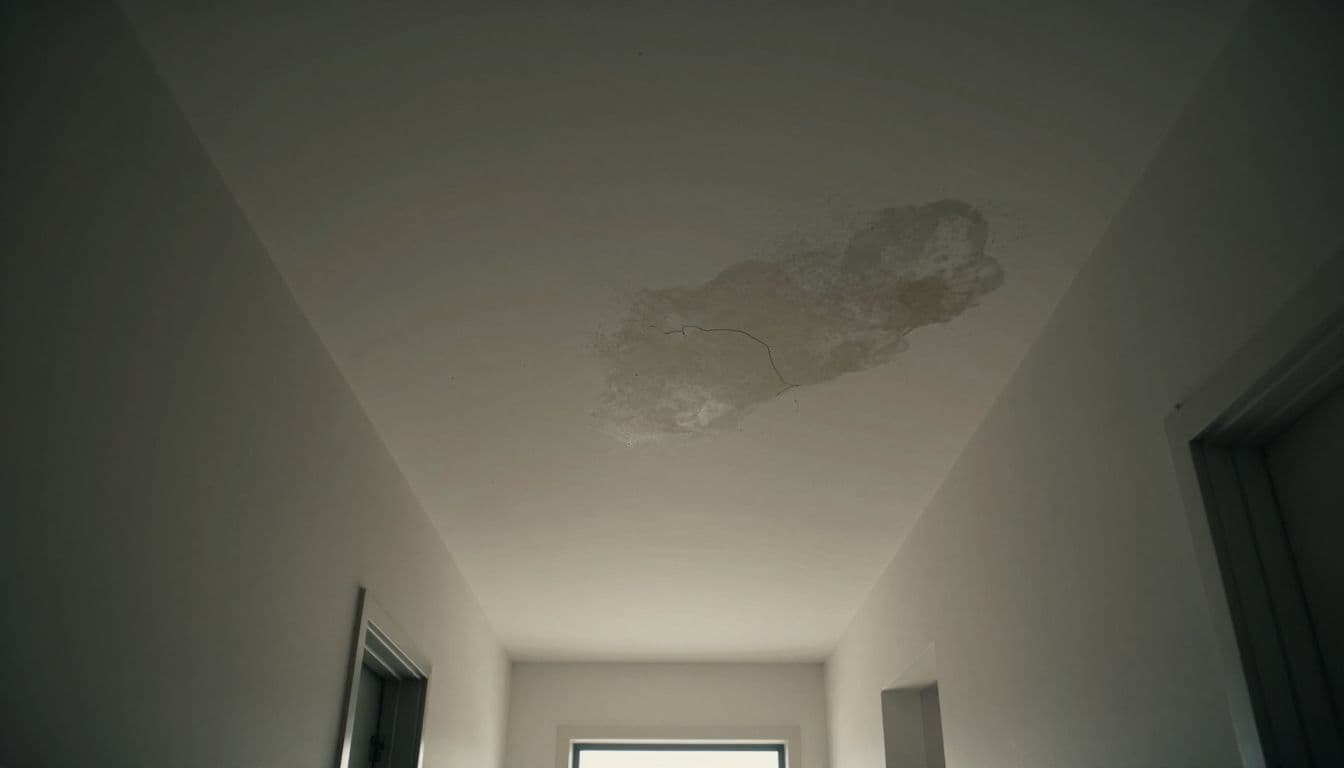
Use Timing and Location to Narrow the Source
Rain and upper-floor stains favor the roof
If the ceiling gets wet during a storm, inspect the roof system first. Common entry points include chimney flashing, skylight flashing, plumbing vent boots, roof valleys, vents, and roof edges.
A roof leak may continue after the rain stops because insulation and roof decking can hold water. The first visible drip might appear in a hallway, bedroom, or bathroom, even when the actual opening is near a vent or roof valley.
Look for yellow, tan, or brown rings on the ceiling. In an accessible attic, check for dark roof sheathing, damp insulation, water tracks on rafters, or daylight showing through roof boards. Never climb onto a wet roof during a storm. A ground-level inspection with binoculars is safer, and a roofing professional can examine steep or damaged areas.
Cape Coral homes also face heavy rainfall, strong storms, and high humidity. A small roof opening can allow enough water inside to damage insulation and drywall before the ceiling shows an obvious stain.
Dry-weather damage often points to plumbing
A stain that grows when it hasn’t rained deserves a plumbing inspection. Focus on the room directly above the damage and nearby fixtures, including toilets, showers, tubs, sinks, dishwashers, washing machines, water heaters, and refrigerator supply lines.
Have someone run one fixture at a time while you listen and watch the stained area. A dripping sound inside the wall, a wet cabinet base, warped flooring, or moisture around a toilet can support the plumbing diagnosis.
Air-conditioning condensate lines and condensation on cold, uninsulated pipes can also create indoor moisture. Those sources don’t fit neatly into a roof-versus-pipe answer, so check the HVAC system when the ceiling stain sits near an air handler or drain line.
Inspect the Attic, Fixtures, and Water Meter Safely
Start with the space directly above the stain. If an attic is accessible, use a flashlight and step only on stable flooring or joists. Avoid pushing through insulation, touching exposed wiring, or walking on the underside of the roof.
Roof-related evidence includes wet decking, compressed insulation, dark trails, and moisture near a penetration. Plumbing-related evidence includes damp supply lines, dripping drainpipes, wet vent pipes, or a bathroom fixture located directly above the area.
Next, turn off every faucet and water-using appliance. Check that toilets have stopped filling, and pause irrigation, pool autofill, water softeners, and ice makers. Look at the water meter, then check it again after 20 to 30 minutes. Movement suggests an active plumbing leak, although irrigation and pool equipment can create false readings.
You can also close the home’s main water valve for several hours if you know where it is. If the dripping stops, plumbing becomes more likely. If water continues entering during or after rainfall, the roof remains a strong suspect. Stored water in insulation or a ceiling cavity can continue dripping for a while, so this test is useful evidence rather than absolute proof.
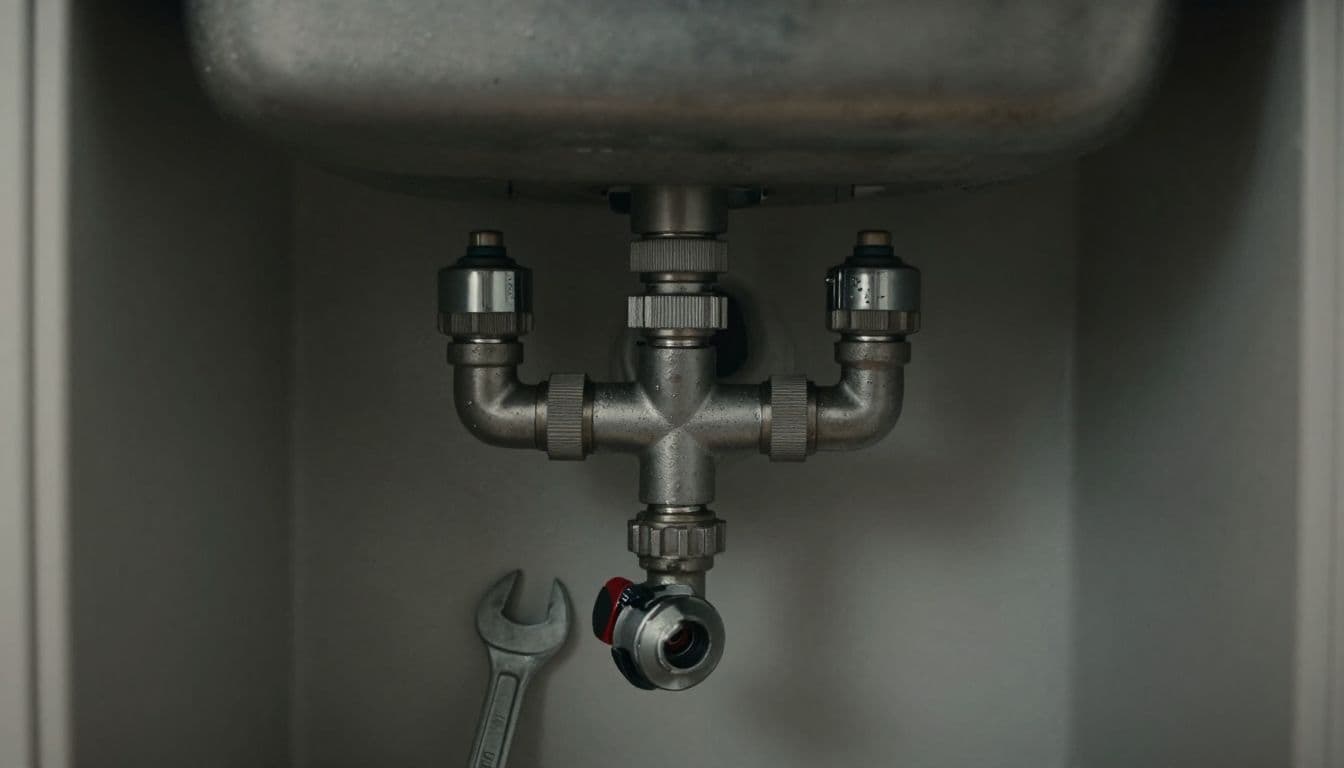
Keep the inspection non-destructive. Don’t cut large holes in a ceiling or wall before documenting the area and asking your insurer what it needs. A professional can use moisture mapping, thermal imaging, pressure checks, and small targeted access points to locate hidden water.
Steps to Take During an Active Leak
When water is dripping now, focus on safety and damage control:
- Move furniture, electronics, rugs, and personal belongings away from the wet area. Place a container under the drip if the ceiling is stable.
- If plumbing is the likely source, close the fixture shutoff valve or the main water supply. Don’t remove a pipe or fitting while the line is pressurized.
- Keep away from wet light fixtures, outlets, electrical panels, and appliances. Turn off the affected circuit only if you can do so from a dry, safe location. Otherwise, call an electrician.
- Take wide photos, close-up photos, and a short video of active dripping. Record the date, weather, room, and steps taken to limit damage.
- Avoid climbing onto the roof, cutting a bulging ceiling, or using fans around contaminated water. Sewage, floodwater, and water with a strong odor require professional handling.
A swollen ceiling may collapse without much warning. If it sags, cracks, or holds a large amount of water, keep people out of the room and call for emergency help.
When a Professional Inspection Makes Sense
Call a licensed plumber when the meter moves with all water use stopped, a supply line is leaking, water pressure has changed, or you hear constant dripping inside a wall. A plumber can test the system and repair the failed pipe, valve, fixture, or appliance connection.
A roofing professional is the right choice when the leak follows rain, attic evidence points to wet decking, or water appears near flashing, vents, skylights, or roof valleys. Do not accept a ceiling patch as a complete repair until the entry point has been addressed.
A water damage restoration team is also appropriate when water has reached drywall, insulation, cabinets, flooring, or several rooms. Professionals can extract standing water, remove materials that cannot be dried, set drying equipment, monitor moisture, and document the work. For Cape Coral and nearby Southern Florida homes, water damage restoration services can coordinate drying and reconstruction after the source is repaired.
Targeted leak detection often costs less than opening multiple walls without a plan. Leak detection and pipe repair guidance can help homeowners understand why a single wet area may need focused testing rather than a whole-house plumbing replacement.
Insurance, Documentation, and Repair Estimates
Insurance usually treats a sudden, accidental pipe failure differently from gradual seepage, corrosion, poor maintenance, or mold that developed over time. A wind-damaged roof opening may receive different treatment from an old roof that has leaked for months. The policy, deductible, exclusions, and endorsements control the outcome.
Rising water and storm surge are separate flood risks. Standard homeowners insurance generally doesn’t cover flood damage, which may require a National Flood Insurance Program policy or private flood coverage. Cape Coral homeowners should review those terms before a storm because flood coverage, water backup coverage, and ordinary plumbing coverage address different causes.
If you may file a claim, notify the insurer promptly. Before throwing away damaged flooring, cabinets, appliances, or belongings, ask whether the adjuster needs to inspect them. Save photos, videos, moisture readings, drying logs, receipts, repair invoices, and the failed component when it is safe to keep it.
Request a line-item estimate that separates:
- Water extraction and drying
- Demolition and disposal
- Cleaning and sanitizing
- Moisture checks and monitoring
- Drywall, insulation, flooring, cabinet, and trim repairs
- Final reconstruction and painting
A low estimate may address only the visible stain. A reliable scope identifies hidden moisture and states which work is excluded, so you can compare bids without surprise changes later.
Find the Source Before Repairing the Surface
A plumbing leak vs roof leak decision depends on a pattern, not one mark on the ceiling. Rain, attic moisture, and roof penetrations point toward roofing. Dry-weather damage, fixture locations, water-meter movement, and pipe sounds point toward plumbing.
We recommend stopping active water, protecting electrical safety, documenting the damage, and arranging the correct inspection quickly. Drying matters as much as the repair because damp insulation, drywall, flooring, and cabinets can lead to odor, mold, and a larger restoration project.
FAQ: Plumbing Leak vs Roof Leak
Can a roof leak look like a plumbing leak?
Yes. Roof water can travel along rafters, insulation, and drywall before it reaches a ceiling opening. A roof leak can appear beneath a bathroom or along an interior wall, so rain timing and attic evidence matter.
Can a plumbing leak look like a roof leak?
Yes. A broken pipe above a ceiling can create brown rings, bubbling paint, and dripping water. If the stain grows during dry weather or the water meter moves with fixtures off, plumbing becomes more likely.
Should you paint over a ceiling stain?
No. Painting covers the mark but doesn’t dry wet materials or repair the source. Confirm that the leak has stopped, check the cavity for moisture, and replace damaged materials before repainting.
When is a leak an emergency?
Call for immediate help when water reaches electrical components, the ceiling sags, sewage enters the home, several rooms are affected, or you cannot stop the flow. Keep people and pets away from the area until it is safe.
