
Pool Equipment Leak Damage in Florida: Cleanup Steps
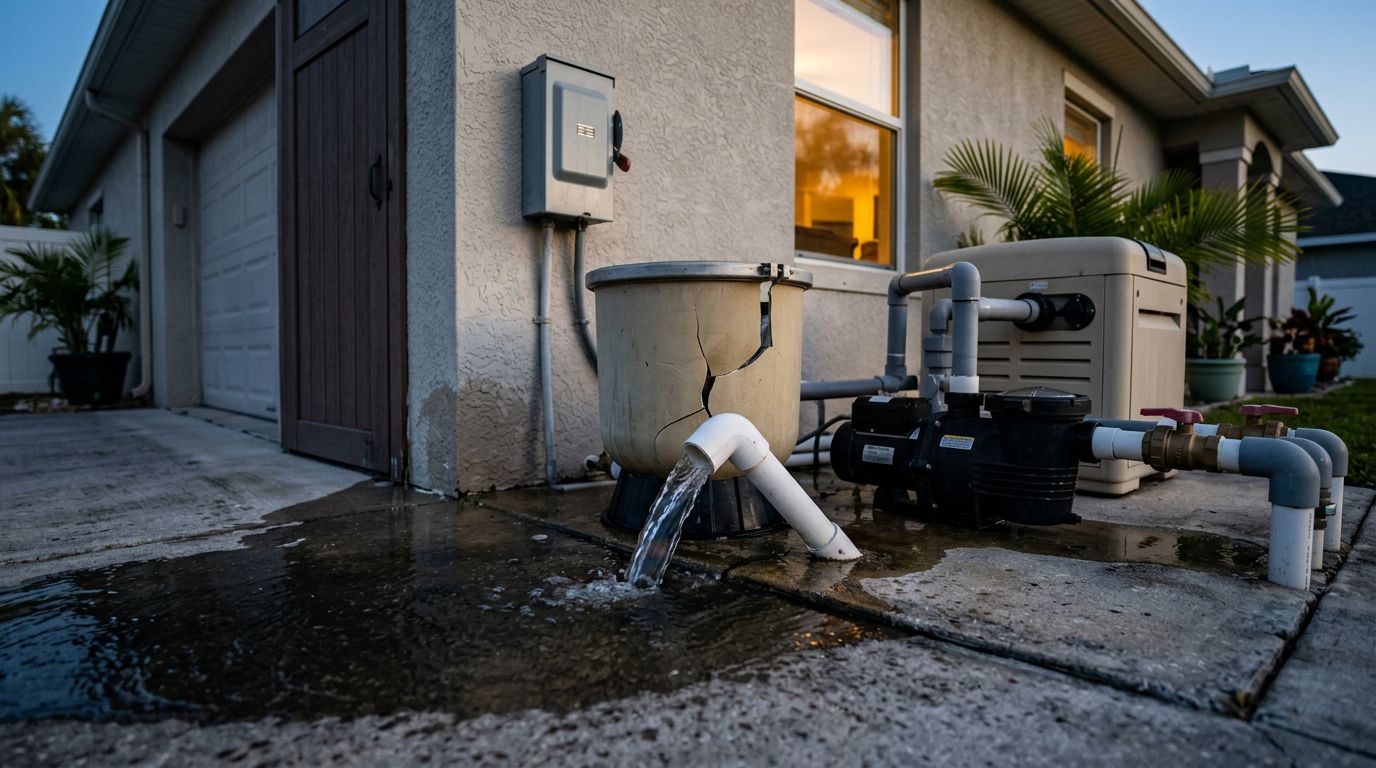
Pool equipment leak damage Florida homeowners notice around a pump, filter, heater, or pipe may extend well beyond the puddle. Water can move under flooring, into walls, and around electrical connections before the visible damage appears.
Your first priorities are safety, documentation, and stopping additional water. We recommend leaving electrical, gas, concealed plumbing, and contaminated cleanup to licensed professionals. These steps help you protect your home without creating a second hazard.
Pool Equipment Leak Damage Florida Homeowners Should Handle Safely
Pool equipment areas often contain pumps, filters, heaters, chemical systems, valves, and electrical disconnects in one small space. A failed union, cracked filter housing, loose fitting, broken pipe, or damaged heater connection can release enough water to affect a garage, patio, slab, wall, or nearby storage area.
Before walking through the area, look for warning signs:
- Water around electrical equipment, outlets, conduit, or the service panel
- A strong gas or chemical odor
- Soft soil, a sinking equipment pad, or visible structural movement
- Sewage, stormwater, or muddy floodwater mixed with the pool water
- Water entering the home, garage, walls, cabinets, or flooring
Keep children and pets away. If water has reached electrical equipment, do not touch the equipment, open a panel, reset a breaker, or plug in a pump. Leave the area and call a licensed electrician.
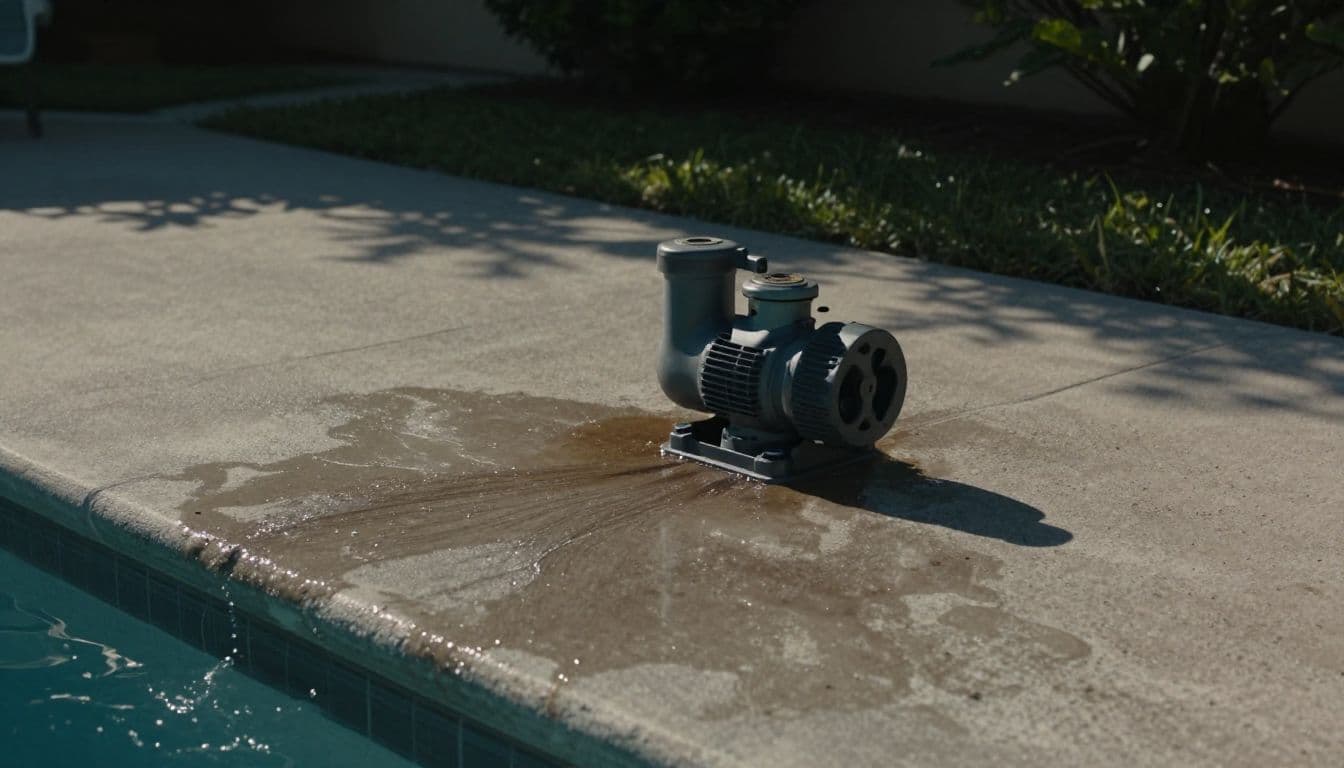
A wet pool pump should not be turned on to locate the leak. Running damaged equipment can cause electric shock, fire, or additional equipment failure. A pool technician can isolate the system and test it safely.
Document the Leak Before Cleanup
Take photographs before moving furniture, removing materials, or cleaning the equipment pad. Start with wide images that show the entire pool area, garage, or affected room. Then take close-ups of the failed component, waterline, stains, flooring, drywall, cabinets, and damaged belongings.
A short video can also help. Record active dripping when it is safe, the equipment location, the water level, and any visible path toward the home. Write down:
- The date and time you first noticed the leak
- Recent storms, unusual noises, pressure changes, or equipment alarms
- The last time the pump, filter, or heater worked normally
- Areas that became wet and steps taken to limit further damage
- Names of pool technicians, plumbers, electricians, and restoration companies
Keep the failed part or component when practical. Save invoices, receipts, water bills, equipment records, temporary repair costs, and written messages. Abnormally high water usage may help document the loss, especially when a leak detection professional provides a written report.
Insurance coverage depends on the policy, cause of loss, deductible, exclusions, and endorsements. A sudden accidental pipe failure may receive different treatment than corrosion, poor maintenance, repeated seepage, or a slow leak that continued for months. Rising water and storm surge usually fall under separate flood coverage, while sewer backup may require an added endorsement.
Guidance from C&S Insurance on water damage claims and SERVPRO’s claim documentation tips supports keeping detailed photos, notes, receipts, and communication together. Notify your insurer promptly if you may file a claim, but ask what it needs before discarding damaged materials or replacing equipment.
Stop the Leak and Remove Water Carefully
Only shut off a valve or normal equipment switch if you can reach it without entering water or touching wet electrical components. If the source is an exposed plumbing connection and the area is dry, you may close the local water valve. Hidden pipes, pressurized lines, heater connections, and gas systems require the right licensed trade.
Use this order for immediate response:
- Keep people away and move safe, undamaged items out of the wet area.
- Shut off the water source if the valve is accessible and dry.
- Disconnect the pool system only through a safe, normal control point. Do not open electrical equipment.
- Photograph the area and damaged property before cleanup.
- Remove small amounts of standing water with towels, a mop, or a wet/dry vacuum rated for liquids, but only when electrical hazards are absent.
- Begin drying with fans or a dehumidifier after the source is stopped and the area is electrically safe.
Never use a regular household vacuum on standing water. Don’t place fans, extension cords, or dehumidifiers in a wet electrical area. Also, don’t mix bleach with ammonia, acids, or other cleaning products.
Pool water may become contaminated after mixing with soil, sewage, stormwater, or chemicals. If the water source is unknown, smells unusual, entered walls or insulation, or affected more than a small area, stop cleanup and call a restoration professional. Porous materials such as soaked drywall, carpet padding, particleboard, and some insulation may need controlled removal rather than surface cleaning.
Water damage can extend sideways beneath flooring and downward through wall cavities, which is why this hidden water damage can go unnoticed. A dry-looking surface doesn’t prove the framing, insulation, or subfloor is dry.
Know Which Professional Should Handle the Repair
Pool equipment leak damage Florida homeowners face often involves more than one trade. The person who removes standing water may not be qualified to repair the failed pump, wiring, gas line, or concealed pipe.
| Problem | Appropriate professional |
|---|---|
| Wet wiring, disconnects, outlets, or panels | Licensed electrician |
| Broken concealed or pressurized plumbing | Licensed plumber |
| Pump, filter, heater, valve, or pool circulation failure | Licensed or qualified pool technician |
| Water inside walls, flooring, cabinets, or insulation | Water-damage restoration professional |
| Gas heater concerns or gas odor | Licensed gas professional or emergency utility service |
| Cracked slab, shifting pad, or structural movement | Qualified structural professional |
A pool technician can pressure-test plumbing, inspect fittings, identify equipment failure, and confirm whether the system is safe to operate. A plumber may need to repair supply lines or drainage connections. An electrician should inspect any circuit or component exposed to water.
Our Services 321 and Restoration 321 team in Cape Coral can coordinate water extraction, drying, moisture checks, mold work, repairs, and reconstruction. We still refer electrical, plumbing, gas, and structural work to the licensed professionals responsible for those systems.
Ask for a Detailed Restoration Estimate
A useful estimate explains where the water traveled and what the property needs. It shouldn’t price only the darkest stain or the water visible around the pump.
Ask for separate line items covering:
- Water extraction and disposal
- Controlled demolition and material removal
- Drying equipment and moisture monitoring
- Cleaning, sanitizing, and odor treatment
- Plumbing, pool, or electrical work
- Reconstruction, painting, flooring, cabinets, and trim
- Work excluded from the estimate
The restoration company should record moisture readings in affected and nearby dry materials. Depending on the loss, technicians may check behind baseboards, beneath flooring, inside cabinets, or within wall cavities. Air movers and dehumidifiers may need daily monitoring, especially in Florida’s humid conditions.
Be cautious when a company offers a low price without discussing hidden moisture, daily readings, or the full moisture path. A surface-only cleanup can leave damp insulation or framing behind. Ask for copies of moisture readings, drying logs, photographs, inventory records, and the written scope.
Keep the restoration company’s inventory separate from your own claim records. Check item descriptions, room names, quantities, condition notes, photographs, and storage information. Save every invoice and written message.
Prevent Another Equipment Leak
After repairs, have the pool professional inspect unions, valves, filter housing, heater connections, pressure readings, and exposed PVC. A clean, properly graded equipment pad makes future leaks easier to spot and helps prevent water from moving toward the home.
Watch for recurring puddles, unusual pump noise, dropping pool levels, pressure changes, cracked fittings, corrosion, or an unexplained rise in the water bill. For a suspected pool-level leak, a bucket test over 24 hours can help compare evaporation with a larger water loss. It won’t identify the equipment failure, so arrange professional testing when the result is unclear.
What should you do first after a pool equipment leak?
Protect people and pets, stay away from wet electrical equipment, and stop the water source only when the valve is safely accessible. Photograph the damage before moving items, then notify the appropriate professional and your insurer if you may file a claim.
Can you run the pump to find the leak?
No. If the pump, wiring, controller, or surrounding area is wet, don’t run the system. A pool technician can isolate the equipment and perform testing without exposing you to electrical or mechanical hazards.
Does homeowners insurance cover a leaking pool pump?
Coverage depends on the policy and cause of loss. A policy may cover resulting water damage from a sudden accidental failure while excluding the old pump, corroded pipe, or worn fitting that caused it. Gradual leaks, poor maintenance, floodwater, storm surge, and sewer backup may receive different treatment.
Should you call the insurer or a restoration company first?
Stop the source and document the condition first. If water is actively damaging the home, contact a restoration company promptly while notifying the insurer as soon as possible. Ask the carrier what it requires before removing drywall, disposing of contents, or replacing equipment. Additional water damage claim guidance from Lightspeed Restoration also emphasizes photos, written records, and saved receipts.
Can you remove wet drywall yourself?
Avoid cutting walls when water may have reached wiring, plumbing, insulation, or contaminated materials. A restoration professional can use moisture readings to determine the affected area and remove only what needs controlled demolition. Painting over a stain before the cavity dries can trap moisture and create a larger repair.
What should a restoration company provide?
Request a written scope, itemized estimate, moisture readings, drying logs, equipment checks, photographs, contents inventory, and clear exclusions. The proposal should separate temporary mitigation from permanent reconstruction and identify whether licensed plumbing, electrical, pool, or structural work is included.
Author: [Author Name], Florida Property Restoration Writer
Editor: [Editor Name], Florida Restoration Professional
Credentials and bio: [Add verified Florida licensing, restoration certifications, and years of field experience. Author Name writes practical property-care guidance for Florida homeowners. Editor Name reviews water-damage safety, drying, and insurance documentation content.]
Last updated: August 2026
