Florida Condo Water Damage Responsibility: Who Pays?
Florida condo water damage responsibility usually turns on the leak’s source, the declaration, and any negligence, not on which unit shows the stain. Associations generally handle common elements, while owners often handle in-unit finishes and belongings, but the facts and insurance policy can change who pays.
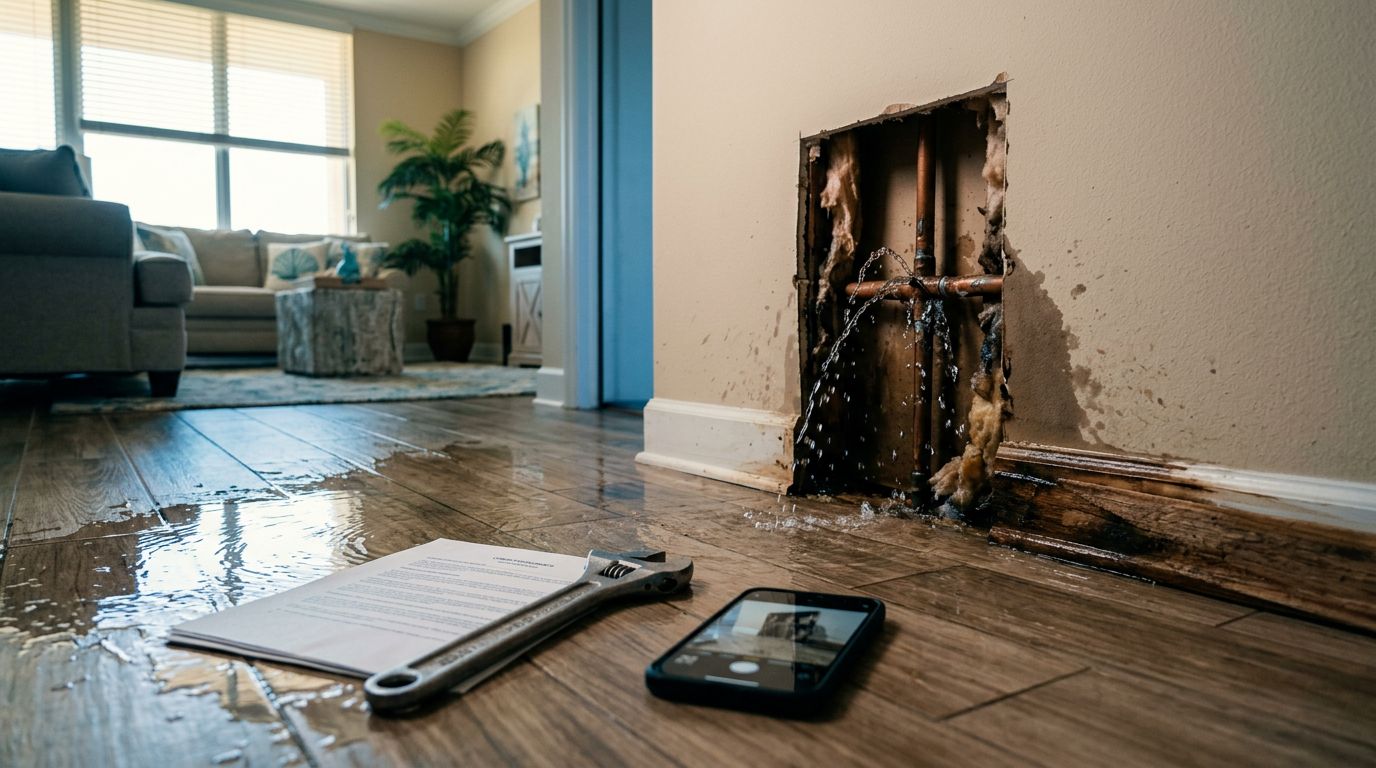
A failed pipe behind a wall can create association duties. A leaking washing machine hose may point toward the unit owner. When water crosses floors or damages another unit, the responsible party still depends on the origin, maintenance duties, and proof of negligence. We recommend documenting the loss before arguing about fault.
Florida condo water damage responsibility starts with the source
Florida’s Condominium Act places maintenance of common elements with the association, subject to the declaration and its treatment of limited common elements. Florida Statutes Section 718.113 requires the association to maintain, repair, and replace condominium property for which it is responsible.
Common elements often include roofs, exterior walls, structural components, shared plumbing, common sewer lines, and pipes located behind walls or beneath floors. However, the declaration may assign a particular component to the unit owner. That document can change the answer even when the statute points toward association responsibility.
The first question is therefore simple: Where did the water begin? The second question is less obvious: who had the duty to maintain that component?
Association repairs and owner repairs are different questions
Association duties for common elements
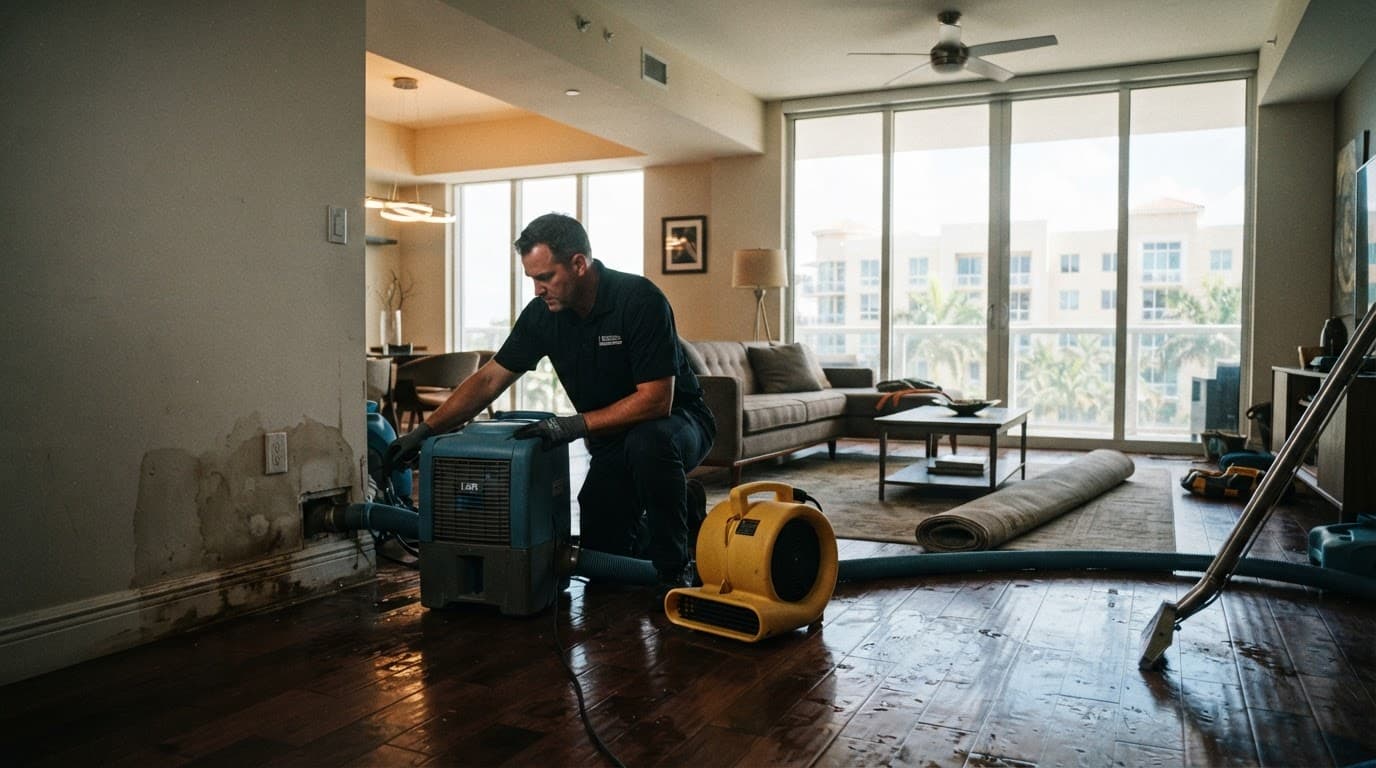
An association usually arranges repairs when a common pipe, roof, exterior wall, slab, or shared drain causes the loss. The association may also need to stop the source, protect the building, coordinate access, and restore property within its assigned maintenance scope.
That doesn’t automatically mean the association pays for every item inside an affected unit. Association insurance and repair duties often focus on common property and certain original-installed building components. Floor coverings, wall coverings, cabinets, appliances, furnishings, window treatments, and personal belongings may fall outside the association’s coverage.
The declaration, bylaws, insurance documents, and board policies should be reviewed together. A Florida condo water damage guide provides a plain-language discussion of the way Chapter 718 can affect repair responsibility.
Owner duties inside the unit
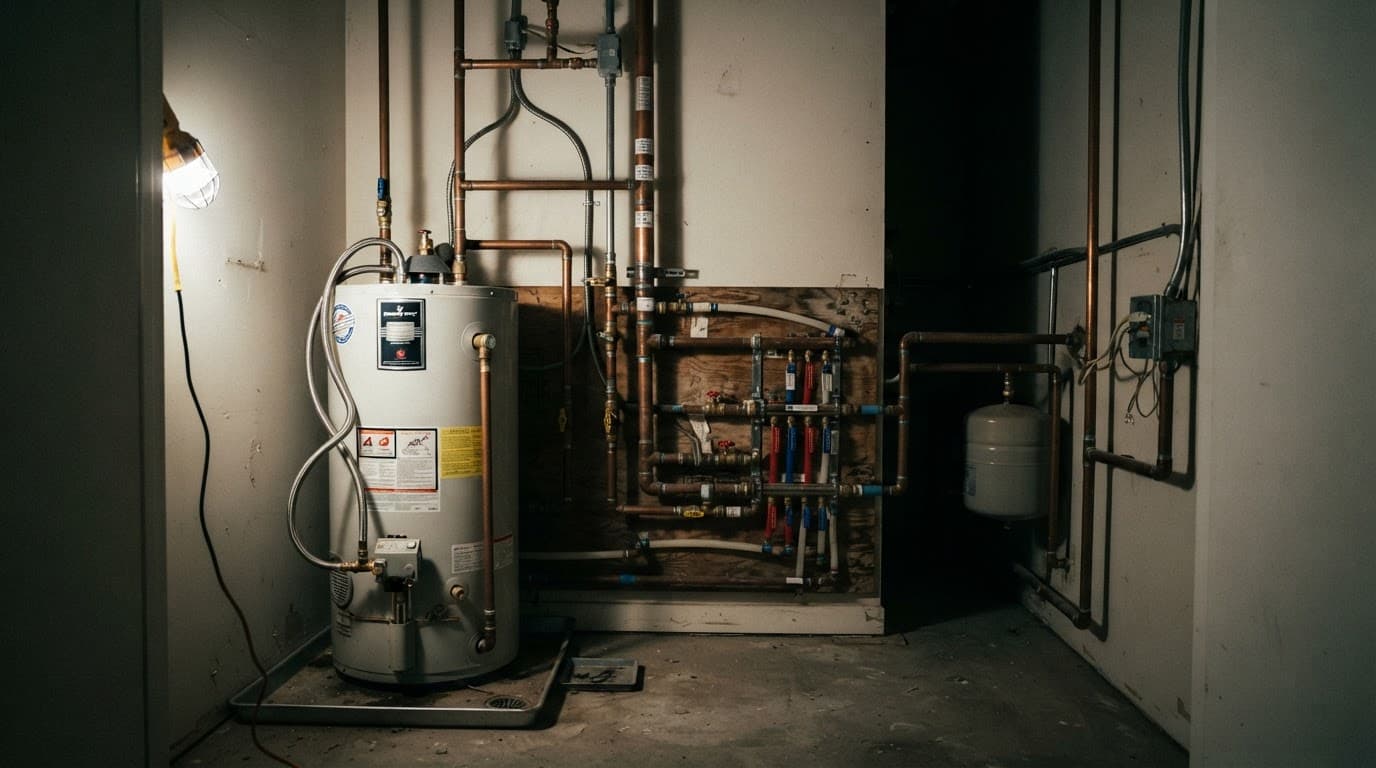
Owners commonly handle their personal property and interior items assigned to the unit. Examples include furniture, clothing, electronics, rugs, decorative finishes, and some appliances. The owner may also be responsible for a water heater, fixture, supply line, or appliance connection located inside the unit.
Responsibility becomes stronger when the owner ignored a known leak, failed to maintain equipment, caused the damage intentionally, or violated a condominium rule. Under Florida law, an owner’s negligence, intentional conduct, or rule violation can create responsibility for repair costs that insurance doesn’t cover.
Still, water coming from a unit doesn’t prove negligence. A sudden failure can happen without warning. The association or another owner must connect the loss to a duty, a failure, and actual damage before demanding payment.
When water damages another condo unit
Water often travels through ceilings, wall cavities, flooring, and shared plumbing spaces. The unit with the visible stain isn’t always the unit where the problem began.
For example, a broken supply line inside an upstairs unit may send water into the ceiling below. The upstairs owner may need to address the failed line if it was part of the unit owner’s property. The association may still need to repair a damaged common element, such as a structural ceiling or shared pipe. The downstairs owner may use an HO-6 policy for belongings and interior finishes.
If the upstairs owner knew about a recurring leak and ignored it, the negligence analysis changes. A sudden, hidden pipe failure presents a different question. Florida condominium leak guidance from Gomez Law also distinguishes common-element duties from damage tied to an owner’s conduct.
Boards and managers should coordinate emergency access quickly. Waiting for a final liability decision can allow wet drywall, insulation, cabinets, and flooring to deteriorate. We recommend stopping the source, documenting conditions, and preserving evidence while the parties review responsibility.
Insurance, deductibles, and the cause of loss
Insurance coverage depends on the policy language, cause of loss, exclusions, deductible, and endorsements. A sudden, accidental pipe break may receive different treatment from corrosion, poor maintenance, or a slow leak that continued for months.
A policy may cover resulting interior damage while excluding the failed appliance or worn-out pipe itself. Some policies cover reasonable tear-out needed to reach a broken pipe inside a wall. Other claims may be limited when the evidence shows repeated seepage or long-term deterioration.
Water backup coverage may require a separate endorsement. Rising water, storm surge, and other flood conditions generally require flood coverage rather than standard homeowners or condo-unit coverage. Wind-driven rain entering through a storm-damaged roof can receive different treatment from floodwater entering at ground level.
The deductible also needs careful review. The party who reports the claim isn’t automatically the party who must absorb every cost. The association’s policy, the unit owner’s policy, the declaration, and the cause of loss all matter.
Notify the insurer promptly if you may file a claim. Ask what it needs before you discard contents, remove damaged materials, open walls, or replace an appliance. Keep the claim number with photographs, videos, estimates, invoices, receipts, moisture readings, drying logs, and written messages.
What to do after a condo leak
Make the first response safe
Stop the water if you can do so safely. Contact building management when the source may involve a common pipe, roof, riser, sprinkler, or another shared system. If water reached outlets, switches, wiring, or electrical equipment, don’t touch the components or reset breakers. A qualified electrician should inspect the affected system.
Clean water from a small, contained area may sometimes receive immediate attention. Sewage, storm surge, or contaminated drain water needs professional handling. Keep people and pets away from the affected space. Porous materials exposed to contaminated water may require removal rather than surface cleaning.
Take wide photographs of each room and close photographs of stains, damaged materials, and the suspected source. Record when you noticed the problem, whether it followed heavy rain, and what steps you took to limit further damage.
Demand a complete restoration scope
A reliable estimate should separate:
- water extraction and disposal;
- demolition and removal of damaged materials;
- drying equipment and moisture monitoring;
- cleaning, sanitizing, and odor treatment;
- plumbing, electrical, cabinet, flooring, and painting work;
- reconstruction, finish matching, and items excluded from the price.
Ask whether the crew will check behind walls, under flooring, inside cabinets, and around baseboards. Water can move beyond the visible stain. A cheap estimate that addresses only the puddle may leave wet insulation or subfloor behind.
At Services 321, we use written scopes to separate restoration from reconstruction. Our Cape Coral team can coordinate water cleanup, moisture checks, repairs, mold work, and remodeling, but licensed trades should handle electrical, plumbing, structural, and other regulated work.
Publisher and legal review
Services 321, also known as Restoration 321, is a Cape Coral-based, state-certified property repair and restoration company serving Southern Florida. Its listed credentials include CRC1333503, MRSA2528, and MRSR2717. The company provides water damage restoration, mold remediation, remodeling, contracting, and property maintenance support.
Last updated: August 2026. This article provides general information, not legal advice. Before publication, a named Florida condominium-law attorney, such as counsel with Krapf Legal or Gomez Law, or a qualified insurance professional should review the legal and coverage statements. The published version should include the reviewer’s name, credentials, and a factual author bio.
Florida Condo Water Damage Responsibility FAQ
Does the association pay for water damage inside a condo unit?
Not automatically. The association usually handles common elements and property assigned to it by the declaration. The unit owner often handles personal belongings and interior finishes. The governing documents and insurance policies determine the final allocation.
Is a condo owner liable when water damages the unit below?
Only when the facts support responsibility. The owner may face liability if negligence, intentional conduct, or a rule violation caused the loss. A sudden failure without warning doesn’t automatically establish negligence.
Who pays the condo water damage deductible?
There is no single answer for every Florida condominium. Review the association’s policy, the unit owner’s policy, the declaration, and the cause of loss. Ask the insurer and association manager for a written explanation before accepting a charge.
Can owners begin cleanup before the insurance inspection?
Owners should take reasonable steps to prevent further damage, but they should document the condition first and ask the insurer what it requires. Emergency extraction may be necessary, especially when water threatens walls, flooring, or health. Preserve failed parts and damaged contents when practical.
When should a condo owner call a restoration company?
Call promptly when water reached drywall, insulation, cabinets, flooring, electrical components, or more than one room. Professional drying and moisture documentation can protect the building while giving the association, owner, and insurer better evidence for the responsibility decision.
