
Refrigerator Water Line Leak Damage in Cape Coral Kitchens
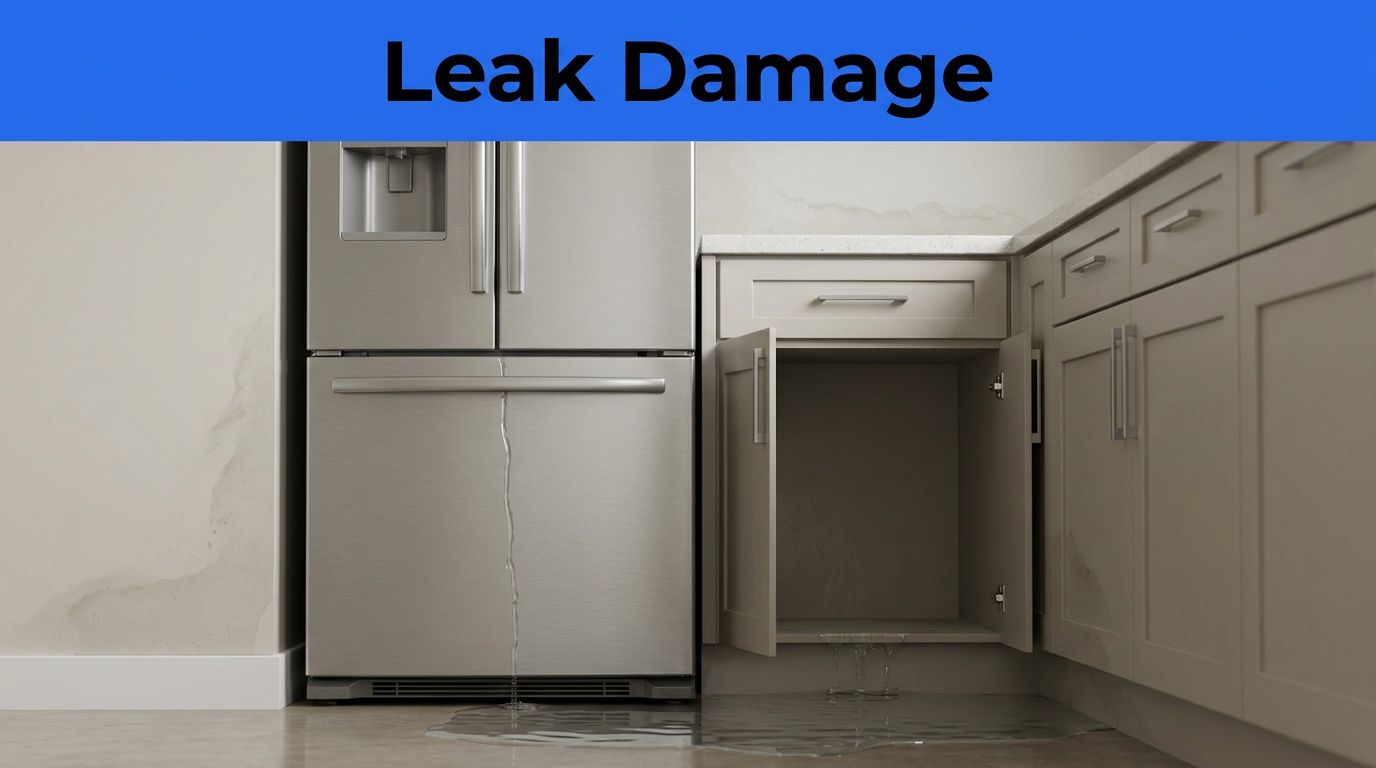
That thin line behind your fridge is often the culprit when refrigerator leaking water soaks a kitchen before lunch. In Cape Coral, a leak doesn’t stay on the surface for long. High humidity levels and warm, damp air slow drying, while water slips under cabinets and into wall cavities, risking mold growth.
A refrigerator water line leak often starts small, then turns into cabinet damage, floor damage, and mold risk. Fast action makes a big difference, so it helps to know the warning signs, the safe first steps, and the point where professional drying becomes the smart move.
Key Takeaways
- Refrigerator water line leaks in Cape Coral kitchens cause hidden damage under cabinets and in walls due to high humidity, turning small puddles into mold risks.
- Act fast in the first hour: shut off water at the valve, mop up standing water, check fittings for cracks or looseness, and aim fans at wet areas.
- Hidden moisture lingers longer than visible puddles; use moisture meters and professional drying to prevent swelling, staining, and musty odors.
- Call professionals for repair and mitigation if water reached cabinets, drywall, or flooring, or if leaks recur after DIY fixes.
- Document leaks with photos, receipts, and timelines to support insurance claims, as coverage depends on sudden damage.
Why Cape Coral kitchens hide refrigerator water line leak damage
A water supply line is easy to ignore because it hides behind a big appliance. But that small supply tube stays under pressure. If it cracks, loosens, or kinks when the fridge is pushed back, water can keep feeding the leak for hours.
Common causes include worn plastic tubing, damaged copper tubing or braided steel supply line, loose compression fittings, and a failing inlet valve. Some owners first notice a slow ice maker, weak dispenser, swollen toe-kicks, dark grout lines, or a musty smell near the refrigerator. A clogged defrost drain or issues with the defrost drain can mimic water supply line leaks, while a faulty drain pan offers another potential source of moisture. A faulty door gasket or door seal can lead to excess condensation and pooling water, especially if evaporator coils are dirty. This guide to common fridge leak causes is helpful if you want to compare symptoms before pulling the unit out.
Older plastic lines deserve extra suspicion. They can turn brittle with age, especially when the refrigerator shifts during cleaning or floor work.
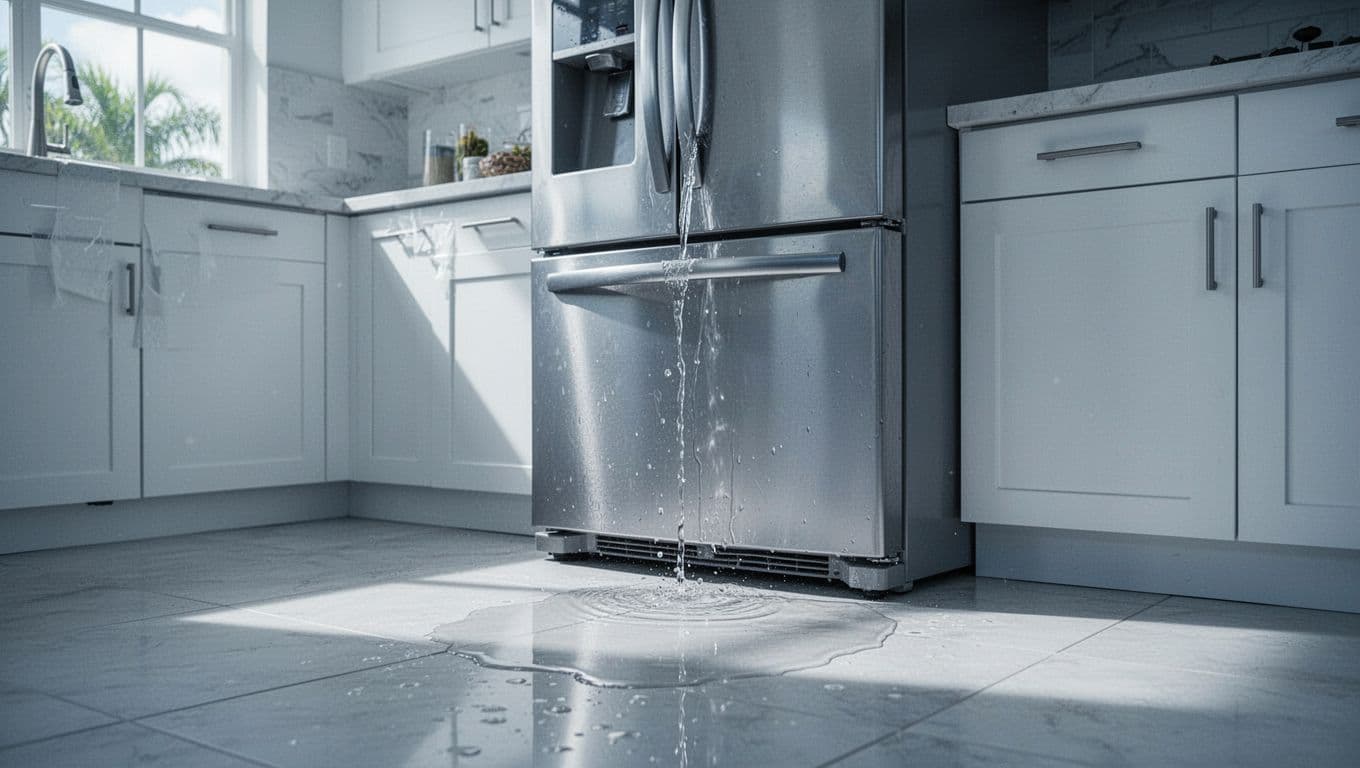
In many Cape Coral homes, tile hides the problem at first. Water can travel under base cabinets and sit against drywall. Because the leak is tucked behind the fridge, the first visible puddle is often only part of the damage. That is why refrigerator leaking water can leave behind more kitchen water damage than a bigger spill you notice right away.
What to do in the first hour
Move fast, but keep safety first. If water is near the outlet, cut power before reaching around the appliance. Then shut off the refrigerator’s shutoff valve or the home’s local shutoff if the valve won’t budge; old saddle valves are notorious for leaking.
These steps help limit damage:
- Pull the refrigerator forward carefully, and avoid dragging it across wet flooring.
- Mop up standing water with towels or a wet vac.
- Check the line, valve, compression fitting, and other fittings for drips, cracks (PVC lines are particularly prone to cracking), or a loose nut.
- Aim fans at wet cabinet bases, and open nearby doors to release trapped humidity.
If the problem is a simple loose connection and the floor stayed dry underneath, a homeowner may be able to stop the leak and monitor the area. A frozen water supply line can also cause pressure issues leading to leaks. These repair steps for a refrigerator water line can help with basic troubleshooting for early detection. Still, DIY is for small, caught-early problems. If water reached drywall, cabinet bottoms, laminate seams, or wood flooring, drying matters as much as repair.
Don’t push the fridge back into place until you test the connection. A paper towel under the fitting can reveal a slow drip. Check again after an hour, because a dry-looking floor can fool you. For future protection, consider installing a water alarm behind the unit.
Hidden moisture can outlast the puddle
Standing water gets your attention. Hidden moisture causes the bigger repair bill. Cabinet boxes, drywall paper, insulation, and subfloors can stay damp long after the surface feels dry.
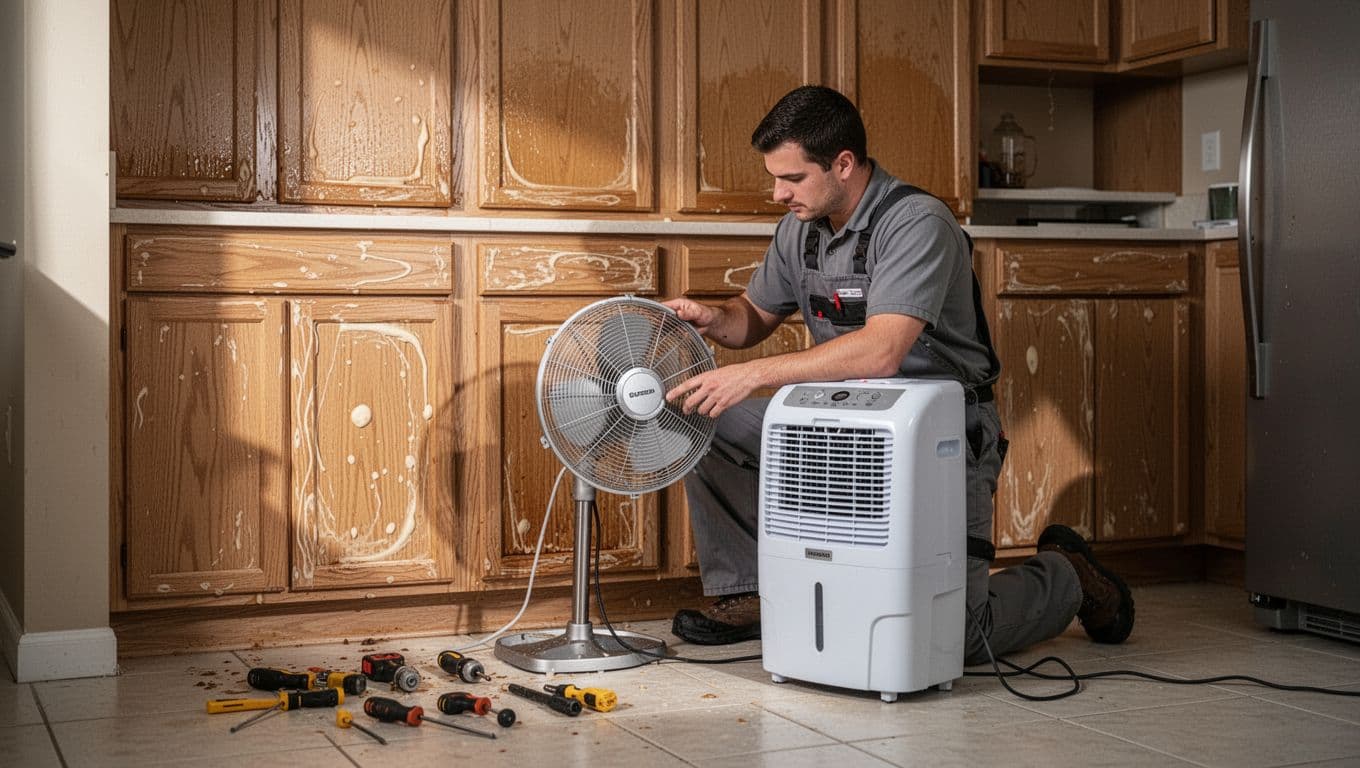
Cape Coral’s high humidity levels make that worse. Surface fans may dry the room, yet damp pockets can stay trapped behind cabinets or under flooring. As a result, the kitchen may smell fine on day one, then smell musty a few days later. Swelling, staining, and mold can show up after the leak seems handled, leading to serious water damage.
If water sat under cabinets overnight, treat it as a drying job, not a simple cleanup.
Professional mitigation teams use moisture meters, air movers, and dehumidifiers to track moisture where your hand can’t reach. They may remove toe-kicks or small trim pieces to let wet cavities dry, and they often check the drip pan for overflow during the process. Regular refrigerator maintenance helps prevent these damp pockets from forming in the first place. That extra step often saves cabinet framing and helps prevent a small appliance leak from turning into a mold problem.
Frequently Asked Questions
What causes a refrigerator water line leak?
Common causes include worn plastic tubing, damaged copper or braided lines, loose compression fittings, and failing inlet valves. Older lines turn brittle with age or shifting during cleaning. Issues like clogged defrost drains or faulty door seals can mimic supply line leaks.
What should I do right away if I find a leak?
Cut power if water nears the outlet, then shut off the fridge’s valve or home supply. Pull the fridge forward carefully, mop up water with towels or a wet vac, check fittings for drips or cracks, and run fans on wet spots. Test connections before pushing the fridge back and consider a water alarm for future protection.
How do I know when to call professionals?
Seek help if the leak ran for hours, caused cabinet or floor swelling, left soft drywall, or brings musty smells after cleanup. Plumbers fix the line, while restoration teams dry hidden moisture with dehumidifiers and air movers. DIY works only for tiny, caught-early puddles.
Why is refrigerator leak damage worse in Cape Coral?
High humidity and warm air slow drying, trapping moisture in cabinets, walls, and subfloors even after surface cleanup. Water slips under tile and baseboards easily, fostering mold in damp pockets. Professional mitigation tracks and dries these hidden areas to avoid bigger repair bills.
Does homeowners insurance cover fridge water line leaks?
Coverage often applies to sudden leaks but not gradual wear; check your policy and note quick mitigation steps. Document with photos of damage, the failed part, timelines, and receipts before discarding materials. Resources like Travelers overviews help, but your policy decides.
When to call for repair, drying, and claim help
Call for professional help when the leak ran for more than a short time, keeps returning, or left visible swelling in cabinets and floors. The same applies if you notice freezer leaking water or frost buildup, drywall feels soft, baseboards darken, or the smell changes after cleanup. A fast local response can mean the difference between drying materials in place and replacing them.
Repair and mitigation are not always the same job. A professional plumber or appliance repair service may stop the leak. A restoration team handles the wet cabinet bases, walls, insulation, and flooring that the leak left behind.
This quick table can help with the call.
| Situation | DIY cleanup may work | Professional mitigation is wiser |
|---|---|---|
| Small puddle caught right away | Yes | Usually no |
| Wet cabinet bottoms or drywall | Temporary only | Yes |
| Musty odor after drying | No | Yes |
For insurance, document everything before tossing materials to support your water damage claim. Take photos, save the failed line or fitting, write down when you found the leak, and keep receipts for cleanup and repairs. If you report a claim, note the steps you took to stop further damage. Coverage often depends on whether the damage was sudden or part of a long-term issue. Travelers offers an overview of appliance coverage, but your own policy language decides the claim.
That small line behind the fridge can damage more than the area you see. In Cape Coral, fast drying matters because humid air gives hidden moisture more time to spread.
If you catch a refrigerator water line leak early, shut it off, dry the area, watch nearby materials closely, and use stop blocks to prevent the fridge from crushing the line when pushed back. When cabinets, walls, or floors are already wet, quick professional mitigation protects the kitchen better than a few towels and hope.
