Washing Machine Overflow Cleanup for Cape Coral Homes
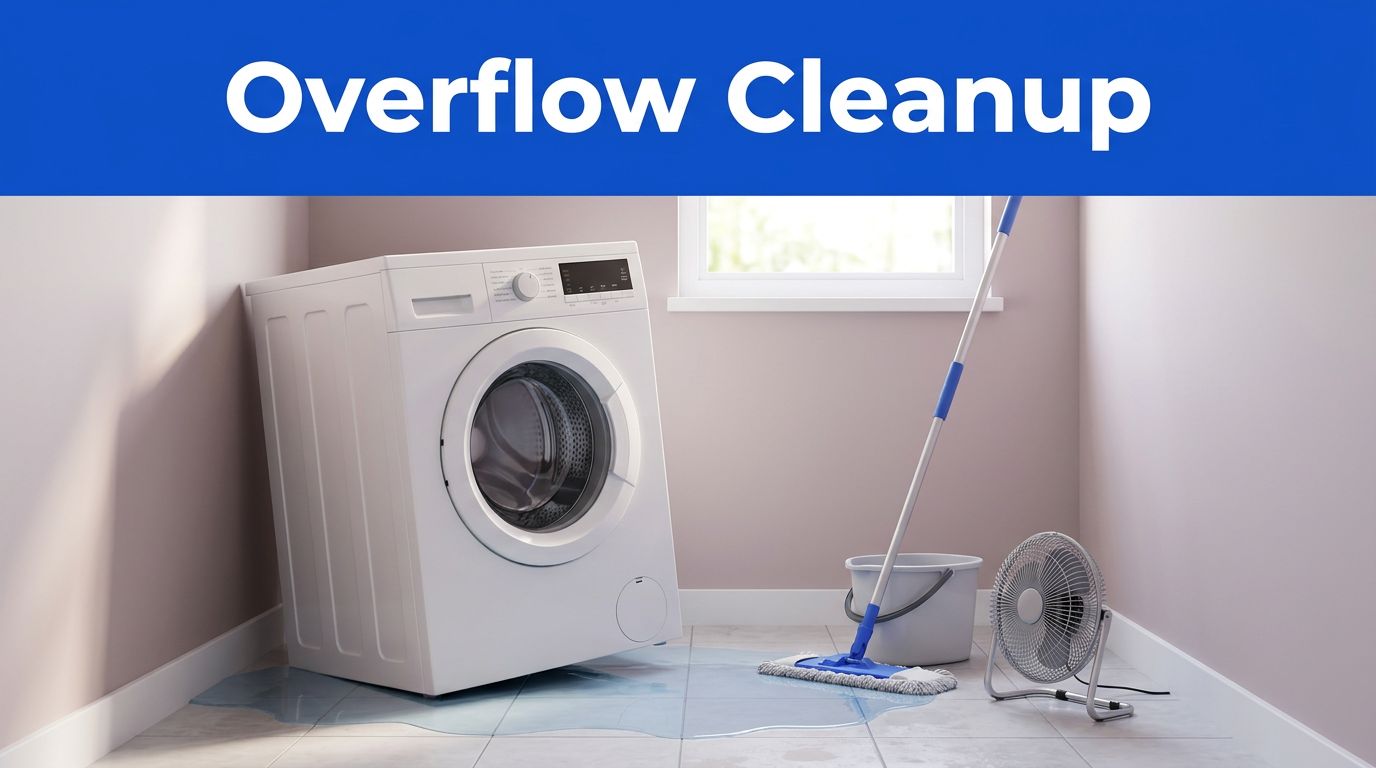
A washer can turn a quiet laundry day into a wet mess in minutes. In Cape Coral, washing machine overflow cleanup needs quick action because warm, humid air slows drying and raises mold risk fast.
Most overflows stay manageable if you move early and stay safe. The goal is simple, remove water, dry hidden areas, and know when the problem is bigger than a mop and fan can handle.
First, stop the overflow and make the room safe
Start with safety before you touch anything. Water and electricity are a bad mix, and a laundry room often has outlets, cords, and metal appliances close together.
If water is near a plug, power strip, or the washer cord, don’t step into it. Shut off the breaker only if you can reach the panel without crossing wet flooring. If not, wait for an electrician or restoration team.
Then work through cleanup in this order:
- Turn off the washer and close the hot and cold supply valves behind it.
- Keep kids and pets out of the room, then put on rubber gloves and waterproof shoes.
- Take a few photos before cleanup, especially if flooring, baseboards, or cabinets got wet.
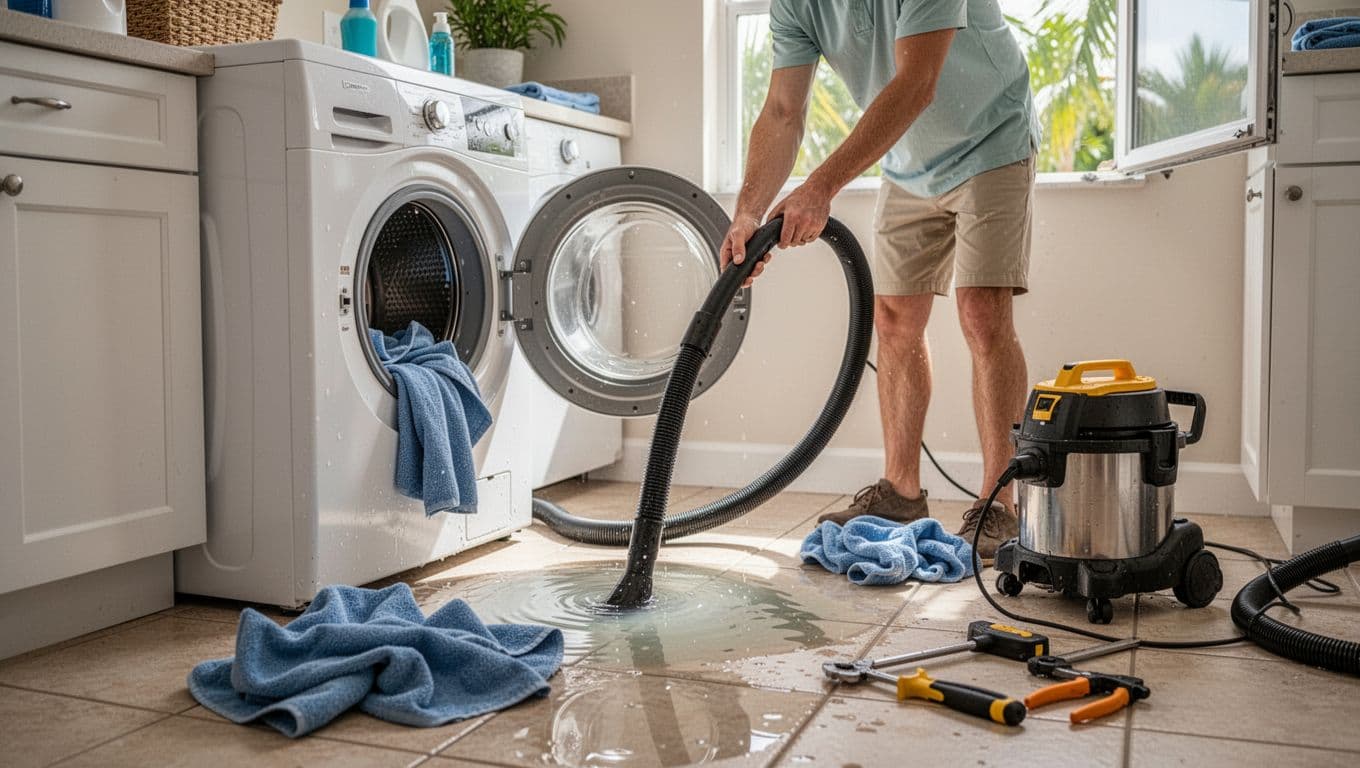
- Remove standing water with towels, a mop, or a wet-dry vacuum. Skip a regular household vacuum.
- Pull the washer away from the wall if it’s safe, then check the drain hose, standpipe, and supply lines.
If water poured out during the wash cycle, the washer may not be the real problem. A blocked standpipe or drain line is a common cause, as explained in this article on a drain line issue during a wash cycle.
Treat the water carefully. A burst supply hose usually starts as clean water, but once it spreads across the floor it can pick up lint, dirt, and bacteria. If the overflow came from a backed-up drain, smells bad, or looks dirty, treat it as contaminated water and consider professional help sooner.
Water also travels farther than it looks. In many Cape Coral homes, it slips under baseboards, behind the washer, and into nearby drywall before the floor even looks soaked.
Dry the room fast before mold takes hold
Surface cleanup is only half the job. Drying is what prevents a small overflow from turning into warped flooring, musty odors, and mold behind the wall.
In Cape Coral’s humid spring weather, mold can start within 24 to 48 hours after an overflow. Try to get wet materials dry within 48 to 72 hours.
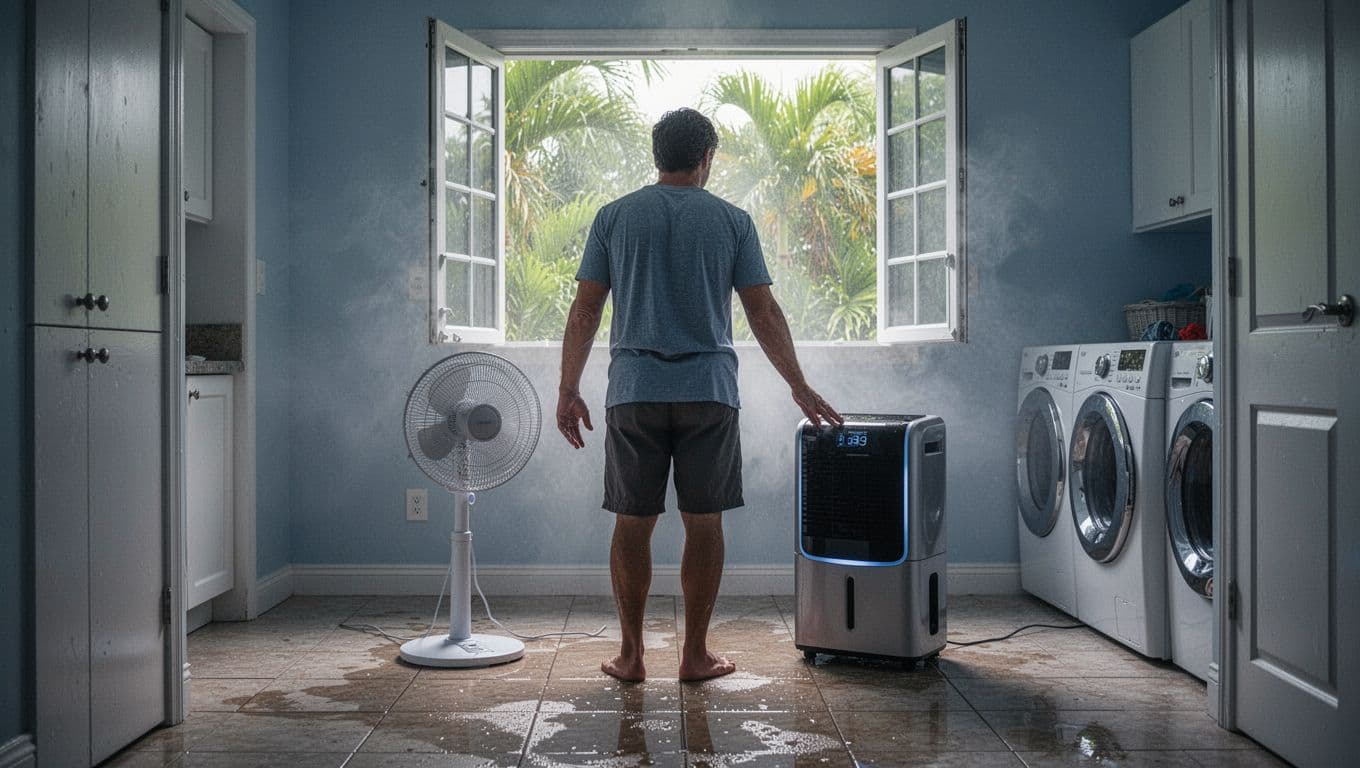
Run the air conditioner, set up fans, and use a dehumidifier right away. Move rugs, hampers, detergent boxes, and anything absorbent out of the room. If water reached a closet, hallway, or adjoining wall, dry those spaces too.
A tiled floor may look fine while the baseboard cavity stays wet. Laminate, vinyl plank, and engineered wood are even trickier because water can sit under the surface. Articles on washing machine overflow damage point to the same issue, visible puddles are often only part of the damage.
Watch for signs that hidden moisture is still hanging around:
- Baseboards look swollen, loose, or darker than usual.
- Flooring feels soft, cool, or slightly spongy near the washer.
- Vinyl edges curl, or laminate boards start to cup.
- Paint bubbles, drywall stains, or a musty smell show up after cleanup.
- The room feels damp even with the floor looking dry.
If you notice any of those signs, don’t assume the problem will fade on its own. Moisture behind trim and under flooring often needs moisture testing and stronger drying equipment.
When professional water damage restoration is the smart move
Some laundry room floods are small and clean. Others soak more than you can see, especially in Southwest Florida humidity.
Professional water damage restoration is a smart move when water reached walls, cabinets, or flooring seams, or when you couldn’t start drying within a few hours. It’s also the safer choice if the overflow involved dirty drain water, sewage odor, electrical risk, recurring leaks, or visible mold.
A restoration crew can check behind baseboards, under flooring, and inside wall cavities with moisture meters. They can also set up commercial air movers and dehumidifiers that dry materials much faster than box fans. If mold has started, they can contain the area and keep spores from spreading through the house.
Cape Coral homeowners should also think about timing. In April, indoor materials can stay damp longer because the outside air is already heavy with moisture. That makes fast response more important, not less.
If you plan to file an insurance claim, keep your photos, save damaged hoses if they failed, and write down what got wet. Local resources on overflow prevention strategies also recommend replacing washer hoses every three to five years and checking the drain line before it backs up again.
A washer overflow feels overwhelming in the moment, but fast action changes the outcome. Make the area safe, remove the water, dry aggressively, and pay attention to signs that moisture is hiding out of sight.
For Cape Coral homeowners, the biggest risk often isn’t the puddle you can see. It’s the damp material left behind after the floor looks dry.
