Sink Cabinet Water Damage Signs in Cape Coral Kitchens
A damp sink cabinet can turn into a rotten, moldy mess faster than most homeowners expect. In Cape Coral, warm air and indoor humidity can keep a small leak from drying out, so damage keeps spreading after the first drip.
If you’ve noticed a musty smell, a swollen cabinet floor, or a door that suddenly won’t close right, those are early sink cabinet water damage signs. Catching them early gives you a better shot at a simple repair instead of a full cabinet replacement.
The first signs usually show up in the cabinet itself
Most under-sink damage starts small. You wipe up a little moisture, then see it again a few days later. That kind of repeat dampness matters because it often points to an active leak, not a one-time spill. This guide on what moisture under a sink cabinet usually means explains why that pattern shouldn’t be ignored.
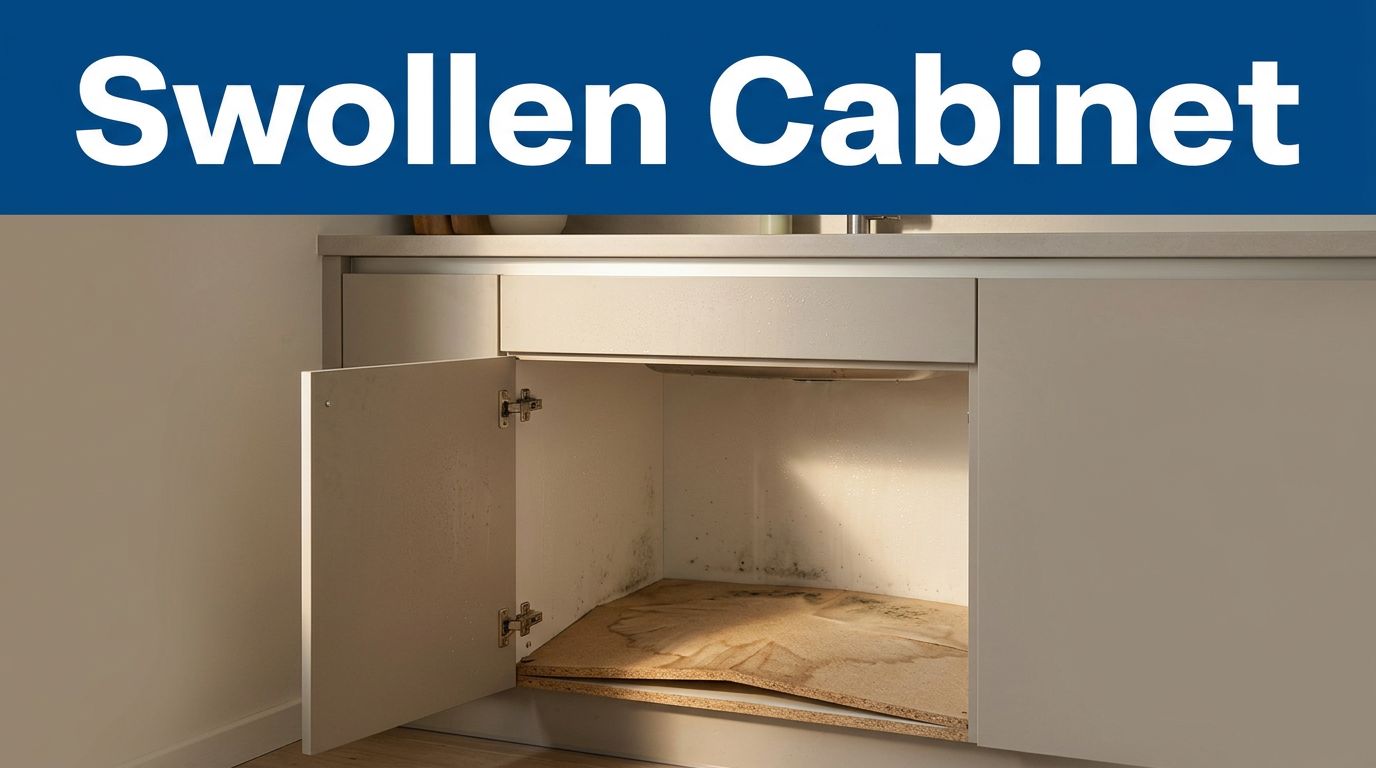
One of the clearest warning signs is swelling particleboard on the cabinet floor. Instead of staying flat, the base looks puffed up or raised at the edges. If you press on it and it feels soft, crumbly, or spongy, water has already soaked in.
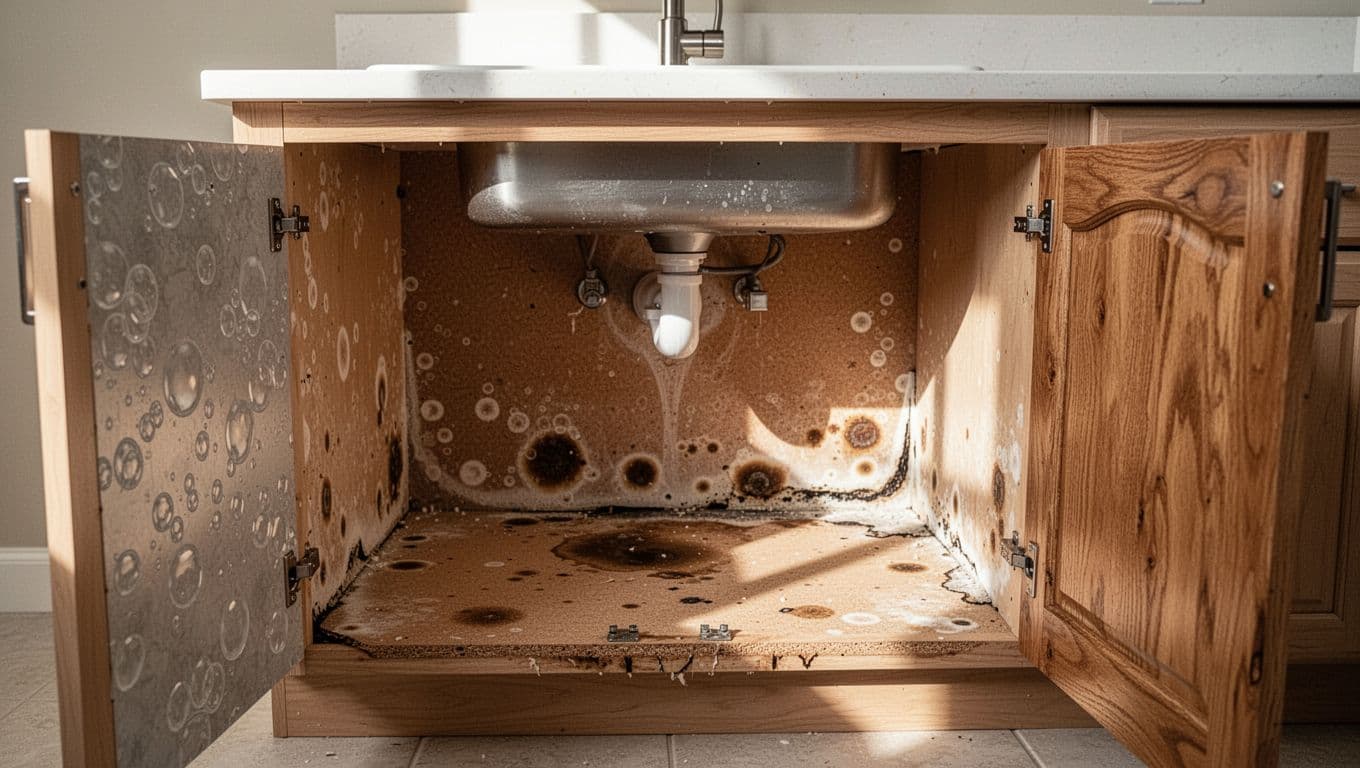
You may also spot bubbling laminate on side panels or peeling at the edges. Laminate tends to lift when moisture gets trapped underneath. Meanwhile, cabinet doors can warp, rub, or hang unevenly because damp wood changes shape.
Discoloration is another common clue. Look for dark rings, yellow-brown staining, or cloudy patches around the pipe openings and along the bottom panel. Rusted plumbing hardware can tell the same story. When shut-off valves, screws, or brackets show orange rust, moisture has likely been hanging around for a while.
Smell matters too. A mildew odor under the sink is often one of the first signs homeowners notice. If the cabinet smells musty even after cleaning, there may be mold growth in the base, side walls, or the back panel. The same goes for loose base panels, especially if they sag or pull away from their fasteners.
If the cabinet floor feels soft or the smell keeps returning, the damage is already past the “watch and wait” stage.
Some moisture never shows up as a puddle. It hides behind side panels and along seams. That’s why hidden water damage behind walls and cabinets can spread before the cabinet looks badly damaged from the front.
What causes sink cabinet water damage in Cape Coral kitchens
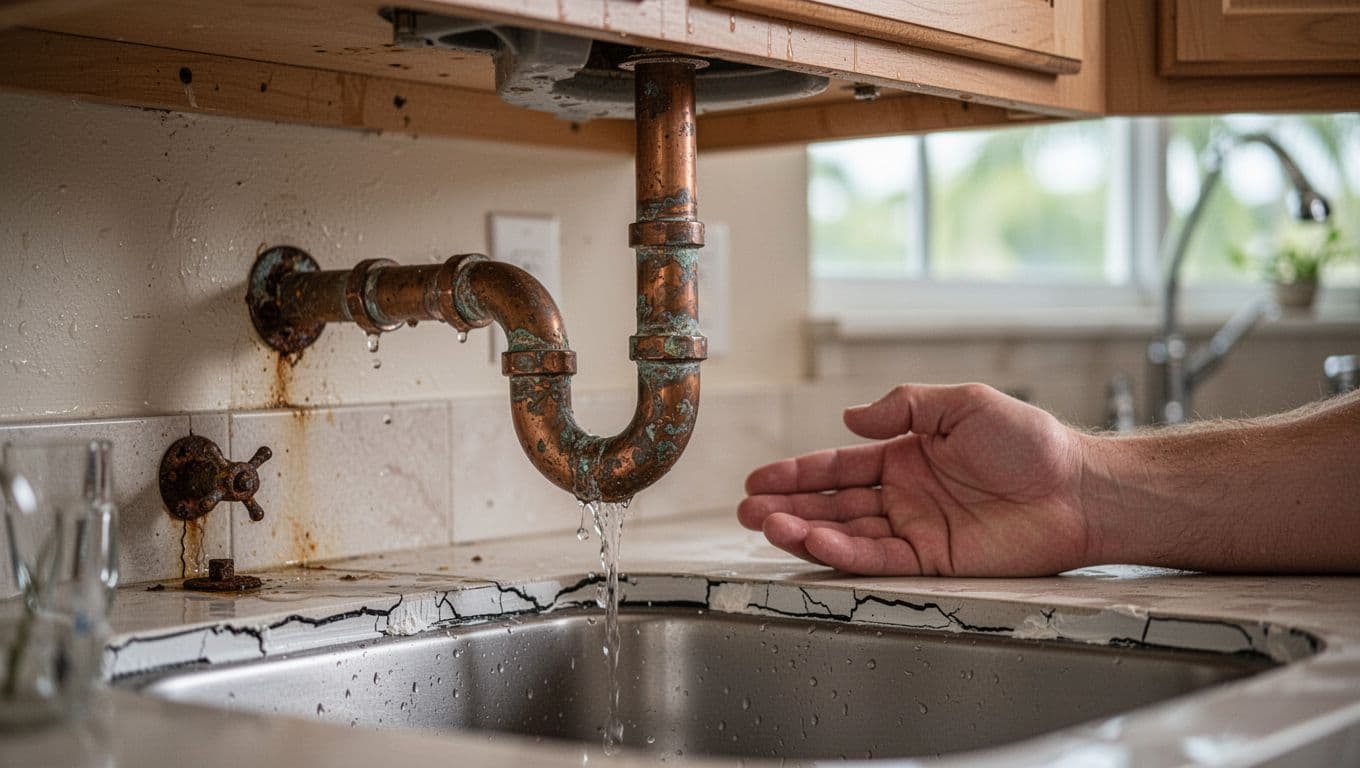
In most homes, the cause is simple: a slow leak that nobody sees for weeks. Supply line drips are common, especially at compression fittings under the sink. A tiny drip can soak the cabinet floor day after day without making much noise.
Drain line problems are another frequent source. If the P-trap connection is loose, or the drain pipe has a hairline crack, water may leak only when the sink drains. That makes the problem easy to miss because the cabinet looks dry between uses.
Failed caulking around the sink rim or faucet base can also send water downward. When you wipe the counter or splash near the faucet, that water can slip through gaps and run into the cabinet. In addition, worn seals around a garbage disposal can leak in the same slow, sneaky way.
Cape Coral’s climate adds another layer. Even indoor air can slow drying, especially in closed cabinets packed with cleaners, trash bags, and other stored items. Poor ventilation traps damp air, so small leaks linger longer. That helps mold take hold faster than many homeowners expect. A Florida-focused look at how kitchen water damage affects homes shows how quickly cabinets and nearby materials can absorb that moisture.
If you keep finding water but can’t trace it to the sink plumbing, check beyond the cabinet. A nearby wall leak or a bigger plumbing issue may be feeding the problem. For local context, these slab leak signs in Cape Coral homes are worth knowing, especially if the floor near the cabinet also feels damp.
When immediate repair is needed, and how to slow future damage
Some situations need fast action because the cabinet may not recover. If you see any of these, don’t wait:
- Active dripping from a supply line, drain fitting, or disposal
- A soft or collapsing cabinet floor
- Mold spots, mildew odor, or staining that keeps spreading
- Warped doors, loose base panels, or water reaching the wall or floor
Once particleboard swells badly, it rarely returns to normal. Even if the leak stops, the base can stay weak and keep crumbling. The same goes for mold. If the odor stays after drying and cleaning, moisture is likely trapped in the material itself.
Quick prevention is simple, but it works best before the cabinet gets soft. Check under the sink once a week for dampness, rust, or fresh staining. Keep the area less cluttered so leaks are easy to spot. Also, replace worn supply lines, re-caulk failed edges, and fix drain drips right away. For added protection, many homeowners use under-sink cabinet mats to catch small leaks before they soak the cabinet bottom.
If you already have swelling, bubbling laminate, or a strong musty odor, prevention alone won’t solve it. At that point, the goal is to stop the water source, dry the area fully, and repair damaged materials before mold spreads or the whole cabinet box needs replacement.
A sink cabinet rarely fails all at once. It starts with moisture, then swelling, then odor, then damage you can feel with your hand.
That slow progression is the good news. When you catch sink cabinet water damage signs early, you have more options, lower repair costs, and a better chance of saving the cabinet. In Cape Coral kitchens, speed matters because heat and moisture give mold a head start.
