Can You Stay Home During Mold Remediation in Florida?
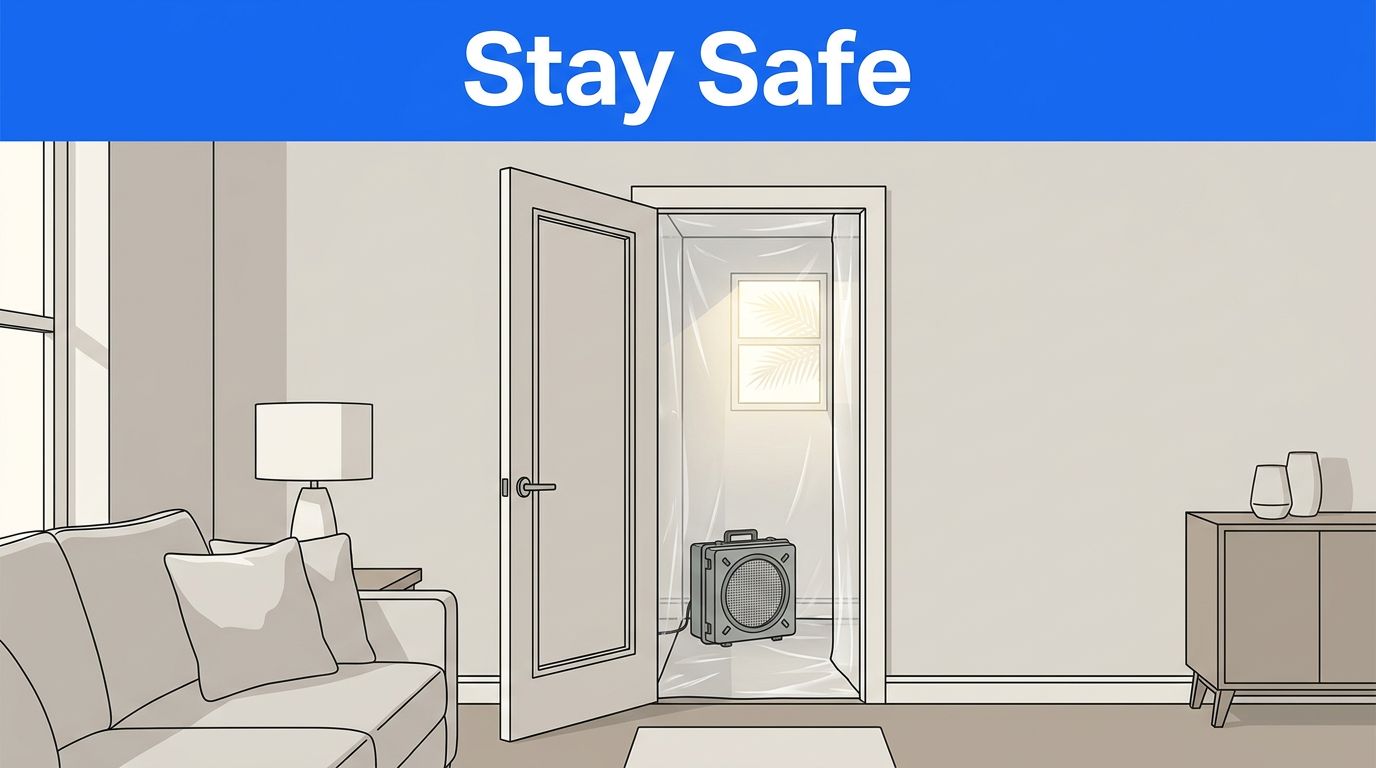
Can you stay home while mold crews work a few rooms away? Sometimes, yes. But the safe answer depends on the size of the problem, how the crew contains it, and who lives in the home.
For many Florida families, mold shows up after a roof leak, AC drain issue, plumbing break, or storm water intrusion. That means the decision is rarely simple. You need to look at the work zone, the air flow, and your household’s health before deciding to stay.
The answer depends on the size of the job
Small, isolated mold jobs may allow you to remain at home. That usually means one contained area, limited demolition, and no shared air moving from the work zone into bedrooms or main living spaces. A professional crew should seal the area with plastic barriers, run HEPA air scrubbers, and control dust and spores with negative air pressure.
Larger jobs are different. If mold affects several rooms, gets into insulation or drywall, or touches your HVAC system, staying home becomes harder and riskier. The same goes for work in the only bathroom, main kitchen, or a central hallway. Even if the mold is in one room, the project may still disturb spores during demolition and cleanup.
Florida law adds another layer. For mold larger than 10 square feet, homeowners should use licensed professionals. The state also separates assessment and remediation in most cases, so one company usually shouldn’t inspect and then fix the same problem on the same home. The Florida mold licensing FAQs explain those rules in plain language.
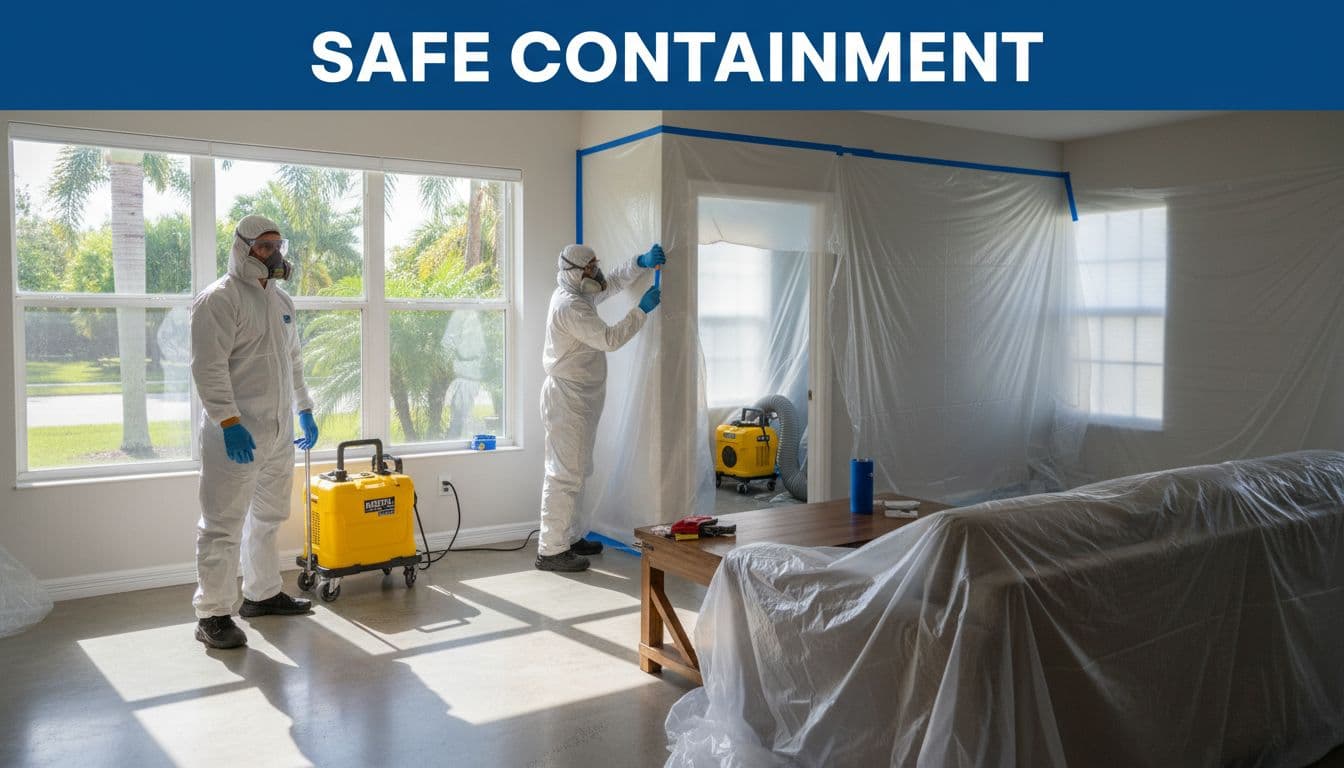
If your contractor says you can stay, ask what protects you. Ask where the containment will be, whether the work area shares return air with the rest of the house, and how they will verify the space is clean afterward. A practical safety overview on leaving during mold removal makes the same point: the answer changes with the scope of work.
Florida homes add extra pressure
Mold remediation in Florida often starts with a moisture problem that hasn’t fully ended yet. High humidity, summer storms, and wind-driven rain can keep materials damp long after the first leak. If that moisture source is still active, staying home during the cleanup may not make much sense because the home still isn’t dry.
Air conditioning matters too. Many Florida homes rely on one central system, and that system can move air from one room to another. If mold is near return vents, inside ductwork, or around the air handler, spores may travel farther than you expect. In that case, partial occupancy gets less comfortable and less reliable.
The Florida Department of Health guidance on mold stresses moisture control for a reason. Indoor humidity should stay below 60 percent, and wet materials should be dried quickly. In Florida, that often means running AC, dehumidifiers, and air movers for days, not hours.
Storm timing also matters. If a remediation project overlaps with heavy rain, crews may need to pause demolition, protect exposed materials, or recheck moisture after the weather clears. That can stretch the job and make living around it more disruptive. For mold remediation Florida homeowners deal with after storms, comfort and safety often depend on how dry the home can stay during the entire process.
When leaving is the smarter choice
Some households should leave sooner, even if the work area looks small. That includes people with asthma, mold allergies, COPD, a weakened immune system, infants, and older adults. These residents are more likely to react to dust, spores, odors, and the general disruption of remediation.
Children and pets also make partial occupancy harder. They don’t always stay out of taped-off spaces, and they can’t judge whether a room is truly off-limits. If the crew is removing drywall, bagging debris, or using strong cleaning products, a short hotel stay or time with family may be the calmer option.
If the work zone shares air with bedrooms, staying home gets risky fast.
Even healthy adults sometimes choose to leave because the house becomes noisy, humid, and inconvenient. If the crew recommends relocation, listen closely. A second Florida-based guide on staying home during remediation also points out that extensive projects and sensitive occupants often do better away from the site. When in doubt, follow the plan from your licensed remediation team, and check with your healthcare provider if someone in the home has breathing or immune concerns.
Quick FAQ
Can pets stay home during mold remediation?
Sometimes, but it’s usually easier and safer to move them out. Pets can track dust, slip through containment, or react to odors and noise.
What about children?
Young children should leave sooner than healthy adults. They spend more time on floors, touch everything, and may be more sensitive to airborne irritants.
Can I sleep in an unaffected room?
Only if that room is fully outside the work zone and doesn’t share air with it in a meaningful way. Ask the crew before sleeping there.
How long does mold remediation take?
A small contained job may take one to three days. Larger projects with demolition, drying, and post-remediation clearance can take several days or longer.
Can mold spread through HVAC systems?
Yes, it can, especially if the system pulls air from the affected area. If mold is near vents or the air handler, ask whether the HVAC should be shut down, protected, or cleaned.
The safest answer is usually the least dramatic one: stay only when the job is small, the containment is solid, and your household can avoid the work area without sharing contaminated air. Florida’s humidity and storm history make that decision more important, because moisture problems can linger after the visible mold is gone.
If the mold is widespread, the HVAC is involved, or anyone in the home is medically sensitive, leaving for a short time is often the better call. A clean house is the goal, but a safe house comes first.
