
Water Under Vinyl Plank Flooring in Florida Homes: What to Do Fast
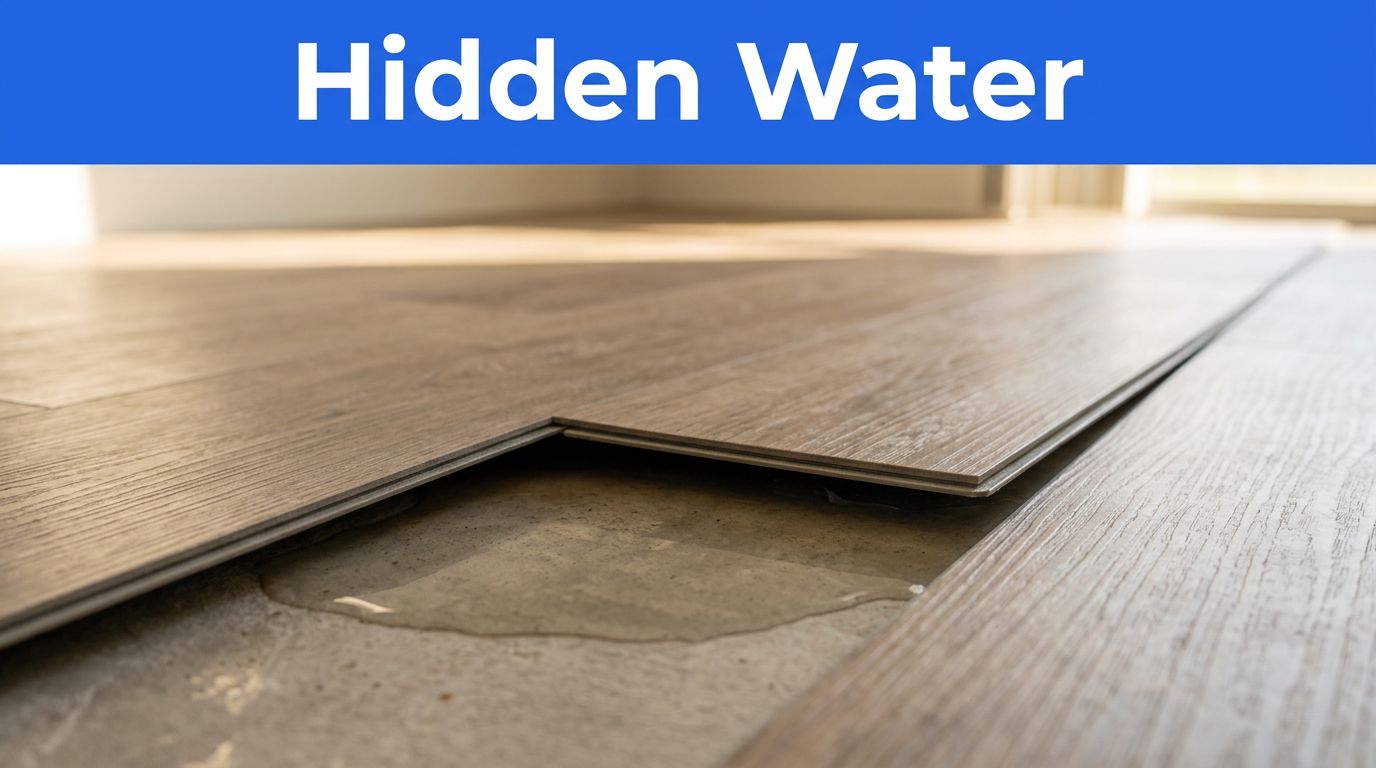
A vinyl plank floor can look fine on top while water under vinyl plank flooring spreads out of sight below. That hidden moisture is a common problem in Florida, where slab homes, high humidity, storm runoff, and AC drain issues all raise the risk.
The planks themselves may resist spills, but the layers underneath often don’t. Moisture can soak a concrete slab, swell wood subfloors, loosen glue, stain baseboards, and leave the room smelling musty. The sooner you catch it, the better the odds of a smaller repair.
Why Florida homes get trapped moisture under LVP
Florida homes deal with water from more than one direction. A dishwasher leak or ice maker line can start the problem. So can a backed-up shower, a slab leak, wind-driven rain, or storm water that slips under doors. In many homes, a clogged AC condensate line is the quiet troublemaker.
Luxury vinyl plank, often called LVP, handles surface moisture better than hardwood. Still, that doesn’t mean the area below stays dry. On a concrete slab, water can spread far beyond the wet spot you first notice. In a wood-framed floor, it can sink into the subfloor and stay there.
That matters because the damage often hits what you can’t see first. Glue-down floors may lose bond strength. Floating floors can trap damp air under the planks. Baseboards, quarter round, and nearby drywall may wick up water. Over time, indoor air can suffer too, especially if musty odors start to build.
If you want a plain-language look at how hidden moisture under LVP is found, this guide on moisture trapped beneath vinyl plank flooring explains why the problem often stays hidden longer than homeowners expect.
Signs your floor is hiding water
The early clues are easy to miss. You may feel a soft spot underfoot. A plank edge may lift a little near a wall. Sometimes the floor clicks more than usual, or it sounds hollow in one area.
Smell matters too. A musty odor near cabinets, laundry rooms, or air vents often points to damp material below. You might also see swollen baseboards, stained trim, or a small gap where the quarter round pulled away from the wall.
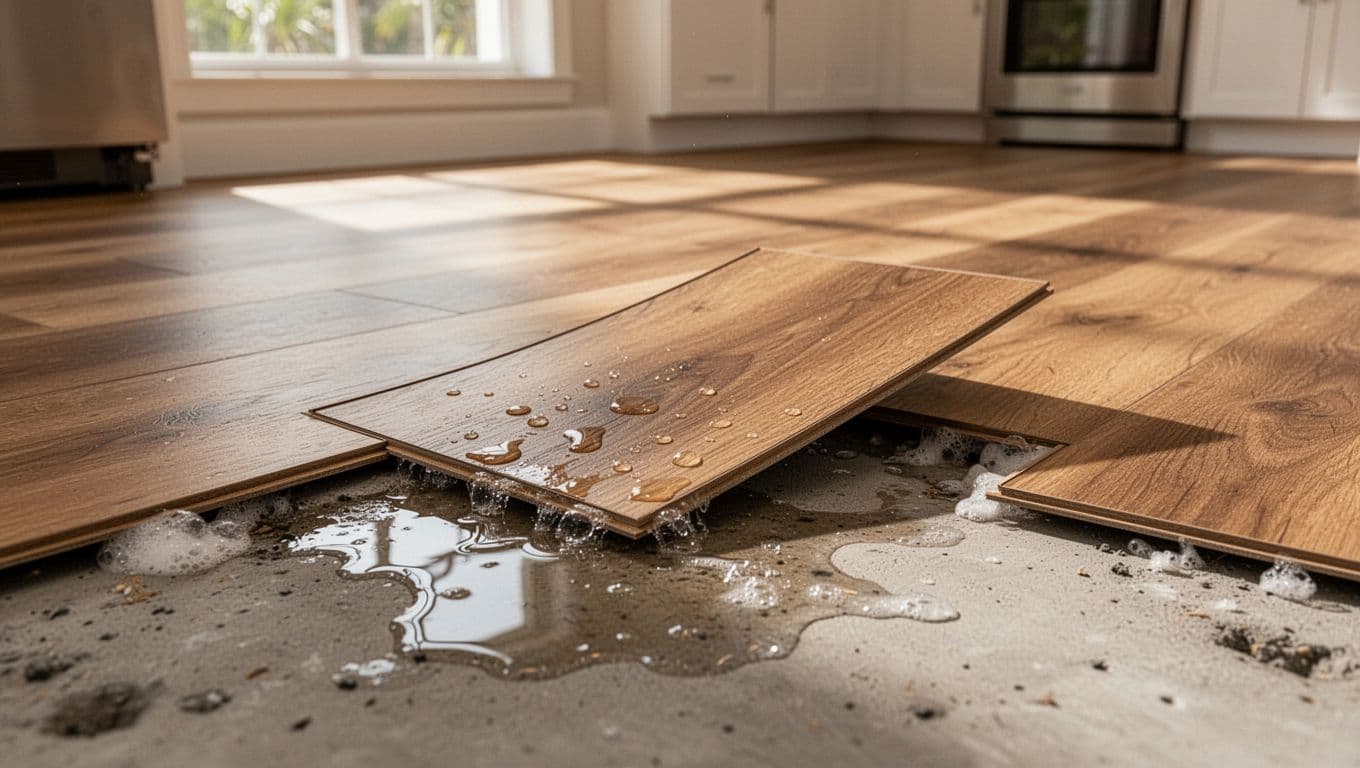
Florida homes on slabs can fool you because the floor may not buckle much at first. Instead, the warning sign is a damp, sticky feel or a odor that won’t go away even with the AC running. If the leak lasted more than a day or two, the moisture likely spread wider than the visible stain.
If the room smells damp after cleaning and drying the surface, the problem is usually below the planks.
For more examples, this Florida guide to subfloor water damage covers warning signs that often show up before major flooring failure.
How to inspect and dry it safely
Start by stopping the source. Shut off the appliance valve, clear the AC drain issue, or block more rainwater from getting in. If water reached outlets or cords, cut power to that area before you inspect.
Then check the floor in this order:
- Dry the surface and remove rugs or furniture.
- Look along walls, transitions, and vents for lifted edges or staining.
- Lift one plank in a hidden spot if the floor type allows it.
- Check the underside, underlayment, and subfloor for dampness or odor.
- Measure the area, because the wet zone is often larger than it looks.
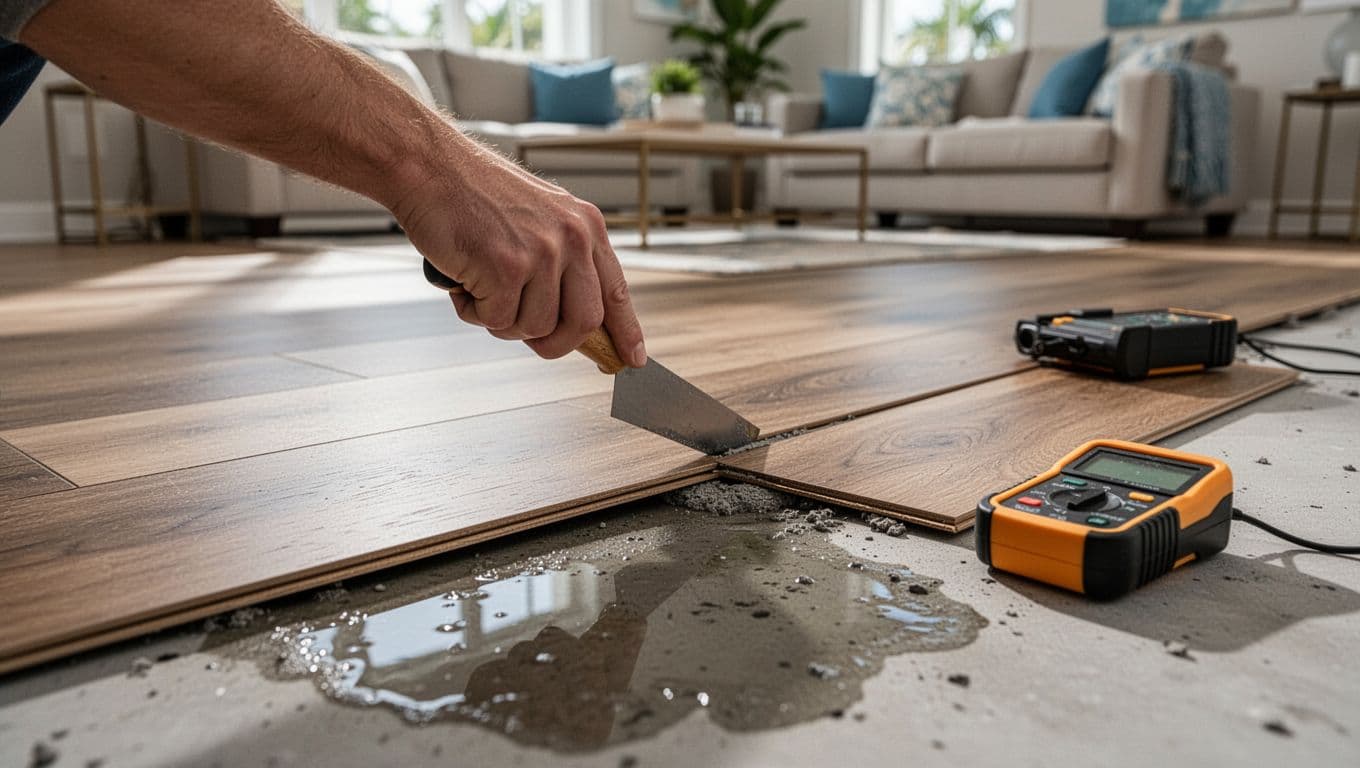
Wear gloves and closed-toe shoes. Also, stop and call a pro right away if the water came from sewage, storm surge, or long-standing flooding. That water is not a DIY cleanup.
Drying takes more than wiping the top of the floor. In many cases, some planks need to come up so air can reach the trapped moisture. Run fans across the exposed area, keep the AC on, and use a dehumidifier to pull moisture from the room. On a slab, drying can take several days. On wood subfloors, it may take longer.
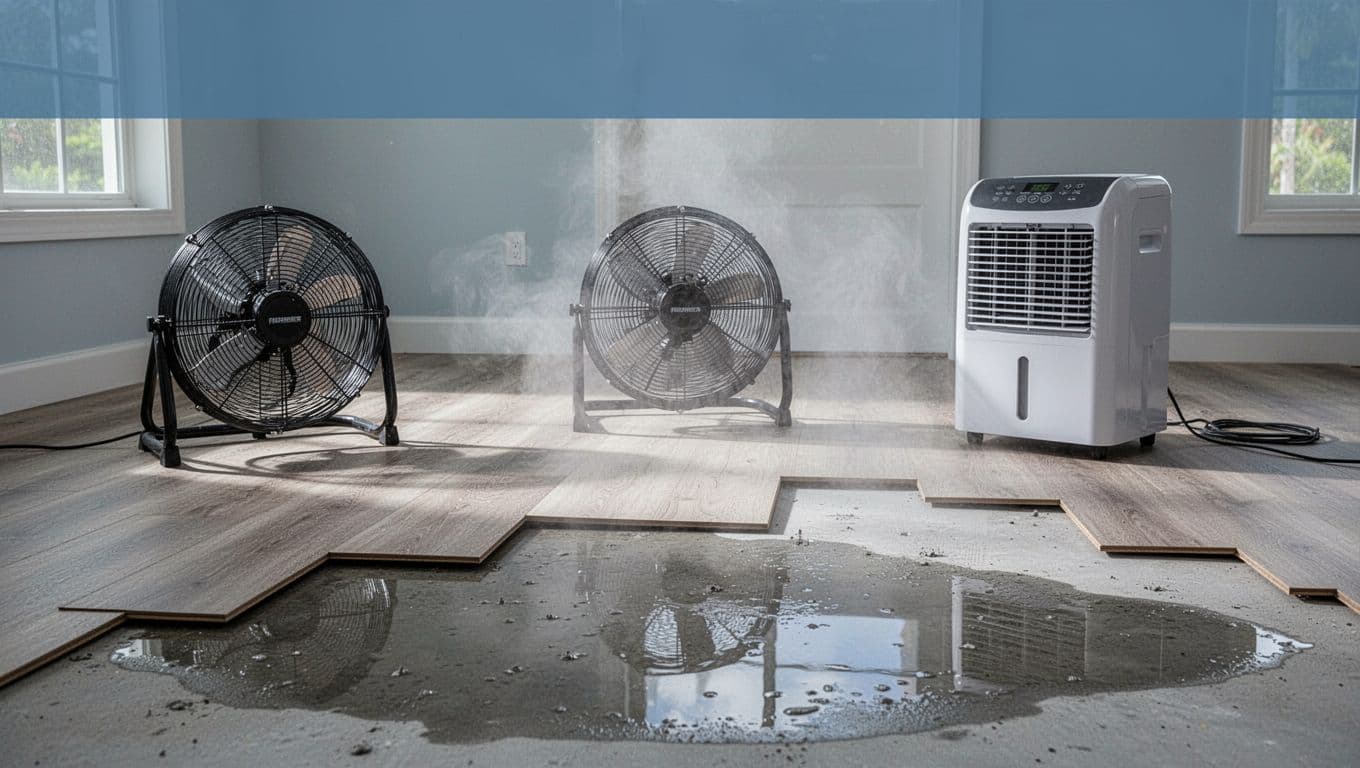
Homeowners often try to save time by snapping the planks back in place too soon. That traps the moisture again. A practical guide on water under vinyl flooring makes the same point: dry the hidden layers first, then rebuild.
Repair vs. replacement, and when to call for help
A small clean-water leak caught early may only need drying, a few replacement planks, and new trim. That is most likely when the floor is click-lock, the boards stayed flat, and the subfloor dries fully with no odor left behind.
Replacement becomes more likely when storm water got under the floor, glue-down planks release from the slab, or the subfloor stays damp after several days of drying. Swollen MDF baseboards, stained drywall, and repeated moisture from a slab leak also push the job toward a larger repair.
Call a water damage professional when the wet area is spreading, the source is unclear, the smell lingers, or the water came from a hurricane, overflow, or contaminated source. Call a flooring contractor when the floor needs to be taken up, matched, and reinstalled. In many Florida homes, you need both.
FAQ
Can vinyl plank flooring be saved after water gets underneath?
Sometimes, yes. Quick action helps most. If the water was clean, the planks stayed flat, and the layers below dry fully, part of the floor may be saved.
How long does it take to dry water under vinyl plank flooring?
It depends on the source, the subfloor, and Florida humidity. A minor clean-water event may dry in a few days. A slab, a large leak, or soaked underlayment can take longer.
Can Florida humidity alone cause water under vinyl plank flooring?
Humidity by itself usually doesn’t leave standing water. Still, it can feed condensation, slow drying, and worsen a hidden leak. In Florida, humidity often turns a small moisture issue into a bigger one.
A vinyl plank floor can hide damage longer than you expect. That is why water under vinyl plank flooring should never be ignored, especially after a storm, a slab leak, or an AC drain problem.
When the surface looks fine but the room smells damp or feels off, trust that signal. Fast drying and a careful inspection often make the difference between a small repair and a full floor replacement.
