
When Bathroom Vanity Water Damage Means Replace, Not Repair
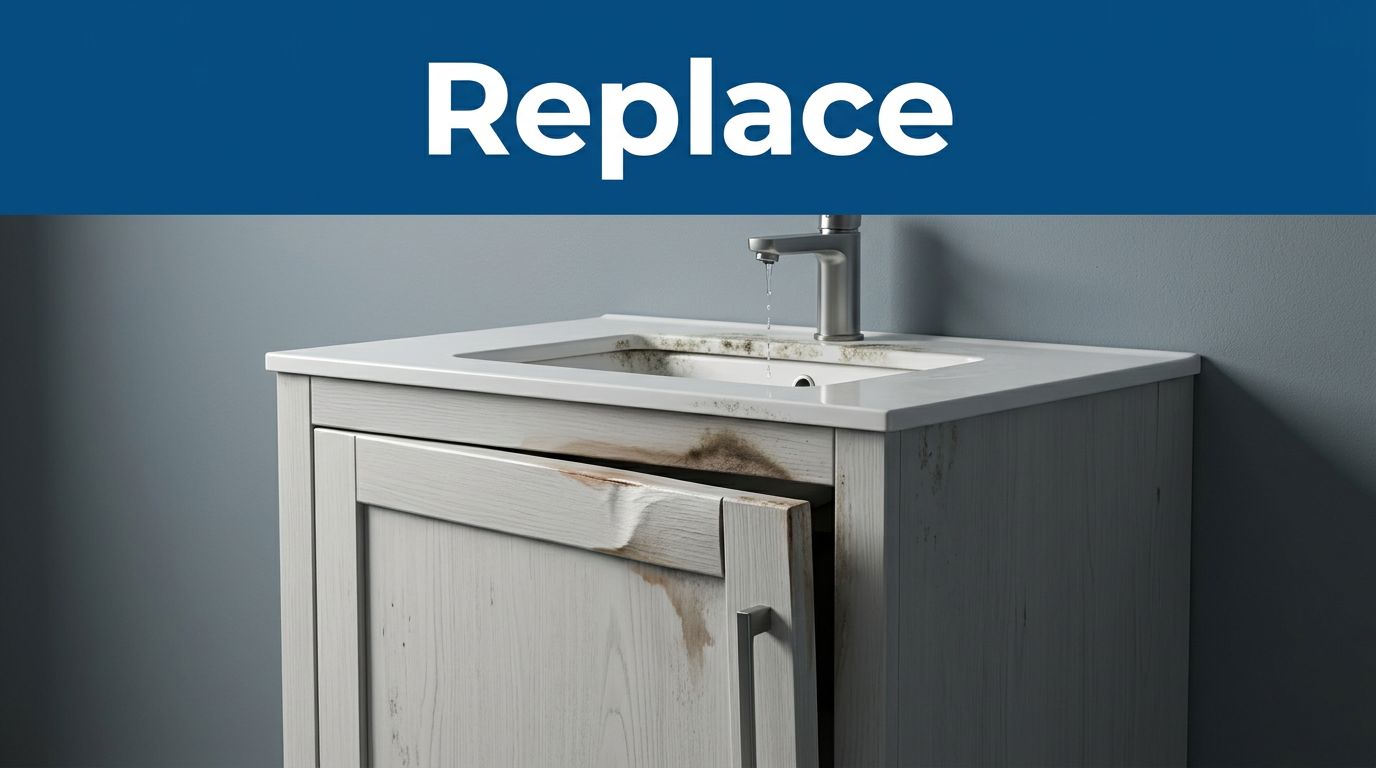
A stained vanity door can look minor. A soft cabinet side, though, is a different story.
With bathroom vanity water damage, the right call depends on what got wet, how long it stayed wet, and what the cabinet is made of. If the leak is fixed and the damage is only on the finish, repair may work. When the cabinet core is swollen, loose, moldy, or breaking down around the sink plumbing, replacement usually makes more sense.
Spot the warning signs before the cabinet fails
Water damage rarely starts where you can see it best. In most bathrooms, it begins under the sink, behind the doors, or along the bottom edge where mops, drips, and damp bath mats collect.
Start with the easy clues. Look for swelling at the door edges, bubbling laminate, peeling paint, and dark stains around the sink cutout. Check for delamination too, which means the surface layer or wood plies are separating. If the side panel looks puffy or the bottom shelf bows downward, moisture has likely moved past the finish and into the cabinet core.
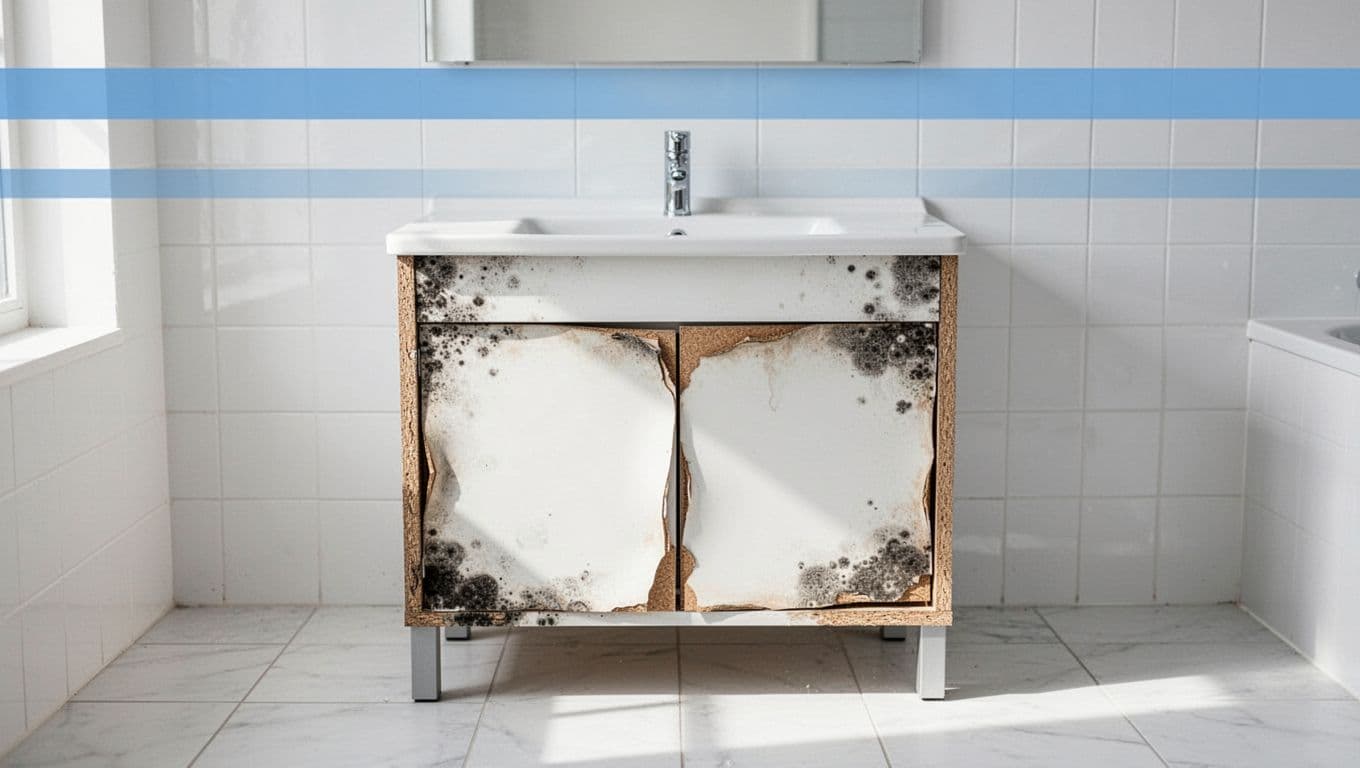
Next, use your hands. Press gently on the floor of the vanity and the side panels near the plumbing. If the material feels spongy, flakes off, or dents and stays dented, that is more than cosmetic wear. A musty smell also matters. Persistent odor often means moisture sat long enough for mold growth or deep material breakdown.
Pay close attention to the drain trap, shutoff valves, supply lines, and the faucet base. Slow drips there can soak the cabinet for months. Angi’s guide to signs of a hidden bathroom leak is useful if the source is not obvious. For a wider look at common bathroom water damage signs, check nearby walls, trim, and flooring too. Damage under the vanity often means the problem spread farther than the cabinet itself.
Cosmetic damage and structural damage are not the same
A vanity can look rough and still be repairable. Surface staining, chipped paint, or a small patch of lifted veneer near the sink may be fixable if the cabinet box is dry and solid. In solid wood or plywood, light sanding, refinishing, re-caulking, or replacing one damaged panel can buy more years.
Structural damage shows up differently. Doors stop lining up. Drawer fronts rub. Joints loosen at the face frame. Screws stop gripping. The sink deck may flex when you lean on it. If the bottom panel sags or the cabinet twists out of square, water has weakened the frame, not just the finish.
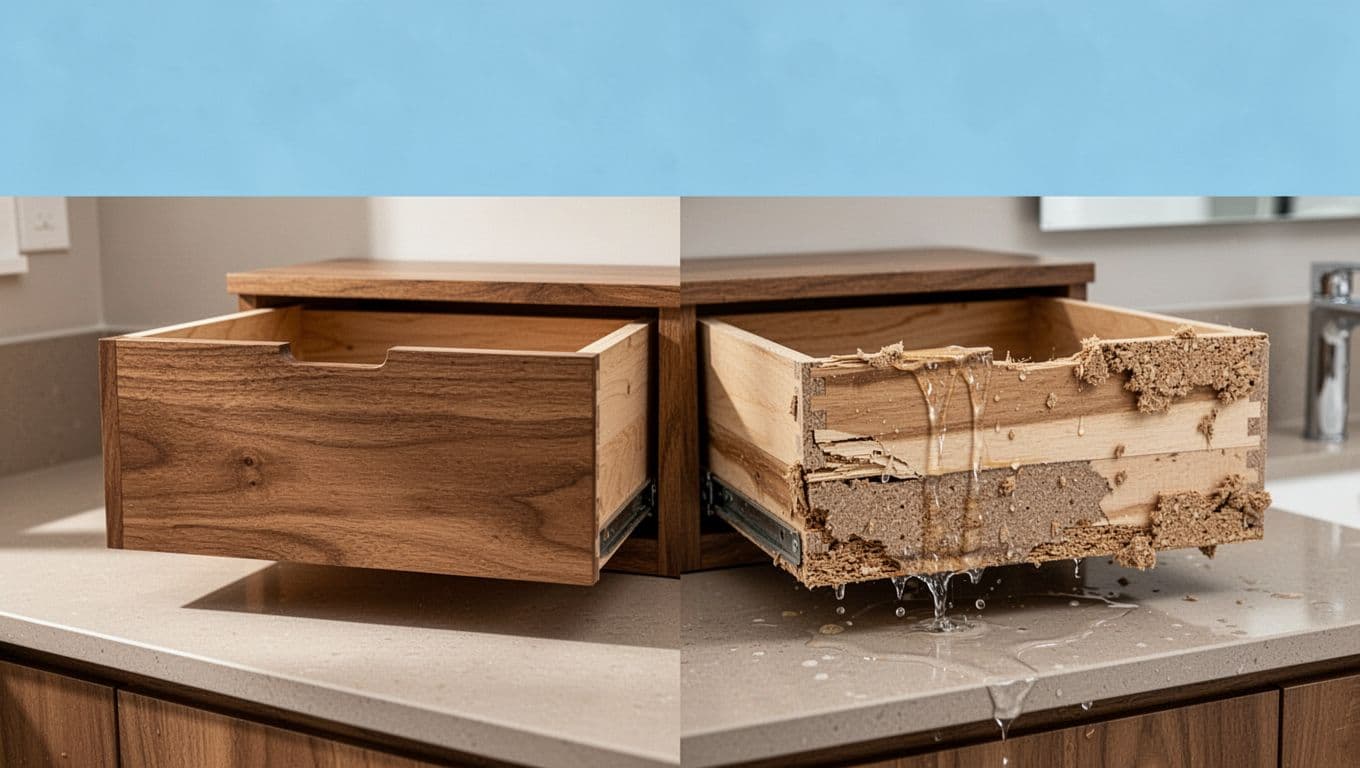
The worst area is often the back corner near the drain and supply lines. That section stays hidden, so water keeps working like a slow rot. By the time the front edge swells, the inside may already be soft.
If the vanity feels soft around the plumbing or the cabinet joints are loose, replacement is usually safer than patching.
Small mold spotting on a sealed surface can sometimes be cleaned after full drying. Mold inside MDF or particleboard is another story, because the material stays weak even after it dries. If you are weighing whether to repair a water-damaged bathroom vanity, the key test is strength. A vanity has to hold a sink, countertop, and daily use. Looks matter, but stability matters more.
The material often decides the outcome
Some vanities handle moisture better than others. That is why two cabinets with the same leak can end up with very different repair options.

This quick table shows the usual pattern:
| Material | What water usually does | Repair odds |
|---|---|---|
| MDF | Swells, puffs, loses shape | Low |
| Particleboard | Softens, crumbles, won’t hold screws | Very low |
| Plywood | May stain or separate at edges | Fair if limited |
| Solid wood | Can stain, swell, or move at joints | Good if dried early |
MDF and particleboard are the least forgiving. Once they absorb water, they rarely return to their original strength. You can sand or paint the surface, but the core often stays damaged. Plywood is more durable, although delaminated edges still need attention. Solid wood may cup or stain, yet it can often be dried, tightened, and refinished if the joints remain sound.
So, if your vanity is made from MDF or particleboard and feels soft, replacement is usually the practical path.
A simple repair or replace checklist
Use this as a quick decision guide before you spend money.
- Repair is reasonable when the leak is fixed, the cabinet is fully dry, and the damage is limited to finish wear, light stains, or one small trim area.
- Repair still makes sense when drawers and doors line up, joints stay tight, and the vanity floor feels hard under pressure.
- Replace the vanity when side panels or the bottom shelf are swollen, soft, or crumbling, especially in MDF or particleboard.
- Replace it when you see delamination, loose joints, recurring mold, or a musty smell that stays after drying and cleaning.
- Replace it when damage is concentrated around the sink drain, faucet holes, or supply lines, because those areas carry the load.
- Replace it when the floor or wall behind the vanity is also wet, stained, or soft, since removal may be needed for full repairs.
Before you do either, stop the water source first. A new vanity over an active drip is money down the drain. Take photos before cleanup as well. Homeowners insurance may cover sudden, accidental leaks, but many policies limit or exclude long-term seepage and neglected maintenance. If water reached drywall, baseboards, or flooring, document the leak source and ask your carrier what is covered.
A vanity can survive ugly stains. It usually doesn’t survive a weak, swollen core.
That is the line to watch. If the cabinet box is solid, dry, and square, repair may be worth it. If it smells musty, feels soft, or pulls apart around the plumbing, replacement is usually the smarter and safer call. The same repair-or-replace framework applies to other water-damaged home components like interior doors.
