
DIY Water Cleanup vs Professional Drying for Florida Homes
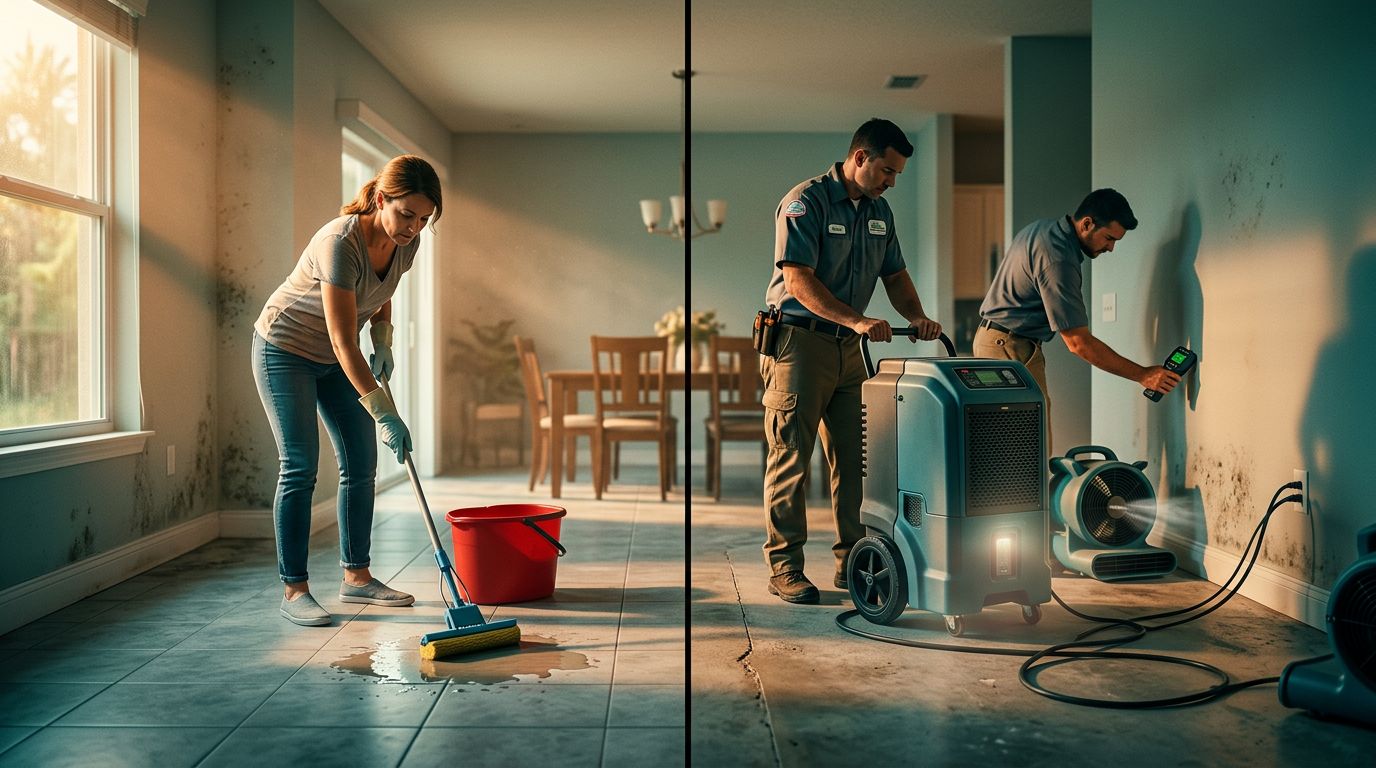
A room can look dry long before it is safe. In Florida, that matters because humid air and hidden moisture keep working after the puddle is gone.
DIY water cleanup can make sense after a small, clean spill caught early. Once water reaches drywall, insulation, cabinets, or outlets, the job changes.
The difference between wiping up water and drying a building is the difference between a clean floor and a problem hiding inside the wall. Here is how to tell which path fits your home.
Key Takeaways
- Small, clean spills can often be handled at home if you catch them fast and keep the area dry.
- Standing water is only the first problem, hidden moisture in drywall, insulation, and flooring is what causes mold and rot.
- Florida humidity slows drying, so a surface that feels dry can still hold water behind it.
- Any sign of contaminated water, electrical risk, soft drywall, or a musty odor after cleanup points to professional help.
- Good drying uses moisture readings, not guesswork, and usually takes several days, sometimes longer.
What DIY Water Cleanup Can Handle
DIY cleanup works best when the water is clean, the area is small, and you find it early. A supply line leak, a small AC condensate spill, or a little overflow from a sink can often be managed at home if the damage stays on hard surfaces and does not soak into walls or cabinets.
Start by stopping the source. Then remove standing water with towels or a wet-dry vac, move rugs and furniture, and open nearby cabinet doors or closet doors if the area is safe. Run the air conditioner and a dehumidifier, because Florida air is already loaded with moisture. A fan can help move air, but it does not dry materials by itself.
If water reached an outlet, breaker, or faceplate, stop there. If the wall feels soft, the baseboard swells, or the smell turns musty, hidden water is likely still inside the structure. For a Florida-specific walkthrough of the early steps, this step-by-step water damage guide for Florida homes is a useful reference.
Why Florida Homes Dry Slower Than They Look
Florida homes fight moisture on two fronts. First, outdoor humidity stays high. Second, storm rain, roof leaks, and plumbing failures often push water into places you cannot see, like wall cavities, under cabinets, and behind baseboards. On slab homes, moisture can also travel upward through small cracks and penetrations.
That is why visible dryness is not true dryness. A wall can feel fine on the surface while the insulation behind it stays wet for days. The same thing happens under vinyl plank, laminate, or hardwood. Cabinets can hold moisture in the backing. Drywall can keep water in the paper face even after the stain fades.
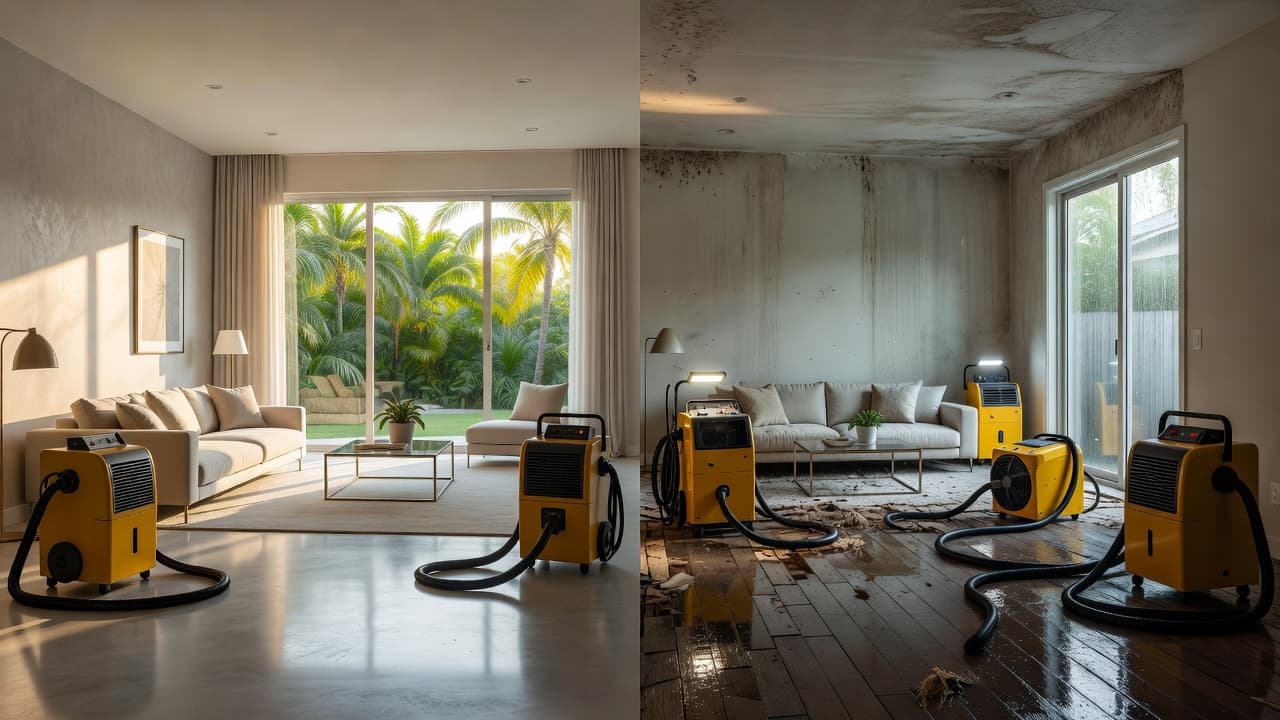
The room can look finished before the wall cavity is dry.
That is why a fan in the middle of the room often gives false comfort. It dries the air faster than the materials, and Florida humidity quickly replaces what the fan moves away. Once indoor humidity climbs past about 60 percent, musty smells often come back. A small plug-in dehumidifier can help, but it may not pull enough moisture out of drywall and framing fast enough on its own.
DIY vs Professional Drying: A Practical Comparison
This quick comparison helps when the water damage is not obvious at first glance.
| Situation | DIY cleanup may be enough | Professional drying is a better fit |
|---|---|---|
| Small spill on tile or another hard surface | Yes, if you catch it fast | Usually not needed |
| Clean water on a small area of floor | Sometimes, with fast extraction and dehumidification | If it spreads under trim or baseboards |
| Wet drywall, insulation, or cabinets | Rarely | Yes, hidden moisture needs real drying |
| Dirty water, storm water, or sewage | No | Yes, because contamination changes the cleanup |
| Water near outlets or breaker trips | No | Yes, plus electrical inspection |
The takeaway is simple. If the water stays on the surface, DIY may work. If it gets into materials, professional drying is safer and usually faster in the long run.
What a Professional Drying Crew Actually Does
A good drying team does more than set down fans and leave. First, it checks where the water came from and how far it traveled. Then it uses moisture meters, thermal tools, and daily readings to see what is still wet. That matters because Florida homes often hide damage behind paint, trim, and flooring.
From there, the crew may remove baseboards, open a section of drywall, pull wet insulation, or lift flooring so air can reach the cavity. If the loss involves dirty water, cleaning and disinfection come into the plan too. That is one reason mold risk rises so fast after water damage, as noted in this article on why mold grows after water damage.

Photo by Tima Miroshnichenko
Professional drying also helps with paperwork. Photos, moisture logs, equipment notes, and repair scopes make it easier to explain what happened if you later speak with an insurer. Even if you do not file a claim, that record helps you track what was removed and what still needs repair.
When to Stop and Call for Help
Some warning signs mean DIY cleanup has reached its limit.
- Musty odor after rain or after drying often means moisture is still trapped.
- Soft drywall, bubbling paint, or swollen trim usually means water reached the wall or base materials.
- Water near an outlet or breaker trip calls for an electrician before anyone touches the area again.
- Sewage, floodwater, or storm runoff brings contamination that needs more than basic cleanup.
- Warped flooring or swollen cabinets usually means the water moved under or behind the surface.
Cape Coral homes see this often after summer storms, but the same rule applies across Florida. If the damage keeps spreading, if the smell returns, or if the area stays damp more than a day or two, stop guessing. Hidden moisture is the part that creates the biggest repair bill later.
How Long Drying Usually Takes
Water damage drying time depends on what got wet, how much water entered the home, and how quickly the source stopped. A small clean leak that never reached the wall cavity may dry in a couple of days. A wet drywall section, soaked insulation, or damp subfloor often takes several days of controlled drying. A larger loss with contaminated water can take one to three weeks or more.
The key is monitoring. Surfaces can feel dry while the middle of the wall still holds water. That is why pro crews keep checking readings until the materials match nearby dry areas. If a contractor closes the wall too soon, the moisture stays trapped and the repair turns into a mold problem later.
Conclusion
DIY water cleanup can save time and money when the problem is small, clean, and caught early. Once water gets into drywall, insulation, cabinets, flooring, or electrical spaces, the job is no longer a simple cleanup.
Florida humidity makes the difference even bigger. The surface may look fine while hidden materials stay wet for days. Quick action matters, but so does knowing when drying needs tools, readings, and demolition that most homes cannot do on their own.
