Can Mold Grow on Concrete in Florida Homes?
Last Updated: October 2026
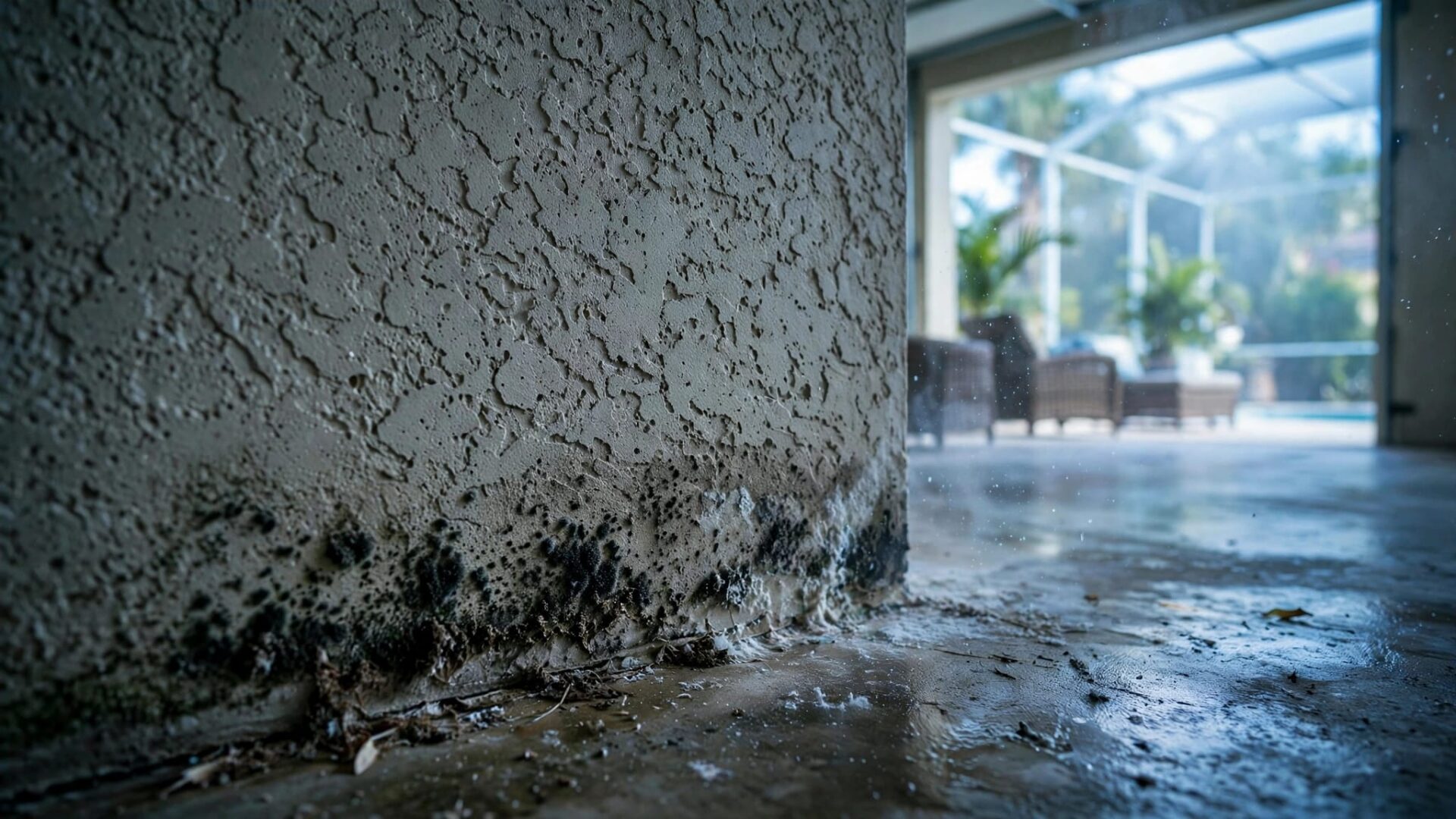
Yes, mold on concrete can grow in Florida homes, feeding on dust and organic residue rather than the concrete itself. Florida’s humidity can keep that residue damp in garages, lanais, and on walls.
We recommend finding the moisture source before cleaning. First, distinguish fungal growth from mineral deposits.
Key Takeaways
- Concrete holds moisture, while accumulated debris supplies mold’s food.
- White deposits may be efflorescence rather than mold.
- Recurring growth, flooding, or hidden dampness calls for professional inspection.
Why Does Mold Grow on Concrete?
Moisture and Debris Support Growth
Mold feeds on dust, organic debris, and biofilm on and within concrete pores. Porous concrete can absorb and retain moisture, with absorption varying by its composition and condition.
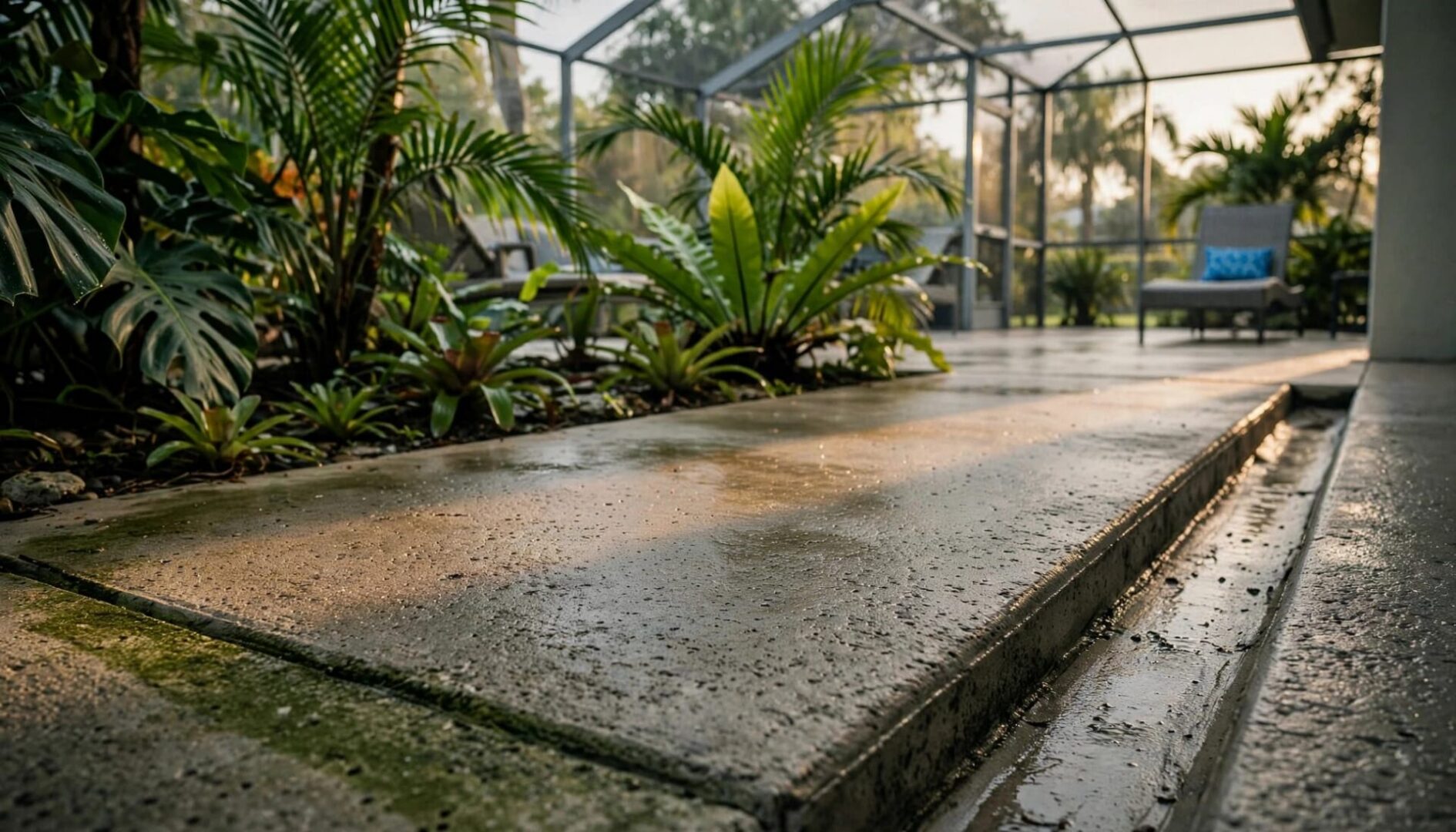
In Southwest Florida, wind-driven rain, plumbing leaks, groundwater seepage, and AC condensation can keep those deposits damp. Fix the source first, because growth may return within weeks if moisture remains.
Color Doesn’t Identify Mold
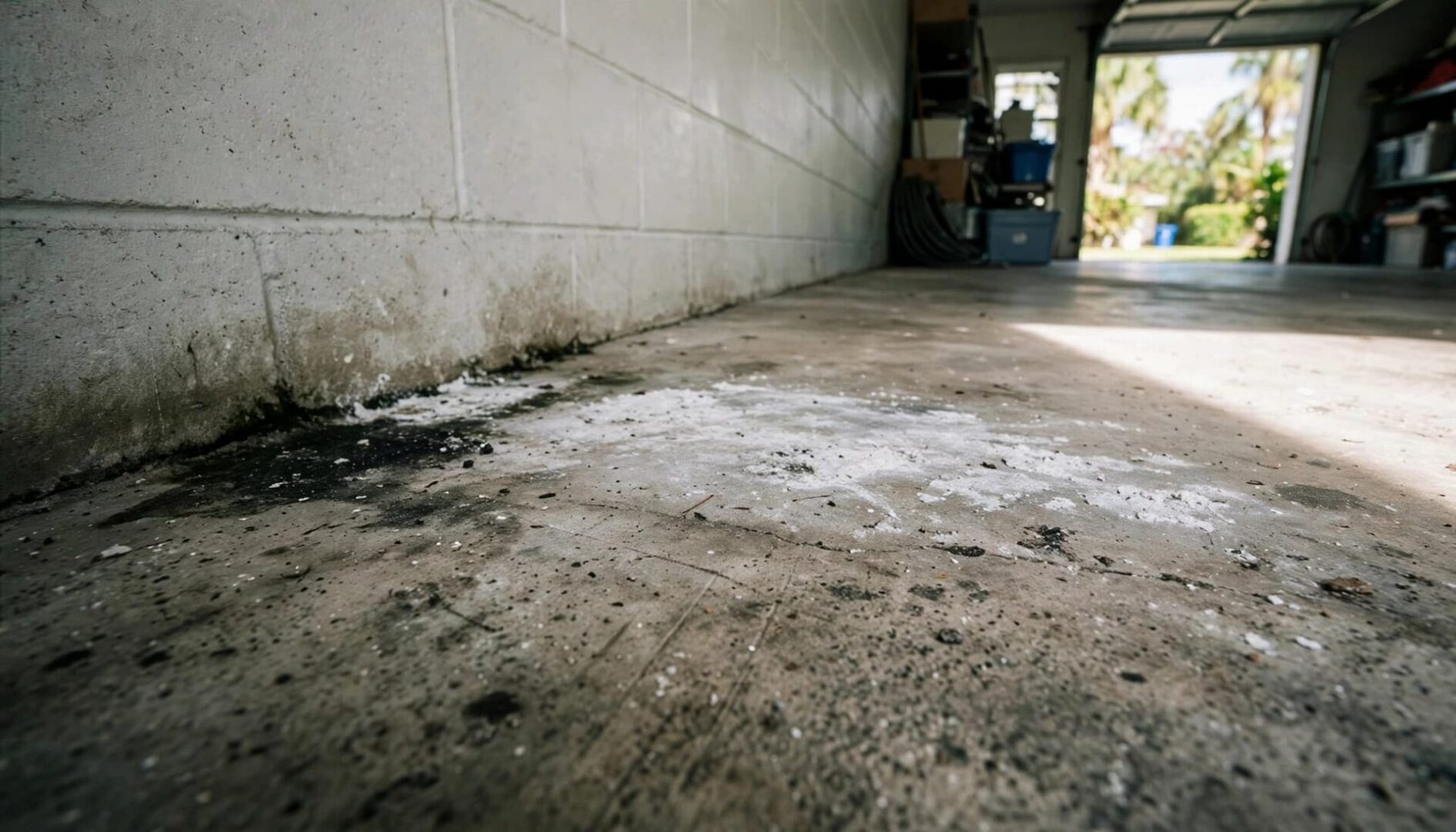
White material may be mineral residue called efflorescence. On exposed masonry, lightly mist a small spot: salts often dissolve or darken, while mold generally remains present. This screens the surface but doesn’t confirm identification.
Mildew is an informal label for surface growth, not a reliable identification of the organism. Stachybotrys chartarum needs cellulose, such as drywall paper or wood debris on or beside concrete. The label “black mold” describes color, but color alone can’t identify a species.
How to Remove Mold on Concrete Safely
Decide Whether DIY Is Appropriate
According to the EPA’s homeowner cleanup guidance, homeowners can usually address areas under about 10 square feet. This is guidance, not a legal requirement to hire someone above that size.
Consult a licensed professional for mold remediation if the area is larger, growth keeps returning, moisture is hidden, or sewage or flood contamination is involved.
For small jobs, wear an N95 respirator or better, nitrile gloves, and goggles. Ventilate appropriately and keep others away. An N95 filters particles, but it doesn’t protect against chemical fumes.
Clean, Remove Residue, and Dry
- Stop the leak or water entry before cleaning. Photograph damage if insurance may be involved.
- Indoors, scrub exposed concrete with detergent and water, then remove dirty water. Never use a pressure washer indoors.
- Rinse as the cleaner requires, then dry thoroughly. After drying, use a properly sealed HEPA vacuum for final dust cleanup, not a standard household vacuum.
Bleach kills surface mold but doesn’t reliably reach growth within unsealed concrete pores. A commonly circulated outdoor recipe uses one part bleach to three parts water for 10 to 15 minutes. We don’t recommend that strong mixture as a default. Follow the cleaning solution’s label for dilution and contact instructions.
Follow the CDC’s bleach safety precautions: never mix bleach with detergent, vinegar, ammonia, or other cleaners. Outdoor use also requires ventilation and protection for nearby plants.
Which Alternative Cleaners Are Appropriate?
These commonly discussed options have important limitations.
| Option | Typical Method | Main Limitation |
|---|---|---|
| Trisodium phosphate (TSP) | Follow the product label for dilution and dwell time | A strong basement-wall cleaner that requires protective equipment and thorough rinsing |
| Distilled white vinegar | Apply full strength for 30 to 60 minutes | Less effective on heavy growth; acidity can etch concrete |
| Professional steam cleaning | Equipment may operate around 150°C (300°F) | Can kill mold and many spores, but equipment temperature doesn’t guarantee surface treatment |
We favor detergent and water for routine small indoor cleanup. Killing mold alone doesn’t remove contaminated residue, and steam adds moisture that must be removed.
How to Keep Mold From Returning
Keep indoor humidity below 60%, preferably around 30% to 50%. Maintain AC drains, repair leaks, clear gutters, and direct runoff away from slab edges.
For storm-soaked homes, our Cape Coral water damage restoration service dries the home before finishes go back.
After cleaning and drying exterior concrete, consider a penetrating sealer made with silane or siloxane. Reapplication is often needed every 5 to 10 years, depending on exposure and product.
Sealing isn’t an automatic cure. Acrylic and epoxy films can trap vapor beneath them. On painted concrete, bubbling or peeling requires moisture investigation before recoating.
Frequently Asked Questions
Why Does Mold Return After Bleaching?
Bleach may lighten stains without removing embedded debris or correcting dampness. Persistent moisture, hidden contaminated materials, or repeated outdoor wetting can support fresh growth. Another application won’t repair the underlying problem.
Will Dawn Dish Soap Damage Concrete?
Ordinary dish detergent, properly diluted and rinsed, generally suits small cleaning jobs on bare concrete. Coated surfaces need a compatible cleaner. Never add dish soap to bleach, even when an online recipe recommends mixing them.
Get Help With Recurring Concrete Mold
A lasting repair starts with moisture control, followed by removal and drying. Covering damp concrete with paint or flooring can hide the problem.
At Services 321, we bring over 20 years of experience to Southwest Florida repairs and restoration. Our licenses include CRC1333503, MRSA2528, and MRSR2717. We offer 24/7 emergency availability and work with insurance companies, although coverage depends on your policy.
For mold removal in Cape Coral, Naples, or Fort Myers, call (239) 633-6494 to schedule an appointment.
