
Water in HVAC Ductwork: Florida Homeowner Guide
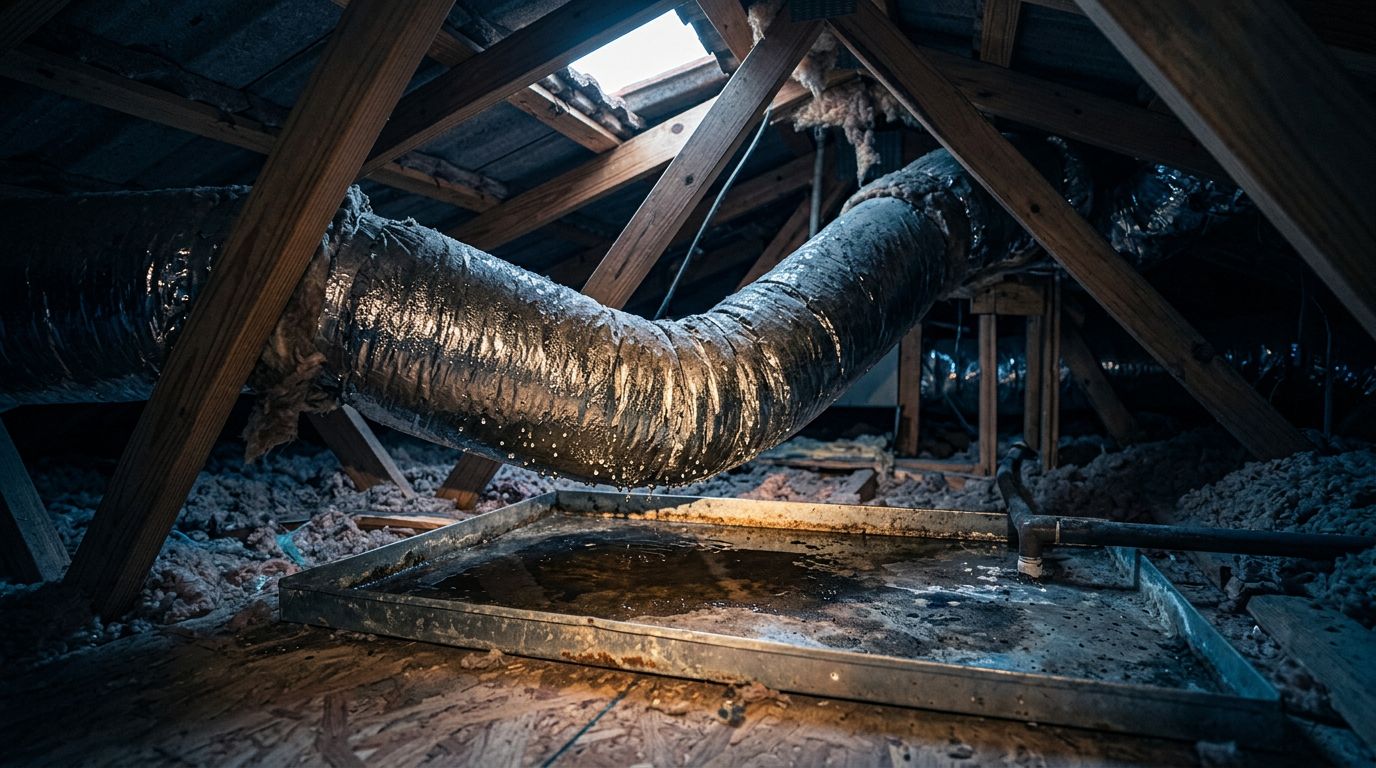
Water in HVAC ductwork can spread moisture, odor, and contamination through your home before you notice a visible problem. In Florida, high humidity, heavy rain, attic leaks, and air conditioner drainage issues make wet ducts a concern for homeowners and property managers.
If you find water in HVAC ductwork, turn off the system when standing water, electrical concerns, or contaminated water may be involved. Then document the damage and arrange an inspection before restarting the air conditioner.
Key Takeaways
- Water may enter ducts through an overflowing drain pan, clogged condensate line, roof leak, storm damage, or condensation.
- Wet fiberglass, flex duct, and internally lined ductwork often require removal and replacement.
- Bare metal ducts may be professionally cleaned and dried when contamination is limited.
- Don’t run the HVAC system if water reached the air handler, electrical components, insulation, or contaminated materials.
- Keep photographs, moisture readings, drying records, estimates, and receipts for possible insurance review.
How Water Gets Into Florida HVAC Ductwork
The air handler is often located in an attic, closet, garage, or utility room. Each location has different water risks.
A clogged condensate drain is one common cause. Your air conditioner removes moisture from indoor air as it cools the home. That moisture collects in a drain pan and exits through a condensate line. When algae, dirt, or debris blocks the line, water can back up into the pan and overflow near the air handler.
A cracked drain pan can cause the same result. Older pans may rust, split, or shift out of position. If the air handler sits above a ceiling, the water may soak insulation and drywall before it reaches the living space.
Roof leaks create another pathway. Wind-driven rain can enter around roof penetrations, vents, flashing, or damaged shingles. Water may drip onto ductwork in the attic and travel along the outside of the duct before appearing several feet away.
Other causes include:
- Disconnected or poorly sealed duct joints
- Torn flex duct in an attic or crawlspace
- Condensation on cold supply ducts
- Storm damage around attic vents
- Plumbing leaks near an air handler
- Floodwater or sewage entering low duct openings
Florida’s warm, humid air can slow evaporation. A duct may feel dry on the outside while moisture remains inside insulation, seams, or a lined interior surface. That is why a visual inspection alone may miss the full problem.
What Water in HVAC Ductwork Can Do
A small amount of clean water in a bare metal duct may not destroy the duct itself. However, the water can still create problems if it reaches insulation, ceiling materials, electrical components, or the air handler.
Wet duct insulation can lose its shape and hold moisture against the duct surface. Fiberglass and other porous materials can absorb water and retain odors. Flex duct has an outer jacket, insulation layer, and inner liner, so drying the visible exterior doesn’t prove that the full assembly is dry.
Mold becomes a concern when moisture remains in porous materials. The system can then distribute musty odors and airborne particles through supply registers. People with asthma, allergies, or other respiratory sensitivities may notice irritation, although indoor air symptoms can have many causes.
Water can also damage nearby building materials. It may run beneath attic insulation, enter a ceiling cavity, or travel along framing. A stain on the ceiling often shows only the lowest visible point, not the complete moisture path.
A ceiling stain below an air handler doesn’t prove the duct is the only damaged component. The pan, drain line, insulation, wiring, ceiling cavity, and nearby framing all need inspection.
A professional may use moisture meters, thermal imaging, visual checks, and equipment inspection to map the affected area. The goal is to find where water traveled, not only where it became visible.
For additional context, South Florida HVAC mold remediation services describe the need to assess both the air conditioning system and connected ductwork when mold or odor concerns arise.
What to Do When You Suspect Wet Ducts
Act carefully during the first few hours. Your priorities are people, electrical safety, documentation, and stopping the water source.
Use this checklist:
- Turn off the HVAC system if it is safe to do so. Use the thermostat when you can reach it from a dry, safe location. Don’t handle wet equipment, wiring, outlets, or an electrical panel.
- Keep people and pets away from the affected area. Avoid entering an attic, ceiling cavity, crawlspace, or other unstable space to inspect the damage.
- Stop the water source only when you can do it safely. A licensed plumber or HVAC technician may need to address a broken line, clogged drain, or damaged pan.
- Take photographs and video. Record the air handler, duct connections, standing water, ceiling stains, wet insulation, and nearby damaged items.
- Don’t run the system to “dry it out.” Air movement through wet or contaminated ducts can spread odor and particles through the house.
- Contact the right professionals. Use a licensed HVAC contractor for the equipment and duct system. Call a water-damage or mold professional when materials are saturated, contamination is possible, or moisture entered walls and ceilings.
- Notify your insurer promptly if you may file a claim. Ask what documentation it needs before materials are removed or discarded.
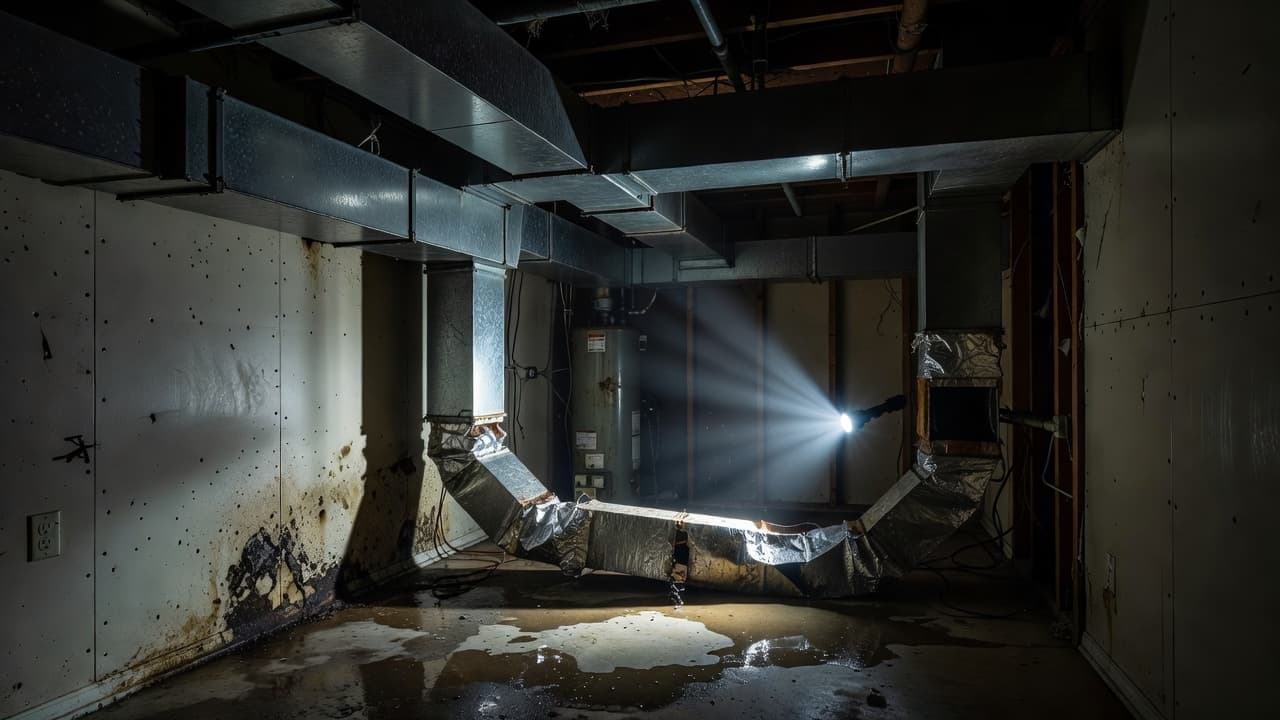
Don’t enter an area with a damaged ceiling, active electrical hazard, sewage, or structural instability. If water has reached outlets, switches, wiring, or the air handler’s electrical components, keep away and arrange an electrical inspection.
Should Wet Ductwork Be Cleaned or Replaced?
The material inside the duct usually determines the repair.
Bare metal ducts can sometimes be cleaned, disinfected when appropriate, and dried by a qualified professional. This option is more reasonable when the water was clean, the metal has no significant corrosion, and porous insulation did not become saturated.
Fiberglass duct board is porous. Once it becomes soaked, contaminated, heavily soiled, or moldy, replacement is often safer than surface cleaning. Scrubbing may damage the fibers and fail to remove contamination throughout the material.
Flex duct can be difficult to restore after extensive water exposure. The inner liner may remain wet even when the outer jacket appears dry. Replacement may be recommended when the liner sags, insulation is saturated, odors persist, or contamination reached the interior.
Internally lined metal ducts also require careful evaluation. A lining that absorbed water or developed mold may need removal and replacement. Coating over damaged lining can trap moisture and make future inspection harder.
The water category matters as well. Clean water from a supply line is different from gray water from an appliance or drain. Sewage, floodwater, and storm surge can contain pathogens, chemicals, and debris. Don’t attempt to clean contaminated ductwork yourself.
A qualified crew should identify the source, isolate affected areas, protect clean parts of the home, remove damaged porous materials, and verify drying with moisture readings. A company that handles commercial HVAC water and mold remediation may also explain why duct cleaning alone isn’t enough after a larger loss.
When to Call HVAC and Water-Damage Professionals
Call an HVAC professional when water reached the air handler, evaporator coil, drain pan, insulation, blower compartment, or duct connections. The technician can test the equipment, correct the drainage problem, inspect the duct material, and determine whether the system is safe to operate.
Call a water-damage professional when water entered ceilings, walls, insulation, flooring, or multiple rooms. This is especially important when the source was contaminated, the moisture remained for an extended period, or musty odors have developed.
Mold concerns may require a separate inspection and remediation plan. A reputable provider should explain what will be tested, which materials need removal, how the area will be contained, and how the crew will verify drying. HVAC mold inspection and remediation guidance can help property managers understand why system inspection and source correction must happen together.
Ask for a written, line-item scope. It should separate:
- Water extraction and cleanup
- Duct inspection and cleaning or replacement
- Drying equipment and monitoring
- Demolition of wet drywall or insulation
- Sanitizing or mold remediation
- Reconstruction and finish work
Avoid anyone who promises a complete answer without taking moisture readings or inspecting hidden areas. A low quote may exclude attic insulation, ceiling cavities, duct replacement, or electrical review.
Insurance and Documentation Considerations
Insurance treatment depends on the cause of loss, policy language, deductible, exclusions, and endorsements. A sudden, accidental plumbing failure may receive different treatment from a long-term condensate leak, corrosion, repeated seepage, poor maintenance, floodwater, or storm surge.
Standard homeowners insurance often treats flood damage differently from an indoor plumbing loss. In coastal areas such as Cape Coral and Fort Myers, separate flood coverage may be relevant for rising water or storm surge. Your policy and adjuster’s instructions control the claim.
Before major removal, take wide and close photographs. Record when you noticed the water, recent storms, unusual odors, equipment shutdowns, and the actions taken to limit further damage.
Keep a claim folder with:
- The claim number and insurer contacts
- Photos and videos
- HVAC and restoration estimates
- Moisture readings and drying logs
- Invoices, receipts, and disposal records
- Written messages and inspection reports
Request copies of the restoration company’s inventory. Check room names, item descriptions, quantities, condition notes, and photographs. A detailed estimate should explain why ductwork is being cleaned, dried, removed, or replaced.
Preventing Future Duct Water Damage
Have the condensate drain and pan inspected during regular HVAC service. A technician can clear buildup, check the drain slope, test the safety switch, and look for cracks or corrosion.
Keep attic vents, roof penetrations, and flashing in good condition. After a major storm, inspect for roof leaks before they soak insulation and ducts. Don’t place stored boxes against ductwork, because blocked access can hide condensation or small leaks.
Watch for warning signs such as:
- Water around the air handler
- Repeated ceiling stains
- Musty air from supply registers
- A wet or sagging flex duct
- Unusual dripping after the system runs
- Rising indoor humidity
Fix the source before repainting ceilings, sealing duct seams, or replacing insulation. Cosmetic work can hide moisture while the damage continues inside the assembly.
Conclusion
Water in HVAC ductwork can range from a limited metal-duct issue to a larger loss involving insulation, ceilings, electrical equipment, and contaminated materials. The safest response is to shut off the system when hazards are present, keep out of unsafe areas, document the condition, and arrange qualified inspections.
Bare metal may sometimes be professionally restored, while wet porous or internally lined duct materials often need replacement. Prompt action helps prevent hidden moisture, protects indoor air quality, and gives you clearer information for repairs and insurance decisions.
