
Thermal Imaging Leak Detection for Cape Coral Homes
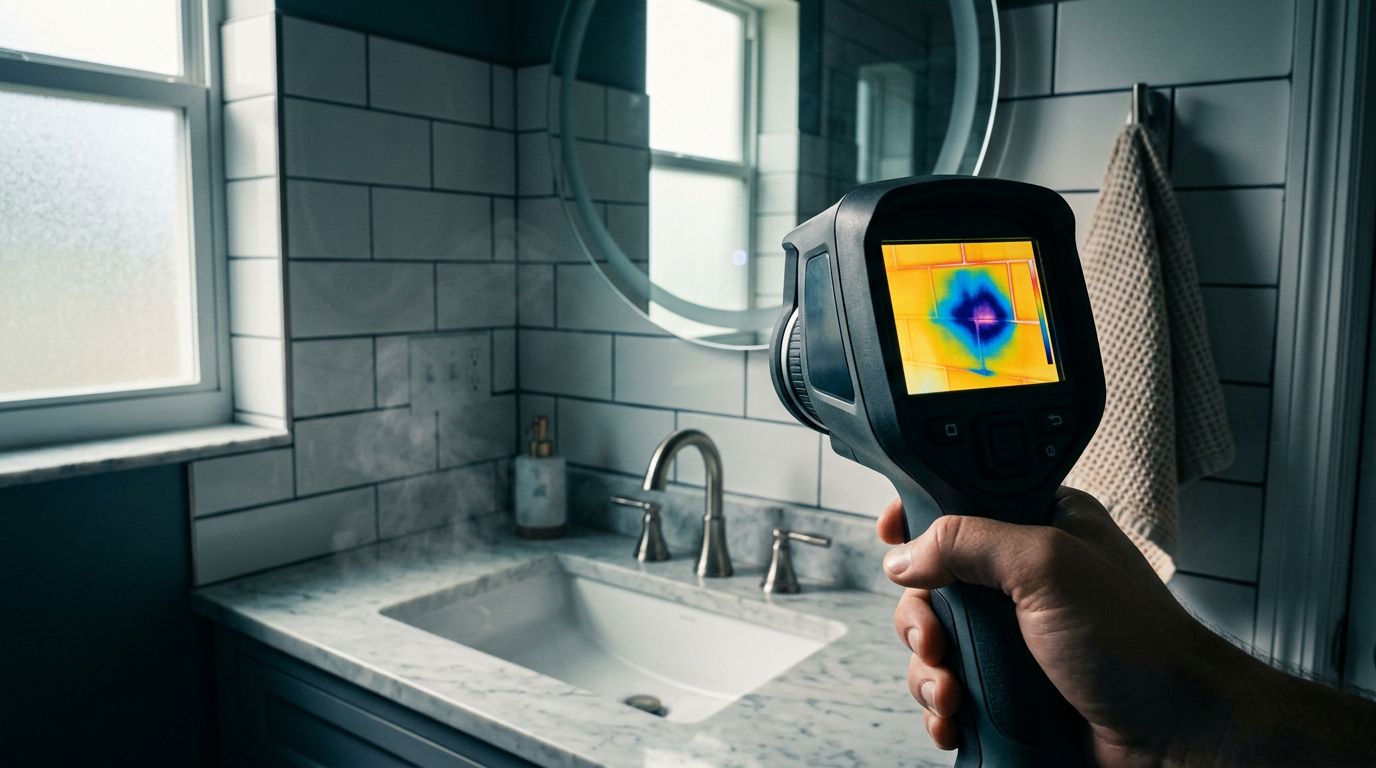
An unexplained cold patch near a bathroom wall can point to a leaking pipe, missing insulation, or an ordinary air current. Thermal imaging leak detection helps narrow down the cause without immediately cutting drywall or removing tile.
For Cape Coral homeowners, that non-invasive inspection can limit unnecessary damage while hidden leaks are investigated. However, this method only identifies surface temperature differences. It isn’t gas leak detection and can’t replace confirmation testing with moisture readings, visual inspection, or plumbing diagnosis.
Key Takeaways
- Thermal imaging leak detection identifies surface temperature differences that may point to hidden plumbing leaks, roof leaks, moisture intrusion, or HVAC problems.
- A thermal camera does not see water inside walls and cannot confirm a leak or detect natural gas, methane, or other gas hazards.
- Cape Coral conditions such as humidity, sunlight, airflow, tile, stucco, and concrete slabs can create misleading thermal patterns.
- Confirm suspicious areas with moisture readings, visual inspection, plumbing diagnosis, or pressure testing before opening walls or replacing finishes.
How Thermal Imaging Leak Detection Works
A thermal camera records infrared radiation from visible surfaces and detects temperature differences. Infrared cameras display those surface readings as colors or shades, not water inside a wall. Thermal imaging instead shows effects created by moisture, heat transfer, or moving water.
Pipe leaks under pressure can change the temperature of nearby drywall, framing, flooring, or concrete. Fluid leaks can cool wet materials through evaporative cooling, while heat transfer from hot or cold water moving through a pipe may create a possible thermal signature. Camera thermal sensitivity affects how clearly that signature appears.
An inspector compares a suspect area with nearby surfaces and checks whether the pattern follows a logical path. Plumbing lines, air-conditioning drains, roof openings, windows, and exterior wall transitions can help explain unusual readings.
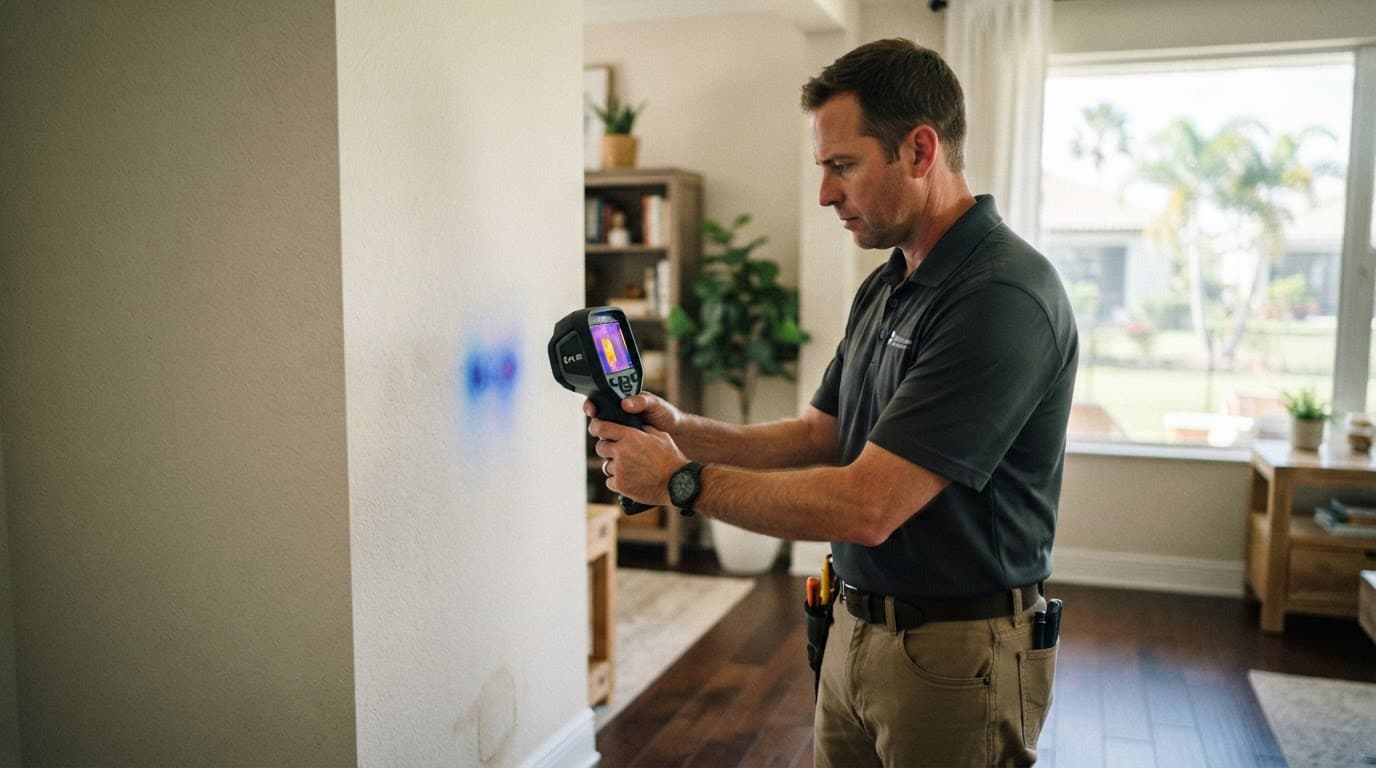
Cape Coral homes require careful interpretation. Concrete slab foundations can spread or delay temperature changes. Tile may hide small differences, while stucco can hold moisture behind the visible surface. High indoor humidity may also reduce surface evaporation, making some plumbing problems harder to identify.
Reading Thermal Anomalies in Humid Cape Coral Conditions
Thermal imaging leak detection is a screening process, not proof that a leak exists. Used correctly, thermal imaging can highlight areas that need closer review.
A single blue, red, or bright spot doesn’t prove that a leak exists. Missing insulation, thermal bridges, direct sunlight, air movement, and changes in framing can create similar patterns.
A reliable inspection follows a consistent process:
- The technician uses a thermal camera to scan a broad area, looking for recurring thermal patterns instead of focusing only on the visible stain.
- The suspect area is compared with nearby materials of similar construction.
- Indoor temperature, outdoor weather, sunlight, fans, and air-conditioning operation are recorded and considered.
- A moisture meter or other test confirms whether the material contains abnormal moisture.
These conditions can change how a thermal camera reads your home:
| Condition | Possible effect | Better response |
|---|---|---|
| Direct afternoon sun | Warms one section of wall or roof | Scan after the surface returns to shade |
| Air-conditioning airflow | Creates a cool line or patch | Compare nearby areas with airflow in mind |
| High humidity | Reduces evaporative cooling | Give moisture readings greater weight |
| Missing insulation | Produces strong thermal contrast | Inspect the cavity or insulation directly |
A persistent thermal signature that aligns with plumbing and matches elevated moisture readings deserves further investigation. A pattern that disappears when sunlight or airflow changes may have an environmental cause instead.
Where Thermal Imaging Helps in Cape Coral Homes
Thermal imaging leak detection can help locate water leaks in slab plumbing and hidden leaks around bathrooms and kitchens. In homes without accessible crawl spaces, pipe leaks may affect tile, concrete, or flooring without revealing the exact failure point, but a hot or cold path across a tile floor can help a plumber narrow the search.
Bathrooms and kitchens are also useful inspection areas. Technicians can scan around vanities, shower walls, toilets, dishwashers, refrigerator water lines, and cabinets. Water may travel sideways beneath flooring or behind drywall, so the visible stain can be smaller than the affected area.
Roof leaks and stucco moisture intrusion may show as cooler or warmer sections after rain, depending on the materials and drying conditions. Window openings, roof valleys, downspouts, exterior penetrations, and wall transitions deserve attention after a storm.
HVAC system leaks can produce unusual temperature patterns near an air handler, condensate drain, duct connection, or poorly insulated line. A follow-up scan may help distinguish condensate or insulation issues from HVAC system leaks. Moisture testing still matters because fluid leaks, cold air, and condensation can produce similar surface changes.
Water Leak Detection Is Not the Same as Gas Leak Detection
A standard thermal camera shows surface temperatures. It isn’t a dependable tool for gas leak detection involving natural gas, methane, or volatile organic compounds.
Optical gas imaging systems use specialized infrared wavelengths to visualize certain gas plumes as they move through the air. This optical gas imaging technology differs from residential thermal cameras and is generally used by trained industrial or environmental professionals.
If you smell gas, leave the property and contact the gas utility or emergency services. Don’t rely on residential thermal equipment when gas leak detection is needed.
Confirm the Finding Before Opening a Wall
Thermal imaging leak detection is a screening method. A building inspection can pair thermal scanning with moisture detection. A moisture meter checks drywall, wood, flooring, and other materials for elevated moisture. Pin meters measure at contact points, while non-invasive meters scan larger areas without leaving holes.
A hygrometer can record indoor temperature and relative humidity. Visual inspection can reveal swollen trim, staining, bubbling paint, efflorescence, damaged caulk, or mold-like growth. Plumbing inspections may require pressure testing, leak detection equipment, or controlled access openings to confirm fluid leaks and locate their source.
Camera quality also affects the result. Smartphone attachments can help homeowners notice broad temperature changes and turn a phone into a basic thermal camera. Professional infrared cameras usually provide better resolution, lower thermal sensitivity, adjustable emissivity settings, and more reliable documentation. Common professional product families include FLIR E6 Pro and E8 Pro cameras, Fluke TiS120+ units, and moisture-focused tools such as the FLIR MR176; lower NETD generally indicates better ability to distinguish small temperature changes.
The right equipment is less important than correct interpretation and confirmation. Thermal imaging can still produce a misleading result when the surface, weather, or building materials aren’t considered.
What to Do When You Find a Suspicious Area
After thermal imaging leak detection flags a suspicious area, don’t paint over a stain, seal a wall, or replace flooring until the source is understood. Photograph the room, note when you noticed the issue, and save thermal images and moisture readings when available.
If water is still active, shut off the supply only when it’s safe. Keep away from wet electrical equipment, outlets, damaged ceilings, and contaminated water. Sewage, storm surge, and rising floodwater require professional handling.
Insurance treatment depends on the cause, policy language, deductible, exclusions, and endorsements. A sudden accidental pipe failure may receive different treatment from long-term seepage, corrosion, poor maintenance, sewer backup, or flooding. Standard homeowners insurance generally doesn’t cover rising floodwater or storm surge, which usually requires separate flood coverage.
Notify your insurer promptly if you may file a claim. Ask what it needs before discarding contents or opening large wall sections. Keep photographs, inspection reports, moisture readings, drying logs, estimates, invoices, and written communications together.
A written restoration scope should separate leak detection and repair from extraction, demolition, drying, cleaning, sanitizing, and reconstruction. Cape Coral homeowners can review water damage cleanup services when the leak has already affected walls, cabinets, flooring, or insulation. Persistent dampness or odor may also require mold inspection and remediation.
Conclusion
A thermal camera supports thermal imaging leak detection by locating temperature effects from plumbing leaks, roof leaks, moisture intrusion, and HVAC problems. Thermal imaging produces clues, not proof of the source. In humid Cape Coral homes with slab foundations and storm exposure, accurate interpretation depends on comparing surfaces, accounting for weather, and confirming results with moisture readings and qualified inspections.
FAQ
Can a thermal camera see water inside a wall?
No. It reads infrared energy from the wall’s surface, not through its layers, and cannot confirm a gas hazard. For suspected gas hazards, follow the safety guidance in the gas section rather than relying on this tool for gas leak detection. Moisture may create a temperature change through evaporation or heat transfer, but the camera doesn’t see through drywall, insulation, tile, or concrete.
What materials work best for infrared moisture detection?
Drywall and exposed wood framing often show temperature changes clearly when moisture affects them. Tile, concrete, thick stucco, dense insulation, and layered finishes can weaken or delay the pattern. A moisture meter is especially important with those materials.
Does rain or humidity affect the inspection?
Yes. Sunlight can heat one wall, wind can cool surfaces, and high humidity can reduce evaporative cooling. Recent rain may help reveal roof or stucco intrusion, but the inspector must separate rain-related changes from normal wet surfaces.
Should I hire a professional for a suspected slab leak?
Professional help is appropriate when the anomaly appears near plumbing, moisture readings are elevated, water use has increased, or flooring and cabinets show damage. A thermal scan can narrow the search, while a licensed plumber confirms the repair location and source. For a rundown of the early warnings to watch for, see our guide on hidden slab leak signs in Cape Coral.
