Water Damage Class Ratings Explained for Homeowners in Cape Coral
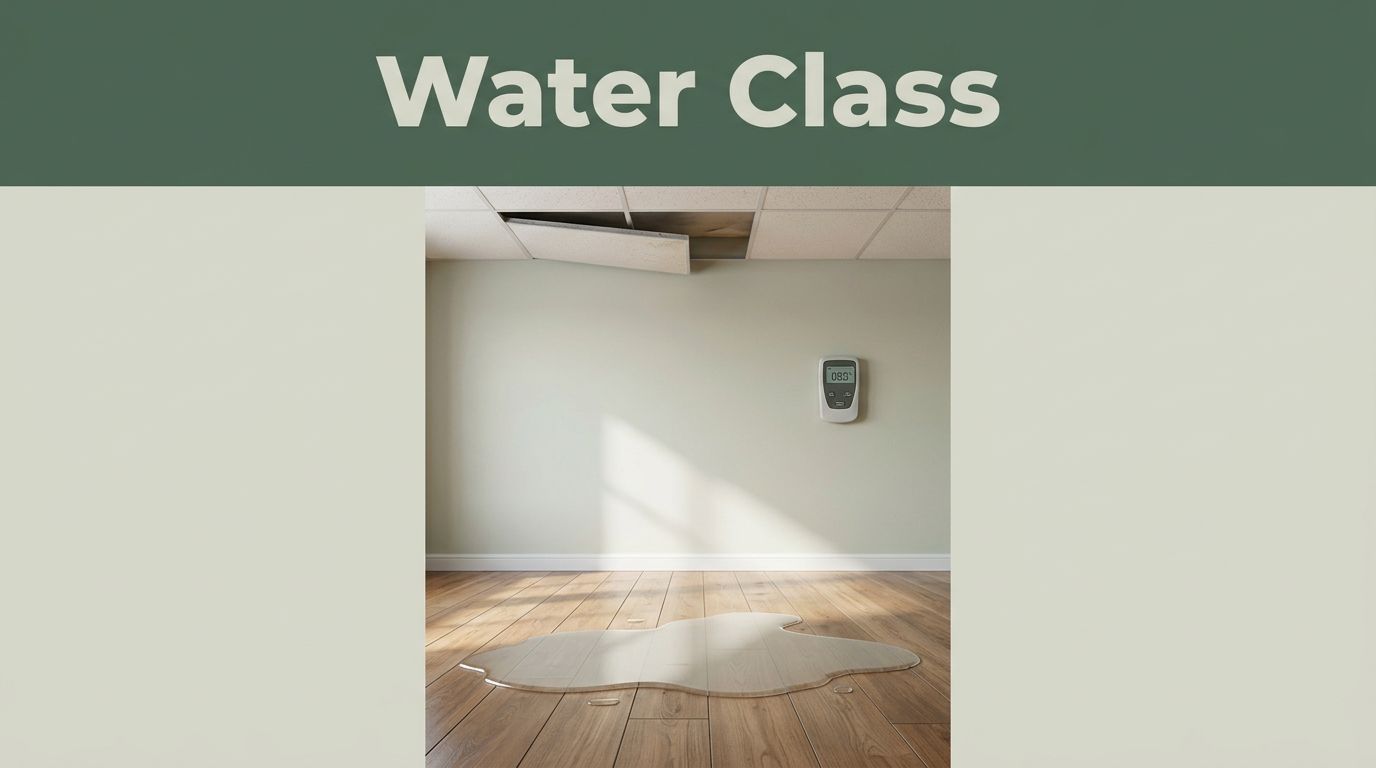
Water on the floor is stressful, but the real question is what that water is doing to your home. Is it a small leak that can dry fast, or has moisture soaked deep into walls and floors?
That’s where water damage classes come in. They describe how much of your home is wet and how hard it will be to dry. In Cape Coral, that matters even more because heat and humidity can turn “minor” water into a mold problem if drying gets delayed.
Even in March 2026, with no major local storms reported so far, most losses here still come from the usual suspects: water heaters, supply lines, AC drain clogs, roof leaks, and wind-driven rain.
What “water damage class” means (and what it doesn’t)
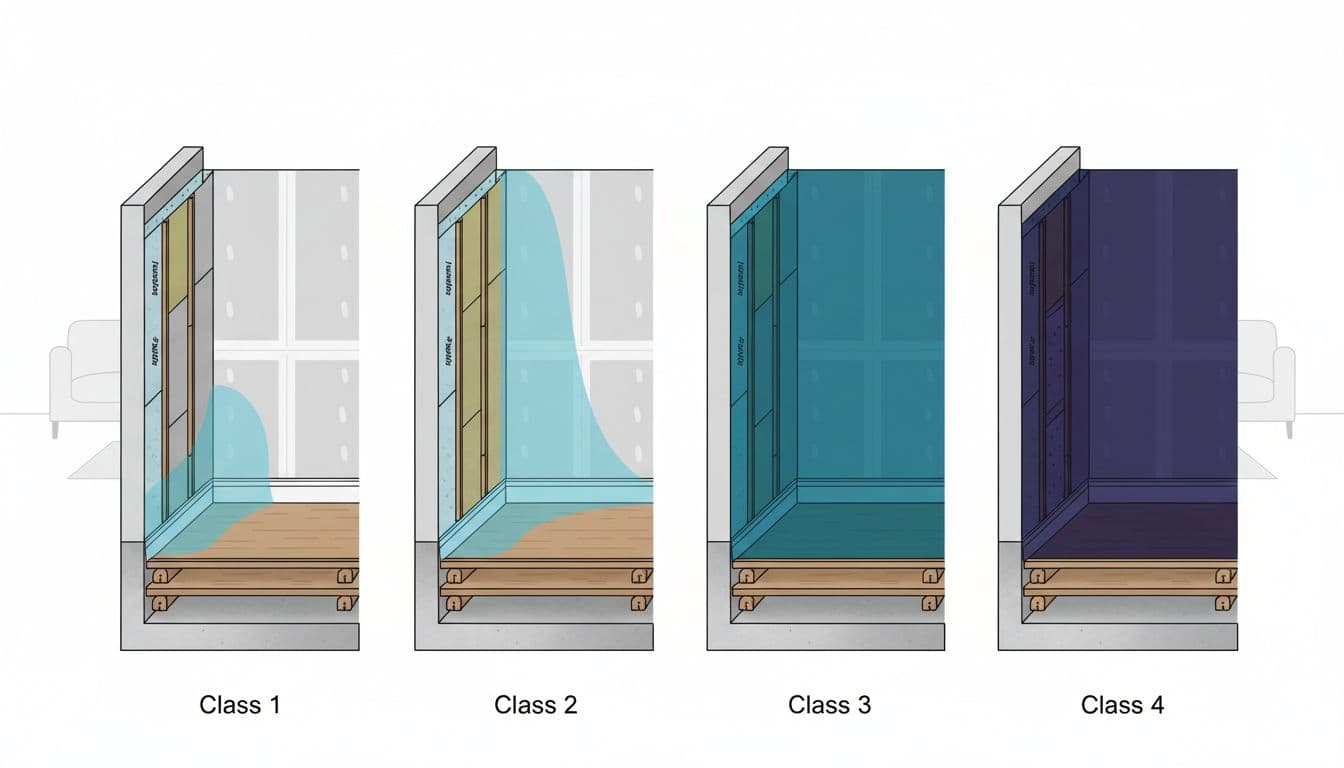
A water damage class rating (Class 1 through Class 4) describes the amount of water absorbed and the evaporation challenge. In plain terms, it answers: how big is the wet area, and how deep did the water soak?
It’s easy to confuse “class” with “category.” They’re different:
- Class = drying difficulty (how much got wet, how fast it can evaporate).
- Category = contamination level (clean water vs gray water vs black water).
Restoration teams often follow the ANSI/IICRC S500 approach. If you’re curious what training looks like for pros who handle these jobs, the IICRC Water Damage Restoration Technician (WRT) program is a helpful reference point.
Here’s a quick way to think about classes: imagine spilling a cup of water on tile versus dumping a cooler onto carpet and letting it run under baseboards. Same liquid, totally different drying job.
Before the details, this table gives you a homeowner-friendly snapshot:
| Water damage class | What usually gets wet | Typical drying challenge | What it often needs |
|---|---|---|---|
| Class 1 | Small area, limited materials | Lowest evaporation | Air movement, light dehumidification |
| Class 2 | One room or more, multiple materials | Water wicked into padding, lower walls | More air movers, dehumidifier, monitoring |
| Class 3 | Ceilings, walls, insulation, floors | Deep saturation, high humidity load | Aggressive drying, possible removals |
| Class 4 | “Hard-to-dry” materials | Trapped moisture | Specialty drying (heat, injection, desiccant) |
Takeaway: the higher the class, the more likely you’ll need professional equipment, controlled drying, and material removal to prevent long-term damage.
Class 1 through Class 4 in real Cape Coral homes
Class 1: Small, contained wet area
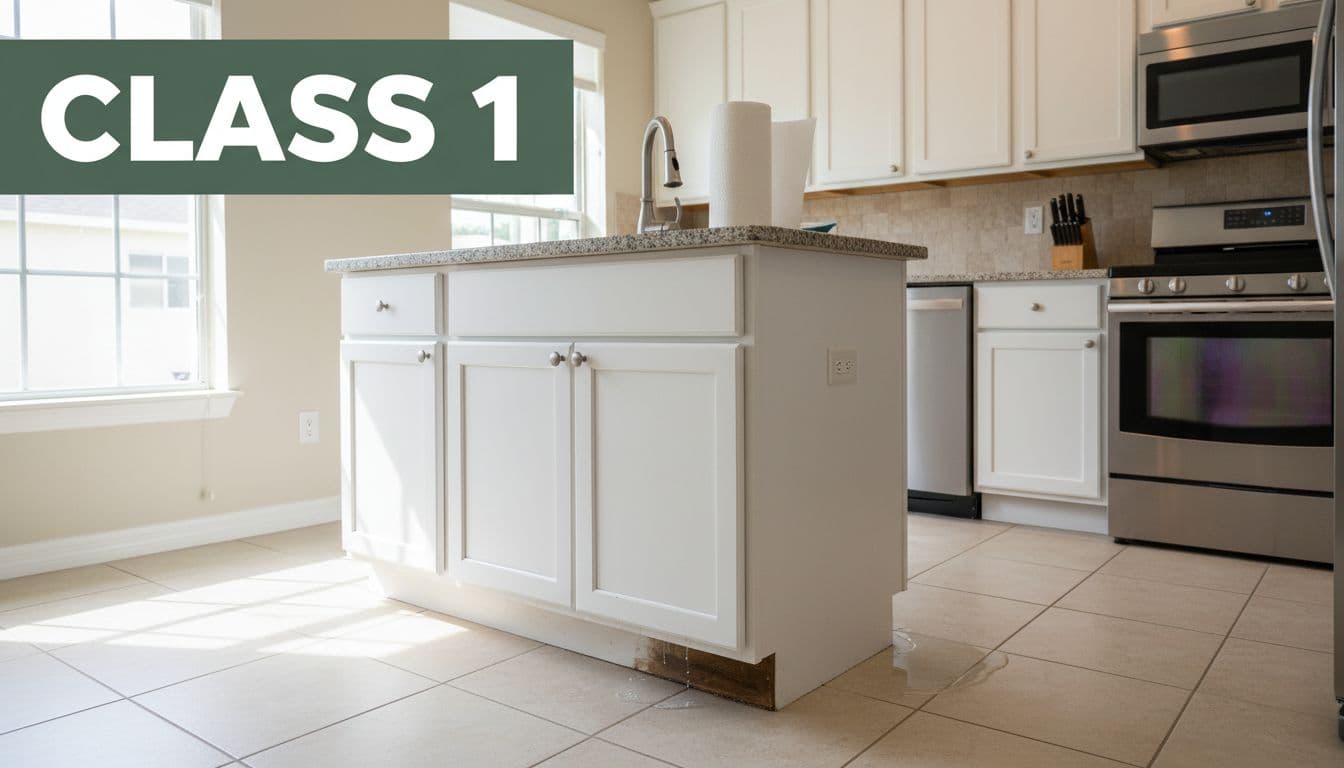
Class 1 is the “best-case” scenario. Water affects a limited area and fewer porous materials. Think a slow supply-line drip under a sink that you catch quickly.
In many Cape Coral homes, tile floors help, but cabinets and baseboards can still swell. If water stays on the surface, drying is usually simpler. If it slips under cabinets, the class can rise fast.
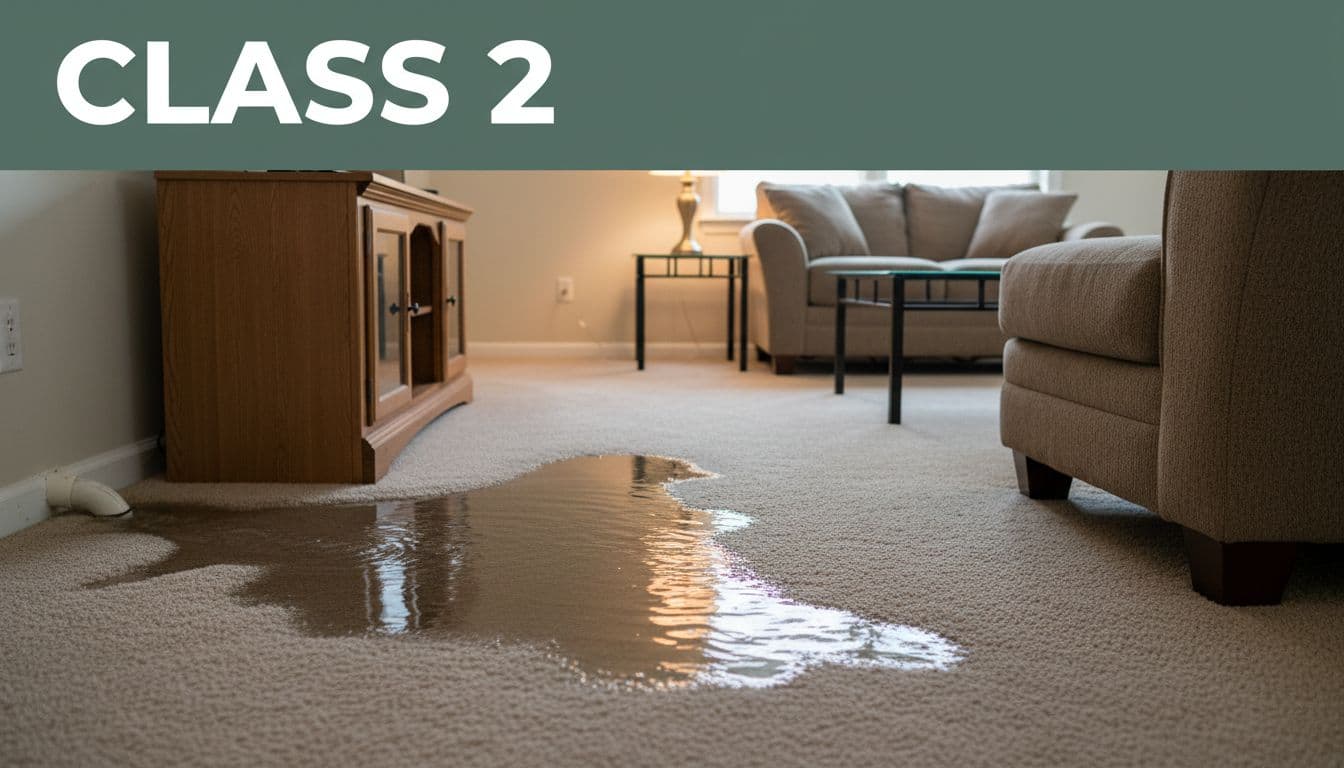
Class 2: Water spreads, materials start wicking
Class 2 usually means more square footage is wet, and water has moved beyond the obvious puddle. Carpet, pad, and the lower portion of drywall can wick moisture like a paper towel.
This is common after a toilet overflow that reaches nearby rooms, or a dishwasher line break that runs across the kitchen and into an adjacent living space. At this point, drying isn’t just about fans. You also need the right dehumidification and moisture checks to confirm the wall cavities aren’t staying damp.
Class 3: Heavy saturation, including walls and ceilings
Class 3 is where homes start to feel “soaked.” Water may come from a burst pipe in an upper area, a roof opening after wind-driven rain, or significant intrusion during a storm. Ceilings can get wet, insulation holds water, and wall cavities trap moisture.
In other words, the drying job isn’t just big. It’s also hidden.
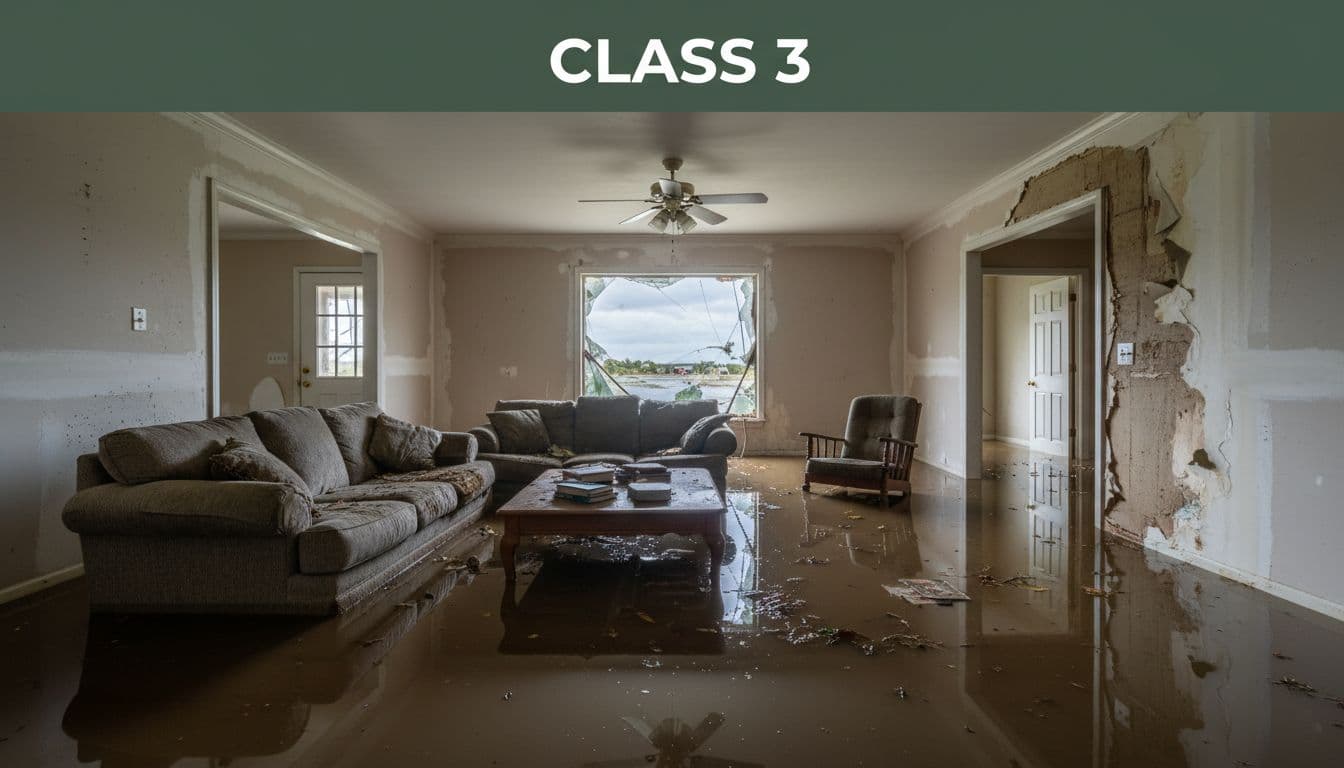

Photo by Helena Jankovičová Kováčová
If wet drywall or insulation stays in place, moisture can linger where you can’t see it. That’s when odors and mold complaints show up weeks later.
Class 4: Hard-to-dry materials (even if the area isn’t huge)
Class 4 is less about square footage and more about what is wet. Plaster, brick, block, tongue-and-groove wood, stone, and layered assemblies can hold moisture deep inside.
This matters in Southwest Florida. Block construction, dense materials, and humid outdoor air can slow drying. Pros may use specialty methods like cavity drying, injection drying, or controlled heat systems to pull moisture out safely.
What to do next: safety, mold risk, and insurance basics
First, treat water damage like you’d treat smoke, you don’t need to see danger for it to be there.
Quick safety notes that prevent secondary damage
- Electricity: If water is near outlets, appliances, or your panel, shut off power if you can do it safely. If not, wait for an electrician.
- Contaminated water: Sewer backups and floodwater can carry bacteria. Avoid contact and keep kids and pets away.
- Hidden moisture: Wet baseboards often mean wet drywall edges or wet cabinet toe-kicks.
- Mold risk: Mold can grow when materials stay damp. For practical cleanup guidance, see the EPA’s mold cleanup steps for homes and the CDC’s mold testing and remediation guidance.
A homeowner-friendly “first day” checklist
Do these in order, if it’s safe:
- Stop the source (shut off the valve, tarp the roof area, pause the AC).
- Document everything (wide shots, close-ups, serial numbers, receipts if you have them).
- Move what you can (rugs, cushions, décor) to a dry area.
- Start gentle air flow (AC on if safe, fans if circuits are dry).
- Call a licensed restoration pro if water reached walls, cabinets, or multiple rooms.
When to call a water damage restoration professional in Cape Coral
Bring in help quickly if any of these are true: water sat for hours, you smell musty odors, baseboards are swelling, ceilings are stained, or you had storm or floodwater. A pro can map moisture, set drying targets, and document readings for the claim.
Local flood risk also affects decisions. For city resources on flood protection and local planning, review Cape Coral’s flood information page.
Insurance guidance (without the legal stuff)
Most policies expect you to prevent added damage after the loss. That usually means prompt mitigation and good documentation.
When you talk to an adjuster, keep it simple and specific. Here are smart questions to ask:
- What damage documentation do you need most?
- Do you require pre-approval for mitigation work?
- How do you want drying logs and moisture readings submitted?
- Is temporary housing covered if rooms are unusable?
Conclusion
Water damage can look the same at first glance, but water damage classes explain why one job dries fast and another turns into demolition and rebuild. The faster you stop the source, document it, and dry it correctly, the better your odds of avoiding mold and costly repairs. If you’re unsure what class you’re dealing with, it’s usually cheaper to get a professional assessment now than to fix hidden damage later.
