
Wet Drywall Around Electrical Outlets in Cape Coral Homes
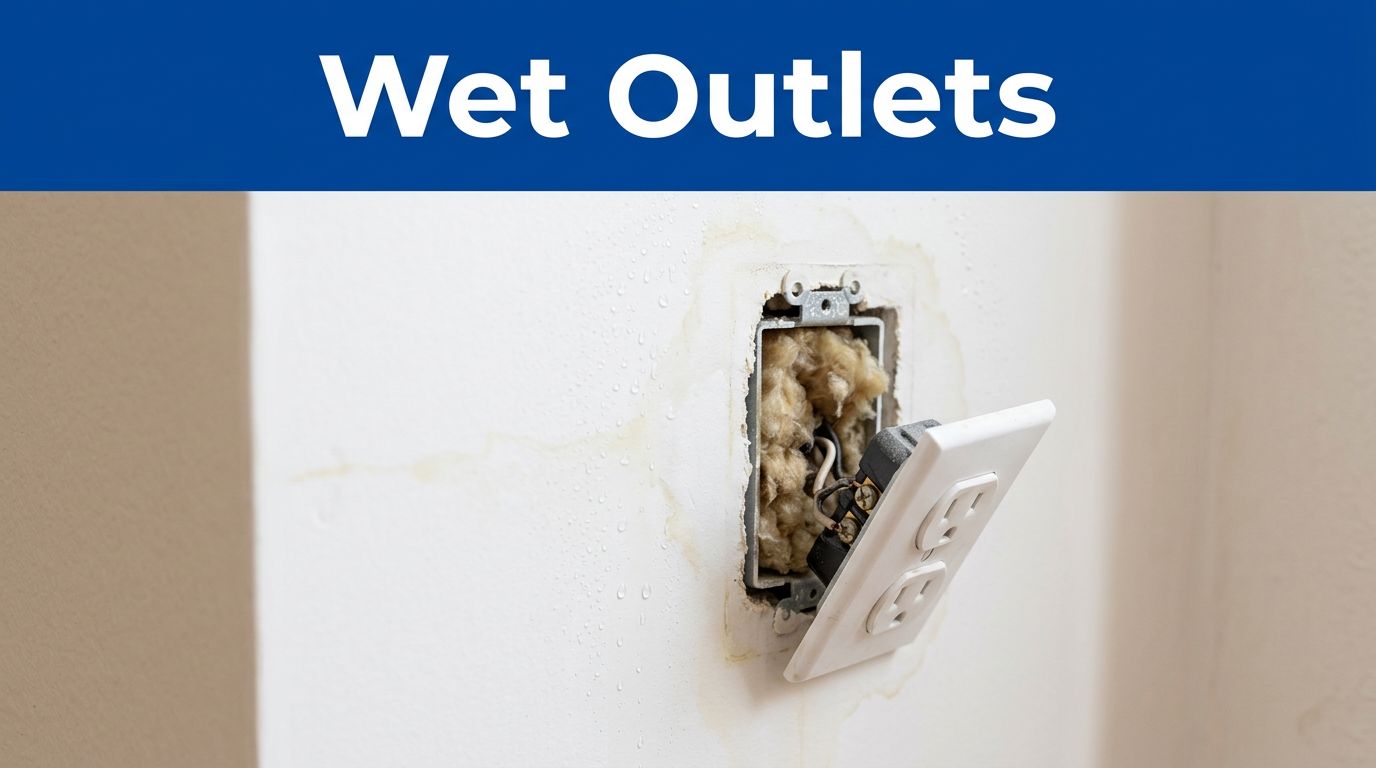
A damp wall near an outlet is never “just drywall.” If you’re dealing with wet drywall electrical outlets in a Cape Coral home, treat it as a safety issue first.
Water near wiring can lead to shock, a short circuit, or a fire inside the wall. In Southwest Florida, that risk climbs fast because storm season, flooding, and humidity can keep moisture trapped longer than you think.
Why wet drywall near an outlet is more dangerous than it looks
Drywall can hide trouble well. A little bubbling paint, a loose outlet cover, or a brown stain may not look urgent. Still, the wall cavity behind it can hold wet insulation, damp wiring, and corrosion around the electrical box.
That matters because electricity doesn’t need a dramatic flood to become dangerous. A slow roof leak, wind-driven rain around a window, or a plumbing drip inside the wall can all soak the area around an outlet. As water damage can affect electrical systems, the damage may keep causing problems after the wall surface starts to dry.
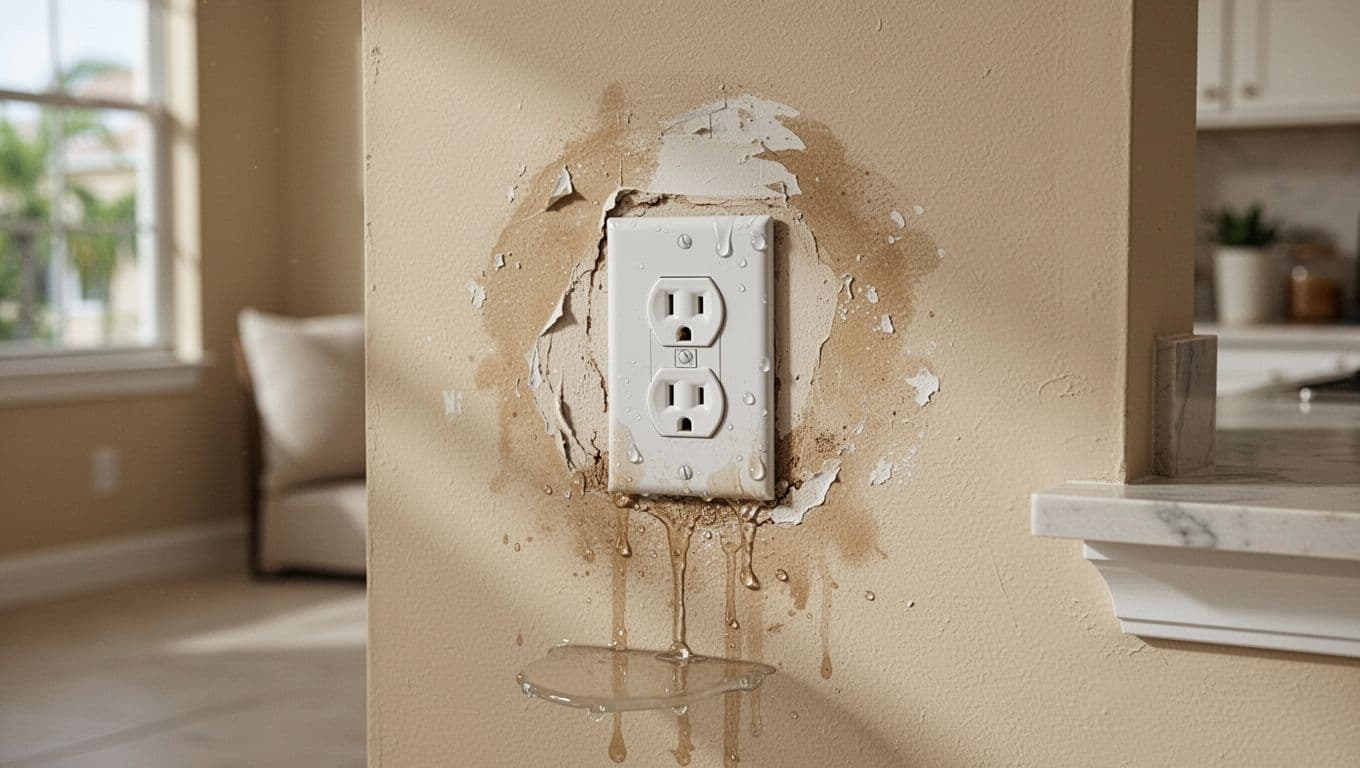
Common warning signs include stained drywall, soft spots, a musty smell, buzzing, flickering lights, or a breaker that keeps tripping. Sometimes the outlet still “works,” which gives homeowners false comfort. That’s like seeing dry paint on the wall while the leak is still active behind it.
If drywall is wet and an outlet is nearby, treat it like an active hazard, not a cosmetic repair.
Don’t plug anything into that outlet. Don’t touch the faceplate if it may be wet. Also, don’t assume the danger is gone because the wall feels only slightly damp.
Why Cape Coral homes run into this problem more often
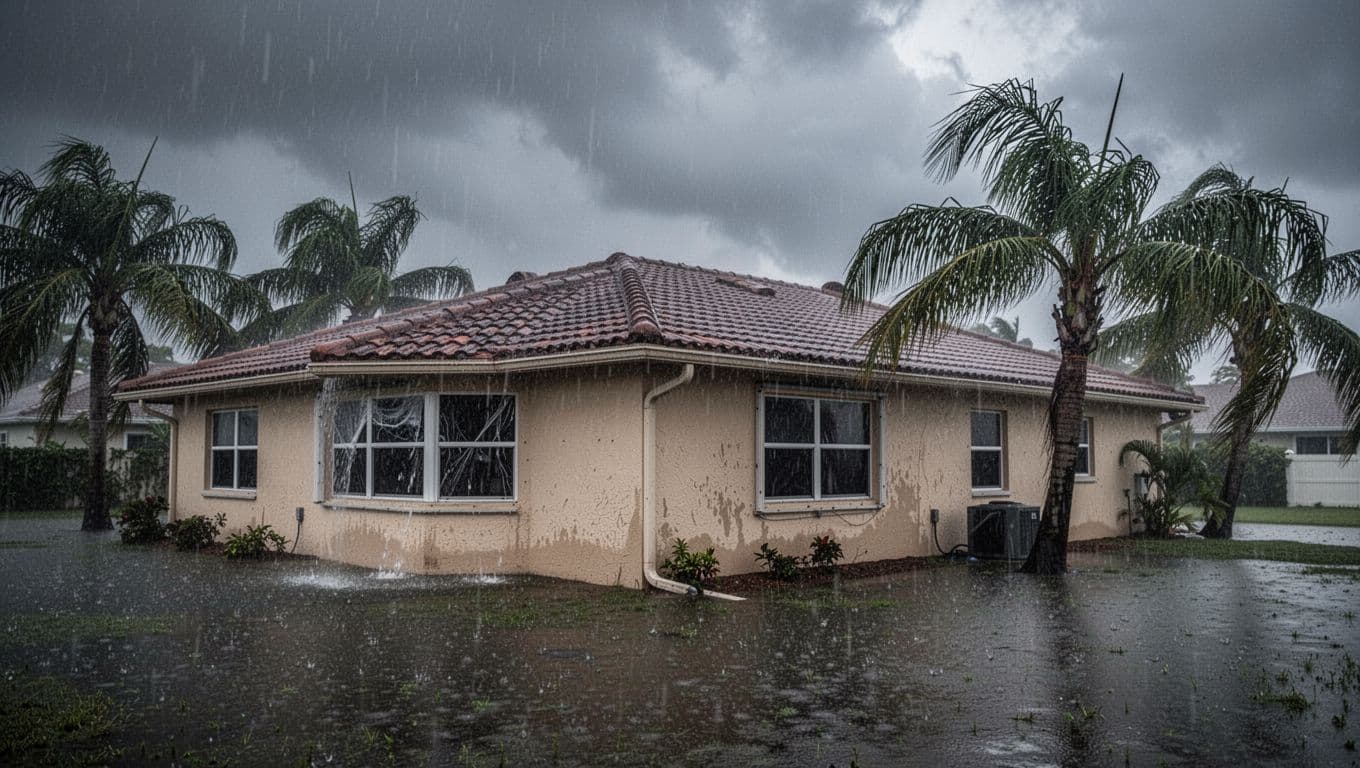
Cape Coral homes deal with a lot of moisture pressure. During summer storms and hurricane season, wind can push rain sideways into small gaps around windows, doors, soffits, and roof lines. Then water travels behind paint and drywall until it finds the easiest path, often near an outlet box or low wall cavity.
Flooding raises the risk even more. If storm surge, yard flooding, or slab-level water reaches an exterior wall, the bottom section of drywall can wick moisture upward. In older homes, worn caulk, older flashing, and aging electrical parts can make that worse. After major weather, a Southwest Florida storm recovery guide can help homeowners spot broad safety issues, but wet outlets still need direct inspection.
Humidity adds another problem. Even after the obvious water is gone, damp air inside the wall can feed mold and corrosion. Florida homes also depend on proper outlet protection in wet-prone areas, and GFCI outlets matter in Florida homes for good reason. Still, a GFCI is not permission to ignore wet drywall.
What to do right away if water is near an outlet
Start with distance and caution. Keep kids and pets away from the area. If a lamp, charger, or appliance is plugged into the wet outlet, leave it alone until power is off.
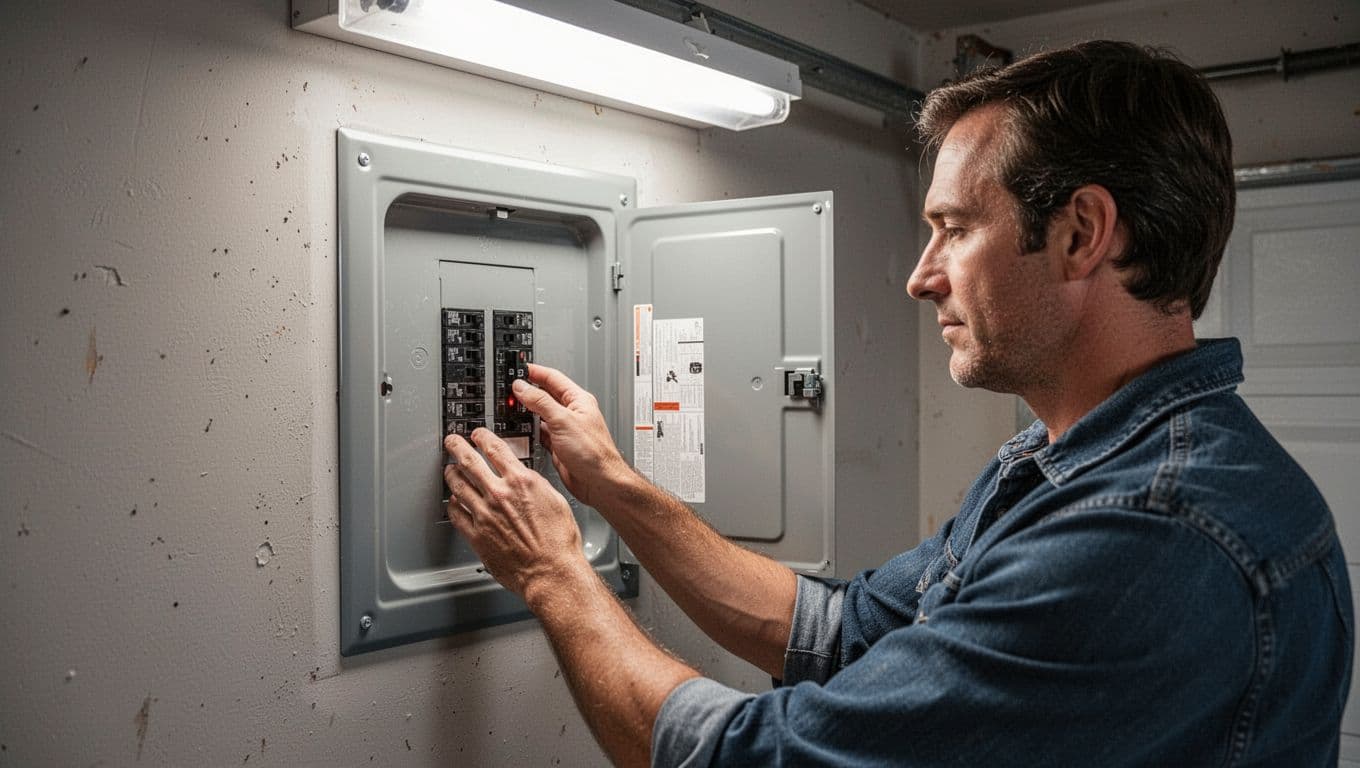
If you can reach your breaker panel without standing in water or touching wet surfaces, shut off power to the affected circuit. If you aren’t sure which breaker controls that wall, and you can do so safely, turn off the main power. If the panel area is wet, or you feel unsure, stop there and call for help.
These are the safest immediate steps:
- Stay clear of the outlet, switch, and nearby cords.
- Turn off power only if you can do it safely.
- Stop the water source if it’s simple and safe, such as closing a nearby valve.
- Call a licensed electrician and a water damage restoration team.
Don’t remove the outlet cover. Don’t test the outlet. Don’t plug in fans or dehumidifiers to that circuit. A Florida electrical safety guide after water damage explains why hidden moisture can stay dangerous even when the wall doesn’t look soaked.
If you smell burning, hear crackling, or see smoke or sparks, leave the area and call emergency services.
What professionals need to check before the wall is closed
This kind of damage has two sides, electrical and water. Both matter, and both need to be cleared before repairs move on.
An electrician should inspect the outlet, wiring, box, breaker, and nearby circuits for moisture, corrosion, and heat damage. In Cape Coral, especially after flooding or wind-driven rain, salt and dirty water can make damage worse. A restoration team should find the water source, check how far the moisture traveled, remove wet materials when needed, and dry the wall cavity fully.
That step matters in older homes. Some houses have older wiring, older boxes, or past repairs hidden behind fresh paint. Local homeowners often deal with the same age-related issues covered in common electrical issues in Cape Coral. Once the wall is opened, professionals can see whether the damage is small or part of a bigger pattern.
Drywall repair should come last, not first. Fresh mud and paint can hide a problem, but they can’t fix a wet wire or a damp stud bay.
A soft spot near an outlet can hide a live hazard. In Cape Coral, storm season, flooding, and year-round humidity give water more ways to sneak into walls and stay there.
The safest path is simple: treat wet drywall around outlets as both an electrical problem and a water damage problem. Don’t use the outlet again until qualified pros say the wall, wiring, and moisture are all under control.
